
Africa
Tinubu and the Rhythm of Restructuring, by Abiodun Komolafe

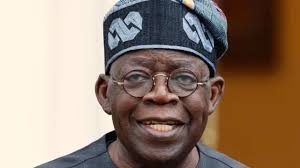
President Bola Tinubu’s recent announcement to unbundle the Nigerian College of Aviation Technology (NCAT), Zaria, Kaduna State, into six geo-political zones is an important landmark in Nigeria’s journey towards true federalism and regionalism, which lies not in the constitutional or institutional structure, but in the society itself. This move will go a long way in addressing the historical imbalance in the distribution of national institutions as well as fostering a sense of belonging and inclusivity among Nigeria’s diverse populations.
Ultimately, this development is a step towards addressing Nigeria’s deep-seated structural issues, which have been perpetuated by a centralized system. One can only pray that the president would also muster sufficient courage to extend this hand of fellowship to institutions like the Nigerian Defence Academy (NDA), Police University and Nigerian Army University as this will not only promote regional balance, equity and fairness but also help reduce the concentration of military power in one area as well as promoting national security. The unbundling of the Law School, previously exclusive to the Southwest, serves as a precedent for this bold move.
It is obvious that, even with the valiant efforts of the Federal Government, economic reforms can only carry the country so far. There will always be a limit to structural dysfunction! In our own opinion, the current Tax Reform Bills, which every patriot should support, is a savvy move towards restructuring through the backdoor. Tinubu is to be commended for this! But, again, there will always be a limit!
Nigeria, in our opinion, was set back – by about 70 years or more – by the ill-advised, to put it politely, ‘suspension’ of the 1963 Republican Constitution. Thankfully, they did not go so far as to claim that it had been completely abolished or abrogated!
The Tax Reform Bills are to be commended for, in the spirit of the 1963 Constitution, they seek to move the country back to a federation, based on production. The Bills are a very mild exposition of the famous description of federalism by the 13th Prime Minister of Canada, John Diefenbaker, who told a group of school children that “Federalism means that you eat what you kill.” For us, this is still the best description of federalism as was reflected in the 1963 Constitution, and the constitutions which had preceded it, which was the spirit upon which Nigeria’s independence was negotiated, and given.
Nigeria until the suspension of the 1963 Constitution was one of the most balanced and productive in the world. It’s even an often-stated fact that the Eastern Region of Nigeria, under Chief Michael Okpara, was the fastest growing subnational of any country in the British Commonwealth. Tinubu, apart from his antecedents in the struggle for democracy, has already given us a glimpse through the Tax Reform Bills, that he is a federalist. Even for this singular effort, the Jagaban of Borgu already has a place in Nigeria’s economic history.
We must go back to the giant strides made between the 1914 amalgamation of the protectorates and the unfortunate events of January 15, 1966. Any cost-benefit analysis would show, without a doubt, that a political economy based on competitive federalism delivers the goods. By jettisoning this path, Nigeria squandered an opportunity which should have made it incontestably among the world’s top 10 economies, such as India and Brazil. By abandoning federalism based on production, Nigeria earned, starting from the first ‘oil shock’ of 1974, hundreds of billions of petrol dollars which did not translate into the basic industries which form the bedrock of a modern industrial economy.
Matter-of-factly, no country has achieved modern industrial development without a strong foundation in industries like machine tools, iron and steel, and petrochemicals. This is why, despite being laudable, Dangote Refinery will still rely on imported vital parts for replacement and servicing. Take, for instance, a thriving machine tools industry in Ijebu-Jesa, Osun State. If such an industry existed, it’s likely that at least 90% of the parts needed for Dangote and other industries would be sourced locally, leading to significant growth in Ijebu-Jesa’s size and economy. This, in turn, would have a profound impact on employment, revenue generation and overall well-being in the region.
It is worthy of note that the Constitutions of Australia, Brazil, Canada, USA, amongst others, mirror the 1963 Republican Constitution and they have not suffered for it. Clearly, either piecemeal, as part of the Tax Reform Bills, or Local Government Reform, or the establishment of Development Commissions, or the ‘inchoate’ Local Council Development Authorities (LCDAs), or wholesale, Nigeria’s journey towards true federalism requires a fundamental shift in its political culture, necessitating a return to the ethos and spirit of this Constitution.
By using guile and tactical astuteness, Tinubu’s historical role must be to go back to the modus operandi of the 1963 Constitution. In his own heart, he knows that there is no alternative to this! This is the only perfect storm that will stand the test of time. It is the only way to cure the Nigerian malaise which is based on lack of revenue. Without a brutally competitive federalism, the country cannot unleash the revenue streams so vitally needed for sustainable development.
A good example of our current quagmire is the sharing of FAAC for December 2024, which was approximately $2.7 billion. This figure is still a far cry from what a country of Nigeria’s size should be generating. Under a proper, productive base, Nigeria’s sharing of FAAC should conceivably be at least $3 billion a month, even in the worst-case scenario. This is underscored by the fact that Gauteng in South Africa has a bigger budget than Nigeria – while Nigeria’s budget for the Year 2025 is roughly $28 billion, Gauteng’s is about $43 billion. It is simply like Lagos State having a bigger budget than Ghana which is a sovereign state.
The critical issue here is for the Tinubu government, which we wish all the best, to accept the incontrovertible fact that economic reforms must be interwoven, going hand-in-gloves with the structural reforms needed in the political economy to make economic reforms sustainable. Otherwise, any future government can reverse the striking gains that will definitely come out of the present reforms, as we are now witnessing in Donald Trump’s America.
Yes, the president’s economic reforms are on the right path with quiet compassion. However, to ensure longevity and sustainability, structural reforms are crucial. For instance, Nigeria’s federal budget, which stands at around $28-30 billion annually for a population of 200 million, is alarmingly inadequate and heading towards social stagnation.
Well, that’s not to say that Nigeria’s restructuring efforts are not facing complex obstacles, including a lack of clear definition and consensus. To be honest, different interpretations of the concept lead to confusion, mistrust and resistance. Entrenched interests, power dynamics and insecurity also hinder restructuring. The political elite may resist changes that threaten their privileges, while the North’s dominance in politics and economy poses another challenge. To overcome these, establishing a clear and inclusive definition involving various stakeholders is essential.
Let me by way of conclusion state that Nigeria’s journey towards true federalism requires a fundamental shift in its political culture, and Tinubu’s thoughtful gestures are a significant step in addressing its deep-seated issues. This shift involves recognizing that power isn’t “a zero-sum game, where one group’s gain must come at the expense of another.” Instead, it is about ensuring that every Nigerian has a stake in the country’s future! It is about weaving the threads of a new life together!
May the Lamb of God, who takes away the sin of the world, grant us peace in Nigeria!
*KOMOLAFE wrote from Ijebu-Jesa, Osun State, Nigeria (ijebujesa@yahoo.co.uk)























You must be logged in to post a comment Login