
Africa
Tinubu and the Significance of Yesterday (2) -By Abiodun KOMOLAFE
Who knew about the Port of Singapore in the 1960s? So, what exactly went wrong, and where exactly did our leaders lose the plot? More critically, where is the substantive plan to bolster security, the very foundation upon which all other state activities must rest? Tragically, the situation is deteriorating so fast that some institutions of higher learning have had to issue curfew timetables for when their students are allowed to move or are forced to go on empty stomachs for the fear of bandit attacks.

The detail makes the difference! In 1961, the regional government in Western Nigeria made tax cuts to shore up its dwindling electoral prospects, largely caused by a drop in commodity prices. There was, however, an unexpected resistance to the tax cuts in some provinces, particularly in Ekiti, Ijebu and Ondo. Over 300 people were arraigned before magistrates across the region for unruly conduct and bound over. The key point here is that people, after an initial resistance in the middle of the 1950s, had come to accept the benefits of paying taxes. Even by today’s standards worldwide, this is real political sophistication.
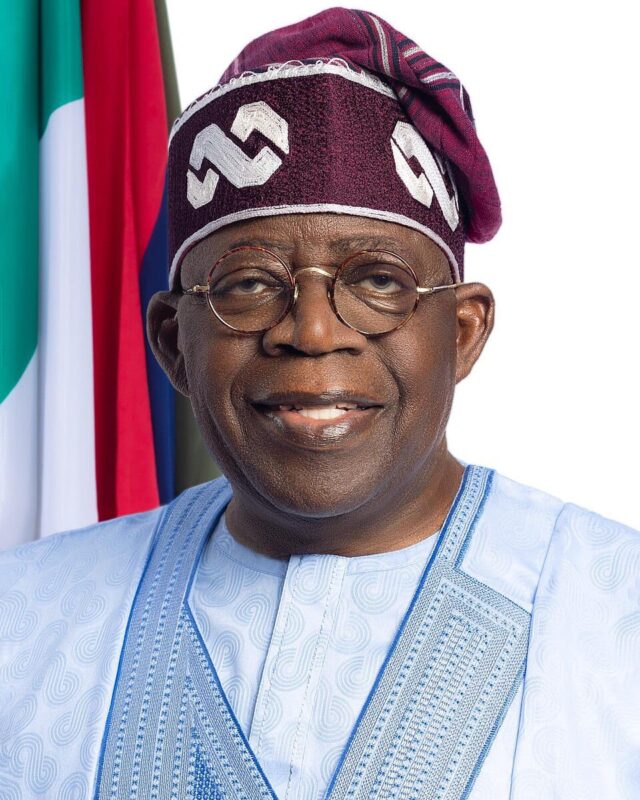
Obviously, this new paradigm is the basis for the laudable, very well-thought-out tax reforms of the Tinubu administration. Fifteen years down the road, the political maturation fostered by these reforms will definitely manifest as resistance to proposed tax cuts, which will be interpreted by the populace as an attempt to undermine their economic rights, even their right to life. This cultural shift would be the highlight of the president’s very important thrust to redefine Nigeria’s political economy, and the verdict of history will ultimately be very favourable to him and his endeavours.
For years, Nigeria has been basking in the euphoria of a revenue economy, but where has that taken us? As we speak, Nigeria holds a complex position in World Bank assessments. In terms of national income per person, the country faces significant challenges, as evidenced by its recent ranking of 146 out of 191 countries on GDP per capita. However, when viewed by overall economic size, the Bank acknowledges Nigeria as the largest economy in Africa by Gross Domestic Product (GDP). Despite its status as Africa’s economic giant, the World Bank officially classifies the country as a Lower Middle-Income Economy.
Again, the question is: do we need the World Bank to tell us that all is not well with Nigeria? Of course, stepping onto the streets will reveal the gravity of the mass misery ravaging our land. If we look at the faces of the people, and evaluate the children who daily trek to their schools with practically nothing in their stomachs, and simply because their parents want to save the N200 or N300 cost of Korope, then maybe we can have better words to situate our predicament.
In the 1960s, things were not this bad because there was a real state. The simple truth is that the political leaders of that era were adequately prepared for leadership roles. Those leaders went into politics because they believed in something, and they pursued it diligently. Since they had a clear agenda for development, their focus was fundamentally different from what obtains these days.
But what can we say about our latter-day leaders? A majority of them are in politics purely because of limited economic opportunities. Since they’re driven only by the fear of personal poverty, they’re bereft of any ideological base. They are not developmentalists because they’re not in politics to build or develop anything. They are children of entitlement, simply dancing away their people’s sorrow. If this were not the case, when was the last time a major factory was established in a town like Ijebu-Jesa in Osun State?
The Agent General of Western Nigeria in London during the First Republic was the de-facto Minister of Export, coordinating the sale of exports like cocoa, palm oil, rubber and the like. It was he who would negotiate markets, shipping and insurance. He always had strong targets, so he was always a very busy man. If we may ask, what is Nigeria’s High Commissioner to the UK selling to the outside world and how much is he remitting to Nigeria as proceeds from the sale of our exports? What’s his target and how is he coping with it?
Yes, personal charisma might win an election, but, while the principalities and powers of the past cannot be reversed, it offers a barometer for learning. Consider Obafemi Awolowo’s 1952 speech to the Western Region House of Assembly on the establishment of the Cooperative Bank; it reads as if the late sage were delivering a Nobel Prize in Economics Acceptance Speech. Characteristically, Awo’s speech was a display of deep, powerful and dialectical thinking. Unfortunately, the majority of those in power today have neither that depth nor the intellectual interest. This critical lack of clear direction and intellectual leadership is one of the primary reasons why Nigeria struggles to survive.
Admittedly, what grows a country are not men but the system. However, the system is always put in place by men. More importantly, the matter isn’t about the absence of documents, but about the presence of a functioning, ethical state. Across the ‘parties’, and frankly in most states of the federation, there are dozens of aspirants who are not distinguishable from one another. They are just vying for access to power and resources, rather than the upliftment of the people and upholding the legacy in the Western Region that affirmed the very purpose of governance and indeed of politics itself: ‘To make life more abundant’.
Who knew about the Port of Singapore in the 1960s? So, what exactly went wrong, and where exactly did our leaders lose the plot? More critically, where is the substantive plan to bolster security, the very foundation upon which all other state activities must rest? Tragically, the situation is deteriorating so fast that some institutions of higher learning have had to issue curfew timetables for when their students are allowed to move or are forced to go on empty stomachs for the fear of bandit attacks.
With Tinubu now in the saddle, the optics may be looking good. Who knows?
May the Lamb of God, who takes away the sin of the world, grant us peace in Nigeria!
*KOMOLAFE wrote from Ijebu-Jesa, Osun State, Nigeria (ijebujesa@yahoo.co.uk; 08033614419 – SMS only)
















You must be logged in to post a comment Login