Africa
Two Years Down The Line, Renewed Hope Everywhere, Has Any Hope Been Renewed? -By Isaac Asabor
The promise of “Renewed Hope” was a political contract. It was a pledge to serve, to fix, to uplift. So far, that contract is being breached daily. Until the government aligns its words with action, until policies begin to positively affect the man in Ojuelegba, the farmer in Makurdi, the teacher in Ilorin, and the market woman in Aba, then we will continue to ask: “Renewed Hope, Renewed Hope Everywhere, Has Any Hope Been Renewed?” And the honest answer, for now, is a deafening No.

In the months leading to the 2023 general elections, the All Progressives Congress (APC) rolled out its campaign mantra under the banner of “Renewed Hope.” For a country like Nigeria, battered by economic hardship, pervasive insecurity, and systemic corruption, the slogan was music to the ears of many. It conjured the image of a government ready to course-correct after the rudderless eight-year administration of President Muhammadu Buhari.
But slogans do not govern nations. Speeches do not reduce inflation. Empty promises do not fill stomachs. And certainly, hope cannot be renewed in an atmosphere where nothing tangibly improves in the daily lives of ordinary citizens. Two years into this administration, the chorus of “Renewed Hope” now rings hollow. Across markets, motor parks, classrooms, hospitals, and even the sacred halls of worship, one common lamentation echoes: Has any hope really been renewed?
Politicians are often known for making grandiose promises, but rarely have Nigerians seen a disparity so wide between campaign rhetoric and actual governance. At the center of this irony is President Bola Ahmed Tinubu’s administration, which hit the ground running, albeit running in the wrong direction.
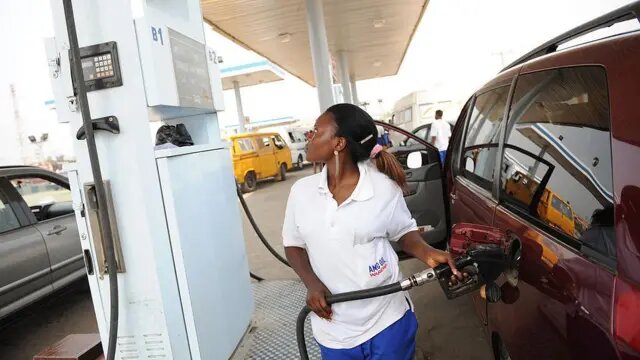
Right from his inauguration, the president declared: “Fuel subsidy is gone.” That single sentence, uttered with unflinching boldness, triggered a domino effect of economic woes. Fuel prices instantly tripled, transportation costs soared, and the ripple effects dragged down virtually every sector of the economy.
What was promised as a foundation for long-term economic gain has instead intensified short-term suffering. There is no coherent plan, no actionable roadmap that assures citizens that the hardship they are currently facing is a necessary sacrifice for a better tomorrow. If there is a plan, it’s hidden from the very people it affects the most.
In response to the crisis his subsidy removal caused, the federal government introduced “palliatives”, distributing bags of rice, ₦25,000 stipends, and other so-called relief packages. But in typical Nigerian fashion, the process has been marred by opaqueness and inequality.
Reports from communities across the country suggest that many intended beneficiaries never received a grain of rice or a kobo in relief. It is not just a question of logistics; it is a reflection of a deeply corrupt and disconnected system. In a country of over 200 million people, how do you expect ₦25,000 given to a small fraction of the populace to solve a nationwide hunger problem?
The disconnect between policy and people is so alarming that even traders and artisans, traditionally less politically vocal, are now asking: “Where is the hope they promised us?”
One of the most glaring indictments of the “Renewed Hope” agenda is the rapidly worsening cost of living. Basic commodities have become unaffordable for the average Nigerian. The price of rice has gone from ₦25,000 per bag hovering between ₦70 and ₦80,000. Bread, a staple for most families, has nearly doubled in price. Even garri, the poor man’s fallback, is now a luxury in many homes.
A mother earning ₦30,000 per month is now forced to choose between paying her child’s school fees or buying food. Graduates roam the streets jobless, and those lucky enough to be employed are earning wages that cannot sustain them for more than a week.
In a country touted as the “giant of Africa,” hunger has become a household name. People no longer plan for the future, they live from hand to mouth, surviving one day at a time.
If one were to judge based on campaign promises, Nigerians should be sleeping with both eyes closed by now. But instead, fear is still a daily companion. From the North-West where bandits operate with impunity, to the South-East where unknown gunmen continue their reign of terror, safety remains elusive.
Farmers in the North Central have abandoned their lands due to fear of herdsmen attacks. Students are kidnapped from schools in broad daylight. Travelers are abducted on major highways. The security situation, far from improving, seems to be mutating.
The government often claims progress is being made, but Nigerians are yet to see this “progress” in their everyday lives. A government that cannot protect its citizens is a government that has failed its most basic responsibility.
Another pain point is Nigeria’s failing electricity sector. Promises of improved power supply have been recycled by successive governments, and Tinubu’s administration has not fared any better. Power outages still last days, if not weeks, in many communities.
Yet electricity tariffs keep increasing. How do you rationalize increasing costs for a service that continues to deteriorate? It is the equivalent of paying more for a product that you never receive, a legalized scam, sanctioned by a government supposedly committed to hope.
Small and medium enterprises are shutting down because they cannot keep up with the cost of running generators. And as they fold, unemployment increases. Another hope shattered.
The Nigerian naira has continued its catastrophic fall against the dollar, hitting over ₦1,500 to \$1 in recent times. The Central Bank seems overwhelmed. The monetary policies rolled out have done little to stem the tide.
The effect of this is a sharp spike in the cost of imported goods. Pharmaceuticals, industrial equipment, even everyday household items have become exorbitantly expensive. And with no local manufacturing capacity to fill the gap, Nigerians are left at the mercy of global markets and a weak currency.
A country that cannot stabilize its currency, provide basic goods, or promote local industry cannot claim to be renewing any form of hope.
The final insult to injury is the sheer insensitivity of the ruling elite. While the masses struggle to survive, their leaders continue to live in opulence. Billions are allocated for cars, refreshments, foreign trips, and renovation of offices. They buy jets when university students are learning in dilapidated classrooms and hospitals lack basic equipment.
This mismatch between government lifestyle and citizen suffering is the real reason hope has not only failed to be renewed, it has been completely extinguished in many hearts. How can a government that preaches austerity still spend like royalty?
The “Renewed Hope” agenda, as it currently stands, is a mirage, a poetic and empty phrase with no practical evidence of its fulfillment. It has become a cruel joke among the populace. A mantra that was meant to galvanize now triggers mockery.
Hope cannot be renewed in a vacuum. It must be backed by visible change, change that reflects in electricity bills, in market prices, in security reports, and in job statistics. A truly renewed hope would be one where governance is people-centered, policies are inclusive, and public officials are held accountable.
Instead, we have a leadership that is long on talk and short on action. A government that praises itself while the people cry. A ruling class that eats fat while the people gnaw at bones.
If this government is serious about rebuilding trust and giving Nigerians real reasons to hope, it must move beyond platitudes and get to work by cutting down the cost of governance, end the waste, and lead by example. In a similar vein, the government, having clocked two years, should endeavor to implement realistic and inclusive economic policies as well as focusing on local manufacturing, agriculture, and job creation.
Also in a similar vein, is the exigency of fixing the power sector. Nigerians can no longer live in the dark, even as it is incumbent of the power that be to secure the nation by making it safe to farm, to learn, in the course of travelling, and for people to be living on daily basis without obsessively entertaining fear.
In fact, it is expedient our leaders become transparent for once, by making the distribution of palliatives and public funds traceable and verifiable, even as they are expected to be speaking less, and doing more. Aptly put, they should always let results, not rehearsed speeches, do the talking.
In fact, they should always have it at the back of their minds that a nation cannot run on empty promises. It is time we face reality. Nigerians are tired of recycled dreams. Tired of slogans that sound good on posters but fall flat in practice. Tired of being told to “endure” when they can no longer breathe.
The promise of “Renewed Hope” was a political contract. It was a pledge to serve, to fix, to uplift. So far, that contract is being breached daily. Until the government aligns its words with action, until policies begin to positively affect the man in Ojuelegba, the farmer in Makurdi, the teacher in Ilorin, and the market woman in Aba, then we will continue to ask: “Renewed Hope, Renewed Hope Everywhere, Has Any Hope Been Renewed?” And the honest answer, for now, is a deafening No.