Africa
Urging Leaders Who Derailed Nigeria’s Project To ‘Say Something’ Or Write A Memoir Like IBB -By Isaac Asabor
Democratic leaders have not fared much better as they have respectively in various political dispensations failed to address corruption and power supply issues effectively, even as they allowed impunity and mismanagement to thrive. In fact, Muhammadu Buhari’s tenure saw worsening economic conditions and insecurity despite promises of change. Even current leaders, including President Bola Tinubu, are struggling to reverse Nigeria’s decline.

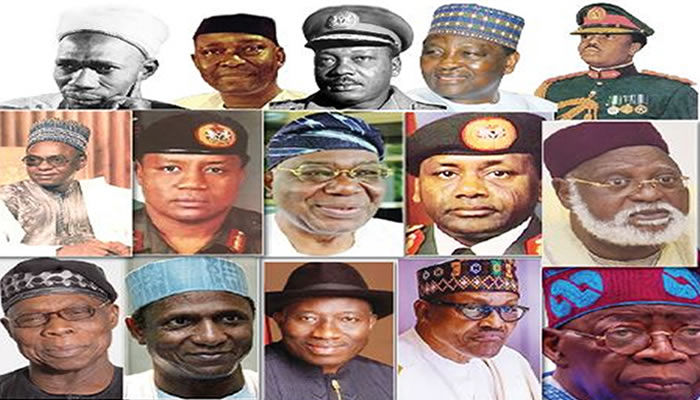
The trajectory of Nigeria’s history is one punctuated by missed opportunities, governance failures, and outright betrayal of public trust. Over the decades, successive leaders, both military and civilian, have made decisions that altered the course of the country’s progress, sometimes setting Nigeria back by decades. Yet, very few have had the courage to admit their mistakes. However, the recent bold step taken by former military president, General Ibrahim Badamasi Babangida (IBB), in acknowledging some of his errors through his book, “A Journey in Service”, serves as a clarion call for other leaders who have contributed to Nigeria’s stagnation to come forward and do the same, either by ‘saying something’ or writing a memoir.
In a nation where leaders often leave office without accountability, IBB’s admission, though late, is a precedent worth emulating. Nigeria’s journey to greatness has been hindered by a myriad of leadership failures, from economic mismanagement to systemic corruption, ethnic divisiveness, and political instability. It is only proper that those who played a part in derailing the country’s progress say something or set the record straight, taking responsibility for their actions, and fostering a culture of accountability that future leaders can build upon.
The reason for the foregoing view cannot be farfetched as Nigerians have from one political dispensation to another been witnessing unapologetic leadership. For decades, Nigerian leaders have displayed a pattern of reckless governance with little or no consequence. The impunity with which public resources have been plundered, policies reversed at will, and development stifled has left millions of Nigerians disillusioned. Despite these, leaders often leave office without a backward glance, indifferent to the hardship they have inflicted on citizens.
One of the biggest betrayals of trust occurred during the military era, when coups and counter-coups led to political instability, economic decline, and gross human rights violations. Leaders like General Sani Abacha, whose reign was notorious for massive corruption and repression, never acknowledged the atrocities committed under his government. Even in civilian rule, the trend continued as political leaders have often been criticized for controversial policies, and the stealing of public funds that largely benefitted political cronies rather than the Nigerian people.
Similarly, under Goodluck Jonathan’s administration, corruption scandals, particularly the mismanagement of billions meant for national security during the Boko Haram insurgency, marred his tenure. While Jonathan has occasionally spoken about his regrets, a more formal and public apology would go a long way in helping the nation heal and move forward.
At this juncture, not a few apologists of political leaders would be asking why this writer wants leaders who derailed Nigeria’s Project to ‘Say Something’ or write a memoir like IBB. The reason for the demand cannot be farfetched as hearing a past leader’s side to a story about how they failed Nigeria would serve multiple purposes. First, it would offer a sense of closure to millions of Nigerians who have suffered from poor governance. This is as acknowledging mistakes is the first step towards rebuilding trust between leaders and the citizens they govern.
Secondly, a public admission of failure would set a precedent for future leaders, reinforcing the idea that public office comes with responsibility and accountability. In a democracy, leaders must be willing to account for their actions, even years after leaving office. This will help discourage the culture of impunity that has plagued Nigeria’s governance system for decades.
Moreover, a sincere apology could pave the way for national reconciliation. Nigeria is a deeply divided country, with ethnic and religious fault lines often exploited for political gains. Many past leaders have played a role in deepening these divisions, whether through biased appointments, rigged elections, or failure to address long-standing grievances. A national apology from those responsible could help bridge these divides and foster unity.
IBB’s recent book, “A Journey in Service”, though one-sided and debatable, is significant in that it offers a rare glimpse into the mind of a former Nigerian leader reflecting on his tenure. While many Nigerians may argue that the defensive excuses that are inherent in the book do not erase the damage done during his rule, particularly the annulment of the June 12, 1993 election, it is still a step in the right direction. Some of his admissions in the book show that even the most powerful leaders are not infallible and that self-reflection is necessary for national growth.
If IBB, a former military ruler, often viewed as an enigma, can own up to some of his failings, then what stops other past and present leaders from doing the same? His act should not be seen as an isolated event but as an example for others to follow. From military dictators to democratic presidents, governors, lawmakers, and political godfathers, many have contributed to Nigeria’s current state of economic hardship, insecurity, and social discontent.
In fact, since Nigeria gained independence in 1960, successive leaders have made decisions that have contributed to the country’s stagnation and decline, leaving millions of citizens in hardship. From military rulers to civilian administrations, poor governance, corruption, and misplaced priorities have kept Nigeria from achieving its true potential. Many of these leaders owe Nigerians an apology for their roles in deepening poverty, insecurity, and underdevelopment.
The military regimes, from Yakubu Gowon to Sani Abacha, contributed to Nigeria’s backwardness through dictatorship, corruption, and the mismanagement of oil wealth. Despite the oil boom of the 1970s, Gowon’s government failed to lay a solid foundation for economic diversification, setting the stage for future economic woes. Abacha’s regime, notorious for human rights abuses and corruption, looted billions of dollars that could have transformed Nigeria’s infrastructure and public services.
Democratic leaders have not fared much better as they have respectively in various political dispensations failed to address corruption and power supply issues effectively, even as they allowed impunity and mismanagement to thrive. In fact, Muhammadu Buhari’s tenure saw worsening economic conditions and insecurity despite promises of change. Even current leaders, including President Bola Tinubu, are struggling to reverse Nigeria’s decline.
These leaders, past and present, owe Nigerians an apology, not just in words but through meaningful reforms, accountability, and a commitment to genuine national development. Without acknowledging their failures, Nigeria risks remaining stuck in a cycle of poor leadership and unfulfilled potential.
While it is easy to generalize that ‘All Nigerian leaders’ have failed, some key figures stand out for their roles in shaping Nigeria’s trajectory negatively.