Education
When Going to School Becomes a Death Sentence The Tears of Oyo Parents and Nigeria’s Endless Nightmare -By Abdulazeez Toheeb Olawale

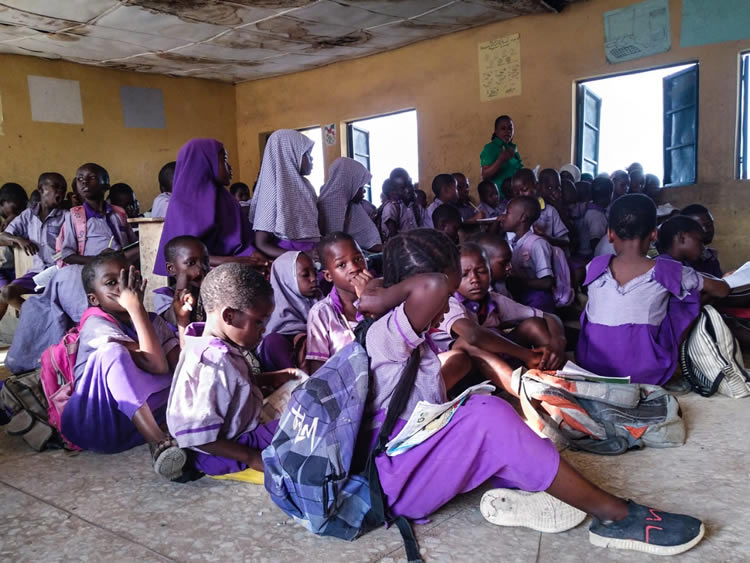
Somewhere in Oyo State tonight, there is probably a mother staring at her child’s empty bed, hoping the sound of a motorcycle outside might bring back the son she kissed before school.
Somewhere, a father is pretending to be strong in front of his family while silently dying inside.
And somewhere in the bush, frightened children who should be holding pencils and school bags are instead surrounded by armed men, fear, hunger, and uncertainty.
This is the painful reality of Nigeria.
On May 15, 2026, armed gunmen stormed schools in Oriire Local Government Area of Oyo State and abducted pupils and teachers in broad daylight. Some of the victims were reportedly as young as two years old. Children. Innocent souls who knew nothing about politics, insecurity, or the failure of a nation.
Yet they have become victims of it.
Nigeria has gradually become a country where parents no longer only worry about paying school fees — they now worry whether their children will return home alive.
Schools, once symbols of hope and learning, are slowly becoming grounds of fear.
The most heartbreaking part of this tragedy is not even the kidnapping itself — it is the silence that follows after the headlines fade away.
Because after social media trends disappear, parents remain awake through sleepless nights. Families continue to negotiate with fear. Younger siblings keep asking questions nobody can answer:
“When is my brother coming back?”
What kind of nation forces children to learn under the shadow of terror?
Reports indicate that despite ongoing rescue efforts and government assurances, many victims were still being held days after the attack. Meanwhile, misinformation also flooded social media, with old images falsely shared as pictures of tortured abducted children. Fact-checkers later debunked several of those viral claims.
But even without fake pictures, the pain is already real enough.
The tears are real.
The fear is real.
The trauma is real.
And perhaps the saddest part is that Nigerians are gradually becoming emotionally used to these horrors. Kidnapping has become so frequent that many people now read tragic headlines, shake their heads briefly, and move on.
That should terrify us all.
Because the day a society becomes comfortable with the suffering of innocent children is the day humanity begins to die quietly.
Years after Chibok, Dapchi, Kankara, Tegina, and several other school abductions, Nigeria still seems trapped in the same cycle of outrage, condolences, promises, and repeated tragedy.
How many more children must disappear before schools become truly safe?
How many more parents must bury hope before insecurity is treated like the national emergency it truly is?
These children are not statistics.
They are dreams.
Future doctors. Teachers. Engineers. Journalists. Leaders.
And every day they remain in captivity is another stain on the conscience of the nation.
May every abducted child return home safely.
And may Nigeria someday become a country where education no longer requires courage to pursue.