Global Issues
Xenophobia and African Unity -By Zayd Ibn Isah
The vision of men like Nkrumah, Nyerere, Mandela, Lumumba, Tafawa Balewa, Azikiwe, and even Gaddafi may seem distant today, but their dream remains relevant. They understood that Africa’s strength lies not in division, but in unity.

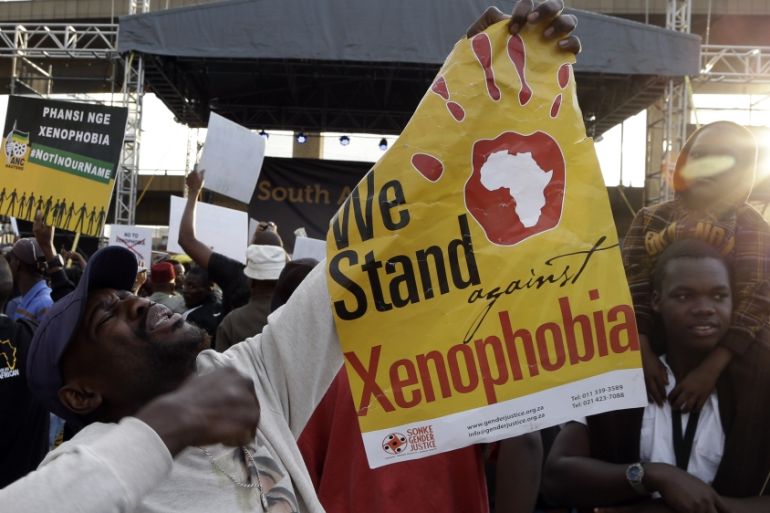
I have written quite a lot about xenophobia in South Africa (and even Ghana), till the point that I promised not to discuss this subject matter again, simply because I was wary of beginning to sound like a broken record. Yet, each time disturbing reports emerge of fellow Africans being harassed, attacked, or blamed for the social and economic challenges of another African country, silence becomes difficult.
PLO Lumumba is one of the leading Pan-African voices in Africa. In one of his explosive speeches delivered at a conference in Nairobi in September 2018, the renowned Kenyan lawyer and activist spoke passionately about the failing state of the continent and reflected on how Africa’s heroes of the past would feel if they were alive today to witness what is happening across the continent.
Permit me to paraphrase him: “ When I look at Africa, many questions come to mind. Many times I ask myself, what would happen if Mwalimu were to rise up and see what is happening. Many times I will ask myself what will happen if Kwame Nkrumah and Patrice Lumumba were to rise up and see what is happening”.
But the part of his speech that struck me the most was when he lamented that these heroes would be confronted with an Africa where young men and women are constantly humiliated at the embassies of Western countries due to a desperate pursuit of foreign visas. It was a painful reflection on how many Africans have gradually lost faith in the ability of the continent and its numerous leaders to uplift and provide opportunities for the masses.
Unfortunately, the likes of Nelson Mandela, Muammar Gaddafi, and Abubakar Tafawa Balewa would not only be confronted with an Africa where young people queue endlessly at embassies in Europe and the United States in search of greener pastures, but also an Africa where a fellow African is treated like a leper in another African country.
Nelson Mandela would be shocked to discover that xenophobia has now been elevated into organised political agitation in South Africa under the code name “Operation Dudula.” According to my research, the term “Dudula” in isiZulu means “to push out.” The painful question is: who exactly are they pushing out? Fellow Africans from Nigeria, Ghana, Kenya, Zimbabwe, and other African countries. Meanwhile, foreigners from Europe and America are largely welcomed without the same level of hostility.
The irony of all this is that South Africa prides itself on the philosophy of Ubuntu, a Bantu concept commonly translated as “I am because we are.” Ubuntu speaks about humanity, compassion, and collective existence. Sadly, it appears that Ubuntu is gradually being replaced by Dudula, and South Africans are no longer saying, “I am because we are.”
Whenever xenophobic violence erupts, Nigerians, who are often among the victims, begin to remind South Africans of the sacrifices Nigeria made during the struggle against the evil apartheid regime. Recently, I came across a reply letter written by Ahmed Joda, the Principal Private Secretary to the then Prime Minister, Abubakar Tafawa Balewa, assuring anti-apartheid activists that the battle against apartheid had only just begun.
The painful question, however, is whether these xenophobic South Africans know about those sacrifices and, even if they do, whether they truly care. Nigeria committed enormous resources toward the liberation of South Africa. Ordinary Nigerians made sacrifices. Successive governments offered diplomatic, financial, and moral support to the anti-apartheid struggle because Africa then believed in solidarity and brotherhood.
That xenophobia still exists in South Africa today represents a serious failure of leadership and social orientation. It is time for the South African government to take stronger and more decisive action against it. Silence, weak condemnations, or attempts to downplay the issue only embolden those who continue to spread hatred against fellow Africans.
One is almost forced to agree with the position canvassed by Adams Oshiomhole, the former Governor of Edo State and current Senator representing Edo North, who has called for stronger measures in response to repeated xenophobic attacks. In his words: “What black South Africans are saying is that Nigerians are taking their jobs. Okay, Nigerians can come home and take over the job of MTN. When we hit back, the President of South Africa will not only talk but will also go on his knees to recognize that Nigeria cannot be intimidated.”
Many people believe this may be the only language the South African government will understand. Otherwise, it may continue to play the ostrich while fellow Africans are targeted within its borders. South Africa should not take Nigeria for granted considering the number of South African businesses operating successfully in Nigeria without harassment or hostility.
For instance, Mike Adenuga owns Globacom, yet he is not complaining that South African-owned telecommunications giant MTN Group, which is widely patronised by Nigerians, has pushed him out of business. There are several other South African businesses operating side by side with Nigerian-owned businesses in Nigeria, and Nigerians are not attacking South Africans or accusing them of taking their jobs or opportunities. Why then should some South Africans attack Nigerians and other Africans under similar accusations?
In reacting to the wave of xenophobic attacks in South Africa, Cyril Ramaphosa stated that South Africans are not inherently xenophobic and that the attacks were partly a fallout of the country’s economic downturn. But should economic hardship become a justification for xenophobia, Mr. President? If that were the case, Nigerians would also have driven out MTN and other foreign businesses operating in the country because of economic hardship. Yet Nigerians continue to accommodate foreign businesses and nationals without organised hostility.
I would have agreed completely with President Ramaphosa if he had said that not all South Africans are xenophobic because there are still South Africans like Julius Malema who continue to tell their people hard truths, even though many refuse to listen.
Ultimately, xenophobia weakens Africa. It defeats the very essence of the African Union and the dream of continental unity. At a time when other regions of the world are aligning economically and politically, Africa remains trapped in unnecessary internal hostility. A continent divided against itself cannot fully harness its enormous human and economic potential.
The vision of men like Nkrumah, Nyerere, Mandela, Lumumba, Tafawa Balewa, Azikiwe, and even Gaddafi may seem distant today, but their dream remains relevant. They understood that Africa’s strength lies not in division, but in unity.
If Africans continue to see one another as enemies rather than allies, then the dream of a united Africa will remain permanently out of reach. But if Africans choose understanding over hatred, cooperation over suspicion, and unity over division, then perhaps the continent can still rediscover the spirit of Ubuntu that once inspired the world.
Zayd Ibn Isah
Lawcadet1@gmail.com