Forgotten Dairies
You don See My 2027 Billboard -By Prince Charles Dickson PhD
Has he seen the farmer who cannot move produce because the road has become a punishment? Has she seen the widow waiting for water? Have they seen the unemployed graduate printing their posters for ₦5,000 a day while being promised millions of jobs? Have they seen the children studying under heat because electricity is still a rumour? Have they seen the citizens, or only the voters?

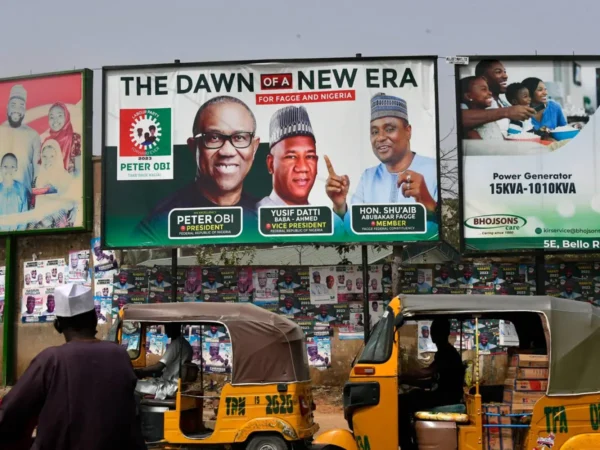
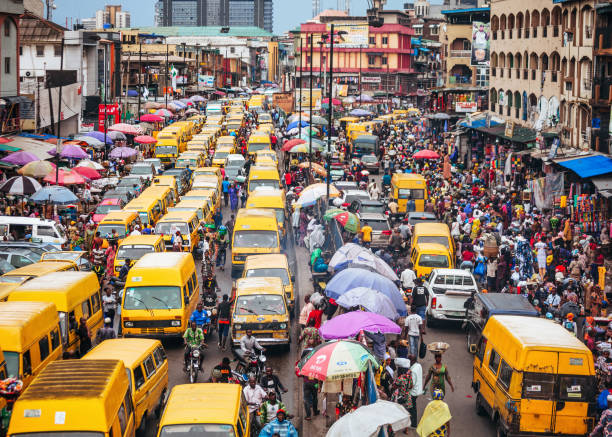
There is a particular Nigerian season when potholes become campaign offices, electric poles become manifesto stands, and every roundabout suddenly receives a new landlord with smiling teeth. The rainy season may fail. The dry season may punish. The power grid may cough like an old generator. But election billboard season never disappoints. It arrives with full chest. One morning, you pass through a road that has been begging for rehabilitation since Obasanjo still had original swagger, and there, standing proudly over the crater, is a politician in agbada promising “Renewed Hope,” “New Dawn,” “Greater Tomorrow,” “Fresh Start,” or one other detergent-sounding slogan.
You slow down because the road has already removed your shock absorber. You look up. The man is smiling. His skin is glowing. His cap is balanced. His wife is somewhere in the corner of the poster looking like national stability. His deputy is there too, but smaller, because even democracy has hierarchy. Then the slogan hits you: “Together We Shall Build.” Build what, sir? The road beneath your billboard has already collapsed into archaeological material.
This is the great comedy and tragedy of Nigerian political advertising. The billboard is not merely a signboard. It is a national confession. It tells us what our politics values: visibility over service, optics over outcomes, name recognition over moral recognition. It is the politician’s way of shouting, “You don see my billboard?” as if democracy is now a beauty contest conducted at traffic lights.
Let us talk money, because politics without money in Nigeria is just civic poetry. Nigeria’s out-of-home advertising market, which includes billboards and digital outdoor displays, is not small pepper. Industry estimates put Nigeria’s OOH and DOOH market around $168.21 million in 2026, with projections to reach $226.38 million by 2031. At an official exchange rate hovering around ₦1,370 to ₦1,380 per dollar in late April and early May 2026, that 2026 market is roughly in the neighbourhood of ₦230 billion plus. Not all of that is politics, of course. Banks, telcos, real estate companies, churches, concerts, betting firms, and beverage brands all live on those boards too. But as 2027 approaches, political faces will increasingly invade that space like spiritual wallpaper.
The real scandal is that nobody can say with confidence how much politicians actually spend on billboards. Nigeria has legal spending limits, but the political economy of campaigns moves like smoke through a broken ceiling. Under the Electoral Act 2022, the presidential campaign spending ceiling was ₦5 billion, governorship ₦1 billion, senatorial ₦100 million, House of Representatives ₦70 million, and State Assembly ₦30 million. Recent reporting and election-monitoring analysis of the Electoral Act 2026 say those ceilings have been raised, with presidential candidates now allowed up to ₦10 billion and governorship candidates up to ₦3 billion.
Now pause there. A presidential candidate can legally spend billions, but the village where his billboard stands may not have water. The state where he promises industrialisation may not have functional primary healthcare. The road where his smile is mounted may be one rainfall away from becoming a fishpond. This is not communication. It is theatre with public suffering as stage décor.
Billboard costs vary wildly. Industry rate cards suggest that static billboards may range from a few hundred thousand naira monthly, while digital boards can run into millions depending on location, size, traffic, and prestige. In Abuja, some large formats are listed from about ₦1 million to ₦5 million monthly, while gantries may reach ₦6 million. In Lagos, high-traffic locations can climb even higher, with some premium digital or mega boards running into several millions per month.
So imagine a serious statewide campaign using dozens or hundreds of boards across capital cities, highways, markets, junctions, and local government headquarters. Add design, printing, agency fees, approvals, transport, installation, security, renewal, LED slots, “support group” branding, and those mysterious posters that appear overnight as if pasted by political angels. Suddenly, “You don see my billboard?” becomes “You don see my budget line?”
And yet, what does the billboard really achieve?
At its most honest, a billboard creates familiarity. It says: here is the face. Remember it. Associate it with strength, calm, youthfulness, competence, religious balance, ethnic comfort, or whatever emotional seasoning the campaign has chosen. It is not built to explain policy. Nobody reads a water reform plan while dodging a danfo, a keke, a stray goat, and a pothole performing open-heart surgery on the road. Billboards are not for argument. They are for imprint. They tattoo the candidate’s face on public memory.
But here is the problem. Familiarity is not the same as trust. Recognition is not the same as credibility. A man may be everywhere on billboards and nowhere in governance. A woman may have her face on every junction and still have no coherent plan beyond “empowerment,” that political word that has suffered more abuse than campaign rice.
The Nigerian billboard often promises utopia from inside dystopia. “Light for all” is mounted in a community charging phones at a barber’s shop generator. “Water is life” is printed above women carrying yellow jerrycans. “Security and prosperity” smiles over a road where travellers whisper prayers before entering the next stretch. “Education first” appears beside a school with no roof. You cannot make this up. Nigeria has turned irony into infrastructure.
The data deepens the insult. The National Bureau of Statistics reported in 2022 that about 133 million Nigerians, roughly 63 percent of the population, were multidimensionally poor. World Bank data puts Nigeria’s electricity access at 61.2 percent of the population in 2023, meaning millions remain outside reliable power access. A 2025 World Bank project document noted that approximately 60 million Nigerians lack access to basic drinking water services. Reports on Nigeria’s road network continue to highlight severe deterioration, especially rural roads, where one widely cited estimate says about 87 percent of the 200,000km rural road network is in very bad condition.
Against that background, the billboard becomes almost rude. It is a giant face looking down on citizens whose daily lives are smaller than the politician’s font size. It is not that campaigns should not advertise. Democracy requires communication. Candidates must introduce themselves, sell ideas, mobilise voters, frame choices, and compete in the marketplace of public persuasion. The issue is not the billboard itself. The issue is the moral emptiness of billboard politics in a society where public goods are treated like campaign souvenirs.
A billboard should be a reminder of performance, not a substitute for it. In a sane democracy, a candidate’s outdoor advertising points to records, debates, measurable plans, and accountable promises. In our own republic of laminated ambition, many billboards function like political juju: paste face, add slogan, invoke destiny, wait for delegates, influencers, pastors, imams, ethnic champions, youth leaders, women leaders, and “critical stakeholders” to begin their seasonal dance.
You will hear them say: “His billboard is everywhere. He is serious.” Serious? My brother, even malaria drug posters are everywhere. Visibility is not vision. A campaign can dominate every junction and still be intellectually empty. A politician can buy every wall in town and still not own one serious idea about taxation, policing, education, agricultural value chains, local government financing, gender protection, or conflict prevention.
The deeper danger is that billboard politics trains citizens to confuse presence with capacity. Once the face becomes familiar, the mind begins to relax. “At least we know him.” Know him how? Through PVC or PVC banner? Through performance or Photoshop? Through public record or public relations? The face on the board is often younger than the politician, smoother than his history, humbler than his convoy, and more generous than his budget behaviour.
That is why 2027 must not become another carnival of printed deception. Nigerians should develop billboard literacy. When a politician says “New Dawn,” ask: where is the policy sunrise? When he says “Rescue Mission,” ask: who damaged the ambulance? When she says “People First,” ask: which people, which budget, which timeline, which institutions, which accountability mechanism? When they say “I am coming,” ask quietly: coming from where, with whom, using whose money, and to do what exactly?
Maybe every campaign billboard should carry a public service warning: This face is not a manifesto. This smile is not a budget. This slogan cannot fix your borehole. Please interrogate before use.
Because in the end, the question is not whether we have seen the billboard. Yes, we have seen it. We saw it at the roundabout. We saw it on the bad road. We saw it beside the dark transformer. We saw it near the abandoned hospital. We saw it above the market where traders pay levies but receive no sanitation. We saw it in the village where young people are leaving because hope has no local address.
The real question is whether the politician has seen us.
Has he seen the farmer who cannot move produce because the road has become a punishment? Has she seen the widow waiting for water? Have they seen the unemployed graduate printing their posters for ₦5,000 a day while being promised millions of jobs? Have they seen the children studying under heat because electricity is still a rumour? Have they seen the citizens, or only the voters?
So yes, honourable sir, distinguished madam, incoming excellency, aspiring messiah of the junction, we don see your billboard.
Now show us your blueprint and may Nigeria win!