Forgotten Dairies
1MDB Scandal: The Global Cartel of Corruption and Its Lessons -By Fransiscus Nanga Roka
The 1MDB case is a powerful reminder that corruption is not only a national issue but also global strategic and economic challenges as it threatens the integrity of many political systems and drags down their economies and democracies. This calls for a strong, concerted international response as no effective consequence can be allowed to remain unpunished. Only in such collectively focused efforts is there a way to recover trust and prevent similar outrages going forward.

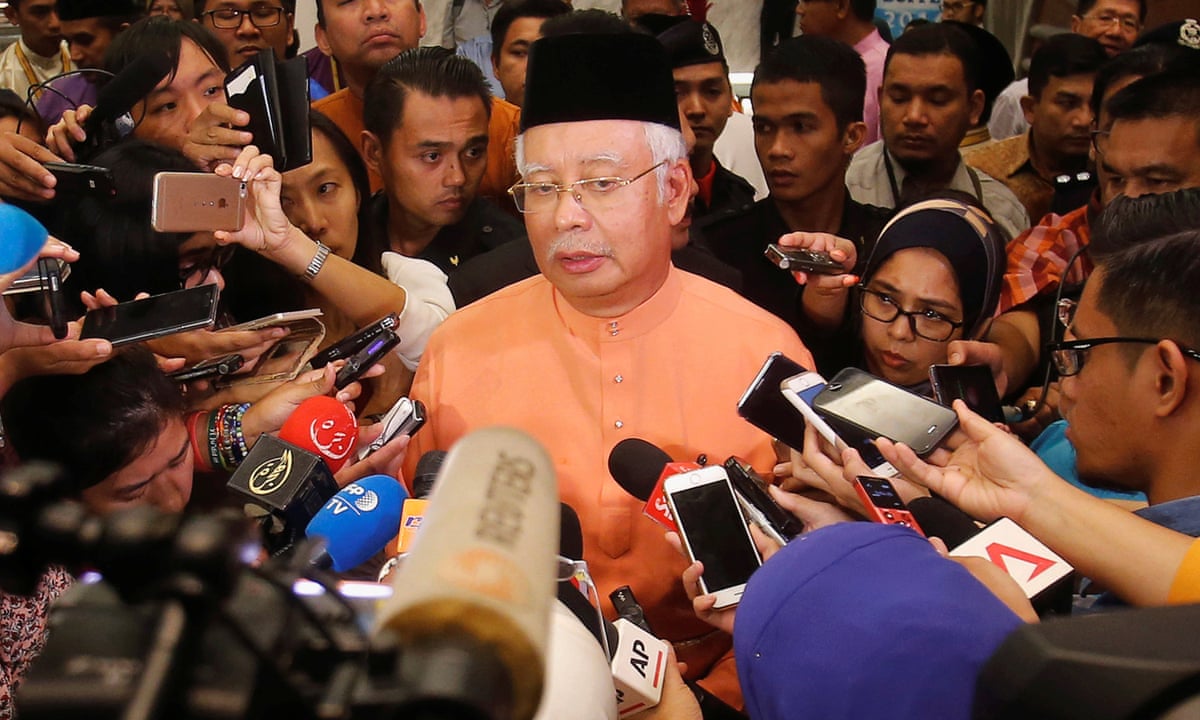
The 1Malaysia Development Berhad (1MDB) scandal is among the biggest cases of government misdeeds, embezzlement and money laundering in contemporary history. Why it happened, who was involved, where the money went, when key occasions unfolded and how gains were made by one party while justice eluded another—these questions make for a complicated narrative that merits careful examination as to what lessons can be drawn on governance and accountability in global finance.
Created in 2009 under then-Prime Minister Najib Razak, 1MDB was a sovereign wealth fund intended to spearhead Malaysia’s economic development through strategic infrastructure investments. But rather than doing what it said on the tin, more than USD 4 billion was embezzled via a web of shell companies, foreign accounts and celebrity middlemen. The money funded luxurious mansions, elite properties in New York as well as London, Hollywood movies and political campaigns.
Najib Razak was at the heart of the scandal, he not only set up the fund but benefited from more than USD 1 billion he had transferred into his own personal bank accounts. Jho Low, a Malaysian businessman who has long been involved in fraudulent activities, had orchestrated the elaborate network of frauds. Goldman Sachs even sold bonds to 1MDB, which made billions in fees despite all of its wrongdoings.
Funds which were earmarked for advancement in Malaysia located its way internationally. The transfers were camouflaged behind offshore entities, with means comprising of superyachts, private jets, artworks and even financing Hollywood film The Wolf of Wall Street. That kind of broad disbursement not only covered up the scent path but also revealed a porous international financial system that can very quickly wash away these kinds of huge amounts.
Founded in 2009, the 1MDB investigations gained momentum after a scandal in 2015 that resulted in Najib losing power at Malaysia’s first-ever replacement government ballot box defeat two years later. Court action disclosed unprecedented abuses, resulting in years of prison time and record fines for Najib. These investigations and asset recoveries span the globe – from the US to Switzerland to Singapore and beyond – revealing the destructive fingerprints of state-sponsored corruption long after it happened.
The 1MBD case is not just a national scandal — it exposes the deep, systemic weaknesses in global governance. It illuminates the ways in which lax regulation, regulatory capture and collusion between political elites and finance can crush nations while corroding public trust. Even more critical, it lays bare the shortcomings of global cooperation needed to combat transnational money laundering and obstacles to shielding sovereign wealth funds from exploitation.
Step one, countries need to implement stricter transparency and accountability requirements for sovereign funds. While regular audits by independent external bodies and mandatory disclosure in the public domain can reduce misuse. Second, international financial institutions should tighten up their anti-money laundering policies and say that they will not participate in corruption, no matter how high the fees are. Third, there is a need for global cooperation, through binding agreements to monitor illicit flows and repatriate stolen assets in an expedited manner. Fourth, political reforms to curtail executive branch overreach and strengthen democratic checks and balances matter.
The 1MDB scandal is thus a shocking revelation of the yawning gaps in sovereign wealth fund governance and global financial system governance. In a world where global investors frequently ignore national boundaries when seeking opportunities, the international community cannot afford to leave any more time for incremental reforms of public resource systemic abuses, but should urgently implement a series of tough strategic measures starting with binding international standards on sovereign wealth funds. The IMF and World Bank cannot sit by as passive observers; they need to lead by establishing mandatory transparency rules and rigorous governance structures for sovereign funds. These measures need to require routine, independent audits and public reporting of every major transaction and investment, not just the financial or legal necessities that corrupt actors so easily hide behind.
Parallelly, the financial industry has an urgent need to significantly strengthen its due diligence practices in banking and investment activities. The ease with which billions of dollars diverted from 1MDB could shift through banks worldwide dispels the illusion of existing anti-money laundering systems. Banks and financial institutions are to institute zero-tolerance policies on suspicious transactions based on a robust know-your-customer (KYC) framework and enhanced due diligence for politically exposed persons (PEPs). Longoverdue industry change will not come from pat-on-the-back compliance culture, but by embracing accountability through penalising complicit behaviour with more than just a fine viewed as ticket-granting.
Just as important, the empowerment of whistleblower protection globally. The corruption inside opens itself the most. But many insiders are still silent for fear of retaliation or career suicide. Whistleblowers should be protected by strong international norms and national legislation, thus promoting early disclosures so that courage can be rewarded at the first signs of wrongdoing. Without those protections in place, 1MDB’s complex fraud ring can shroud itself in secrecy for too long.
Innovation, too, must be mobilised in the fight against financial crime. Disruptive technologies like blockchain and artificial intelligence (AI) can enhance transparency, with immutable tracking of fund flows and real-time alerts for anomalous patterns. With these tools embedded into regulatory frameworks, illicit events will become extremely difficult to hide large amounts of money laundered successfully.
Last but not least, combating 1MDB-type corruption is the definition of a transnational problem that national piecemeal efforts cannot resolve. The creation of a strong international anti-corruption unit—with prosecutive powers and cross-border jurisdiction—is essential. Such a body would accelerate investigations, coordinate legal actions and asset recoveries to break down the international safe harbours in which kleptocrats hide, evade justice.
In conclusion, tackling corruption of 1MDB’s scale requires absolute global standards, unrelenting financial forensic investigation, insider empowerment with protection and technology capability as well as combined governmental action in law. In the absence of these strategic pillars, the threat of mega-corruption such as what we have seen in 1MDB will be deeply anchored within governance and justice systems across nations.
The 1MDB case is a powerful reminder that corruption is not only a national issue but also global strategic and economic challenges as it threatens the integrity of many political systems and drags down their economies and democracies. This calls for a strong, concerted international response as no effective consequence can be allowed to remain unpunished. Only in such collectively focused efforts is there a way to recover trust and prevent similar outrages going forward.
Fransiscus Nanga Roka
Faculty of Law University 17 August 1945 Surabaya and Managing Partner Law Firm Victorious Indonesia