
Africa
2027: What Bauchi Will Go For -By Usman Abdullahi Koli
If the state chooses wisely, it will not merely elect a governor; it will choose a direction. And in that choice lies the difference between repeating old cycles and beginning a new era of seriousness, moderation, and progress. The facts have spoken already. The rating only confirmed what careful observers long suspected: among those seeking to lead Bauchi in 2027, one man towers above the field, not by volume but by value.

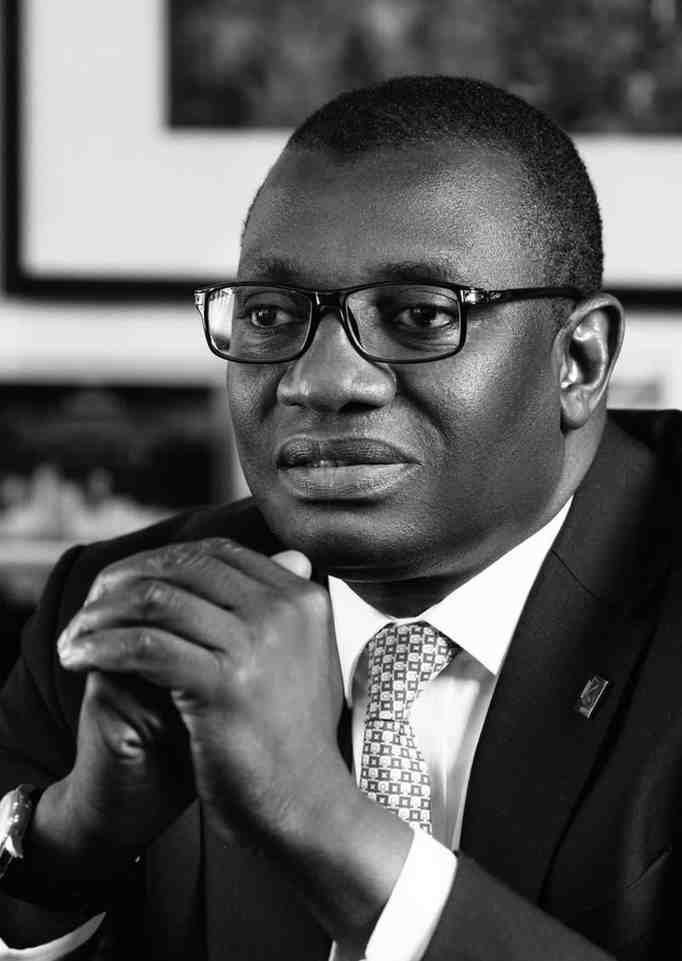
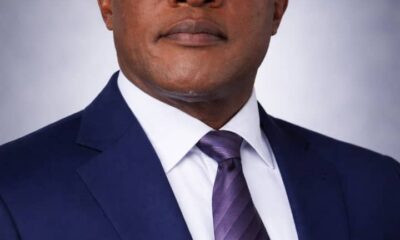
Every election cycle presents its own parade of familiar names, competing claims, recycled promises, and the steady noise of old structures fighting to retain control. Yet, once in a while, a different figure emerges, one who does not force himself onto the political stage but whose presence becomes impossible to dismiss once the facts are laid bare. In Bauchi’s 2027 contest, that figure is Dr. Bala Maijama’a Wunti, a technocrat whose rating, an emphatic ninety-two out of a hundred, did not arise from sentiment, political favour, or local cheerleading but from a sober evaluation of competence, character, and the demands of the state at this critical moment.
Political assessments are often clouded by emotion or the comfort of old alliances. But when the lens is sharpened and the noise muted, leadership becomes an equation: capacity on one side, the realities of the state on the other. Wunti fits that equation with uncommon precision. His education was not assembled for decoration but for the kind of responsibility that alters institutions. His technocratic journey through the country’s most complex sector, upstream investments in NNPC, reveals a man who has not merely observed governance from a distance but has lived its pressures, reconciled competing interests, and delivered outcomes where rhetoric has no value and excuses carry no currency.
I read an article in a national daily days ago; it chronicled priority areas for urgent action and listed the competency needed in any aspiring governor in Bauchi State. The development concerns raised about Bauchi’s future – industrial revival, agricultural expansion, the resuscitation of state-owned factories, and a stronger, more productive economy – require a leader whose skills have been shaped by practical experience, not political rhetoric. These priorities demand the kind of technical depth, negotiation capacity, and investment management that have defined Wunti’s career. His background directly aligns with what Bauchi must pursue in 2027: turning potential into production, reviving dormant assets, and creating the conditions for sustainable growth.
Bauchi needs a governor who can interpret development not as a slogan but as a process anchored in competence, structure, and discipline. Wunti’s track record in building functional systems and coordinating large-scale operations places him in the unique position to deliver the economic transformation the state seeks. His strengths reflect exactly what Bauchi requires at this critical juncture: a leader capable of guiding the state toward industrialisation, food security, and economic stability with clarity and quiet efficiency.
The rating that placed him ahead of the field is not a flattering gesture. It is the product of a structure of measurement: competence, leadership depth, strategic thinking, partnership ability, cultural acceptance, emotional connection, geopolitical balance, and public perception. On each, he did not just pass; he set a standard others struggled to meet. Ten in technocratic competence. Ten in strategic judgment. Ten in partnership strength. Ten in cultural acceptability. Nine in leadership under pressure. Nine in emotional connection, simply because he has not spent years appearing on political stages to court applause. Yet even that nine reveals something important: his appeal grows faster than those who have traded visibility for substance.
Bauchi politics is layered. It demands a candidate who understands tradition without being trapped by it, who commands respect without theatrics, who can negotiate with elders in the morning and speak to restless youth in the afternoon without losing authenticity. Wunti moves through these spaces with a quiet firmness. The traditional institutions know him. The religious circles trust him. Professionals admire him. Students recognise in him the possibility that competence can still matter. In a state where religious courtesy and cultural discipline are not optional traits but fundamental expectations, he carries himself with the kind of restraint that calms crowded rooms.
What sets him apart from the typical political class is not silence but the meaning of his silence. It is the silence of a man who has done difficult work in places where cameras do not go. It is the silence of someone who does not rely on political noise to validate himself. In a landscape where many arrive with political baggage or unresolved quarrels with the public, he stands without the weight of scandal, factional history, or personal controversy. Leadership, when stripped of slogans, returns to credibility, and credibility is one of the few currencies he holds in abundance.
His emergence from Bauchi South is not a matter of geography alone; it is a matter of balance. The state has spent years negotiating zonal sensitivities, and 2027 must settle that question without igniting old grievances. A candidate who enters without the shadow of dominance and without resentment from the other blocs gives Bauchi a better chance at political healing. Wunti’s profile fits that calculus neatly. He is neither a threat nor a pawn; he is a bridge.
Bala Wunti stands out for his disciplined, purposeful approach. He builds consensus across Bauchi’s three zones through deliberate engagement. Elders, clerics, and kingmakers recognize his steady leadership, while youth see clarity and consistency in his vision. His measured presence inspires confidence and demonstrates his ability to turn competence into effective governance.
The opposition may attempt to merge strength, but a candidate who stands outside the traditional rivalries becomes harder to paint into old narratives. That is his unique advantage. He is not burdened by decades of political quarrels. He is not tied to elite monopolies that divide communities. He is not associated with the old political theatre of dominance and retaliation. This neutrality is not weakness; it is rare political capital.
Bauchi, at this junction, needs a leader who can steady the state while lifting it. A leader whose background strengthens institutions rather than weakens them. A leader whose ambition is driven by service, not entitlement. When the state looks across the field, past familiar names, past comfortable alliances, past recycled ambitions, it finds one profile that captures competence without arrogance, reform without chaos, and unity without pretense.
It is no exaggeration to say that the state cannot afford a gamble in 2027. The stakes are too high, the divisions too deep, and the opportunities too fragile. What Bauchi needs is a new order built on discipline, balance, and quiet authority. A leadership that does not provoke the past but prepares the future. In Dr. Bala Maijama’a Wunti, that possibility stands fully formed.
If the state chooses wisely, it will not merely elect a governor; it will choose a direction. And in that choice lies the difference between repeating old cycles and beginning a new era of seriousness, moderation, and progress. The facts have spoken already. The rating only confirmed what careful observers long suspected: among those seeking to lead Bauchi in 2027, one man towers above the field, not by volume but by value.
Usman Abdullahi Koli,
mernoukoli@gmail.com.

















You must be logged in to post a comment Login