
Africa
753 Abuja Duplexes: “Corruption Don Tie Wrapper”, by Isaac Asabor

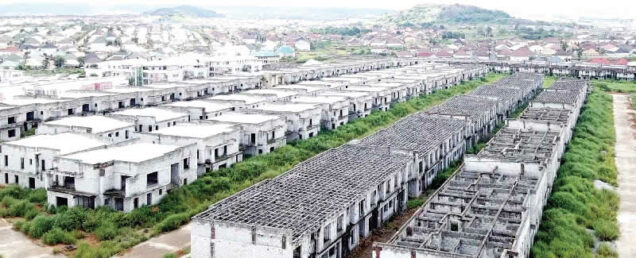
When the Economic and Financial Crimes Commission (EFCC) announced its largest-ever seizure of assets, a sprawling housing estate with over 753 luxurious properties in Abuja, it sent shockwaves across Nigeria. The discovery, which underscores the audacity of corruption in the country, left many Nigerians, including my colleague Mr. Igbinosa, shaking their heads in dismay. His succinct remark, “Corruption Don Tie Wrapper,” aptly captures the frustration of a populace watching its national wealth siphoned into private pockets.
In fact, the recent discovery of houses allegedly built with corrupt funds in Abuja is a stark reminder of how deeply entrenched corruption has become in Nigeria. These luxurious properties, which stand as silent monuments to greed and betrayal, expose the growing audacity of those who plunder public resources for personal gain. At a time when the majority of Nigerians grapple with rising inflation, unemployment, and crippling poverty, this revelation is not only disheartening but also indicative of a systemic failure in curbing corruption. Truly, this is a case of corruption “Don Tie wrapper,” with the fabric of governance and accountability seemingly strangled in its folds.
This expression perfectly captures the worsening state of affairs, as the discovery sheds light on the impunity that still pervades the corridors of power. Each unmasked illicit asset symbolizes opportunities stolen from the masses, funds that could have been directed toward education, healthcare, and infrastructure but instead found their way into private estates. If urgent measures are not taken to prosecute those involved and recover the looted funds, the statement “corruption don tie wrapper” may soon become a chilling mantra for a nation losing its fight against moral and economic decay.
The estate, situated on the outskirts of Abuja, sprawls over 150,000 square meters and has for years been shrouded in mystery. Passersby often speculated about its ownership, and now the EFCC has confirmed it was acquired with the proceeds of corruption by an unnamed high-ranking former government official. Property experts estimate its market value to run into tens of millions of dollars, further highlighting the gulf between Nigeria’s elite and its struggling majority.
Nigeria, which is no doubt Africa’s largest oil producer, is paradoxically a nation where the majority of its over 225 million citizens languish in poverty. Despite the promises of successive administrations to curb corruption, the problem has remained deeply entrenched, infiltrating every layer of governance. While public officials amass obscene wealth, ordinary Nigerians grapple with the soaring cost of living, failing infrastructure, and declining public services.
This disparity is perhaps best illustrated by the EFCC’s findings and the ongoing cases of graft in the country. From not a few political leaders alleged abuse of power to facilitate financial gains for their families to the mysterious ownership of luxurious estates, corruption is a recurring theme.
Without a doubt, corruption thrives in Nigeria because the structures meant to deter it are often compromised. Despite the EFCC’s efforts since its establishment in 2003, high-profile convictions remain rare. Those who are convicted often receive lenient sentences or manage to recover their ill-gotten gains through legal loopholes.
In fact, public accountability mechanisms are weak, and there is a pervasive culture of impunity. Additionally, the vast wealth generated by oil exports creates fertile ground for corruption, with revenues often mismanaged or outright stolen.
The EFCC’s recent seizure is a significant step, but it must go further. Nigerians deserve to know the identities of those responsible for such massive plunder, and the legal system must ensure they face justice. Beyond seizing assets, the proceeds must be transparently reinvested into projects that benefit the public, such as housing, education, and healthcare.
Civil society also has a role to play. Citizens must demand accountability, while the media should continue exposing corruption without fear or favor. Institutions like the EFCC need adequate funding and independence to operate without political interference.
The metaphor “corruption don tie wrapper” vividly illustrates how deeply corruption has entangled Nigeria’s socio-economic fabric. Until the government takes decisive action to untie this knot, the majority of Nigerians will continue to bear the brunt of a broken system.
The EFCC’s efforts may offer a glimmer of hope, but for Nigeria to truly overcome corruption, its leaders must prioritize transparency, accountability, and the welfare of the people above personal enrichment. Only then can the phrase “corruption don tie wrapper” become a relic of the past.























You must be logged in to post a comment Login