
Africa
A Wake-Up Call Or A National Embarrassment? Parsing Parliament’s Scathing Address To Akufo-Addo, by Isaac Asabor

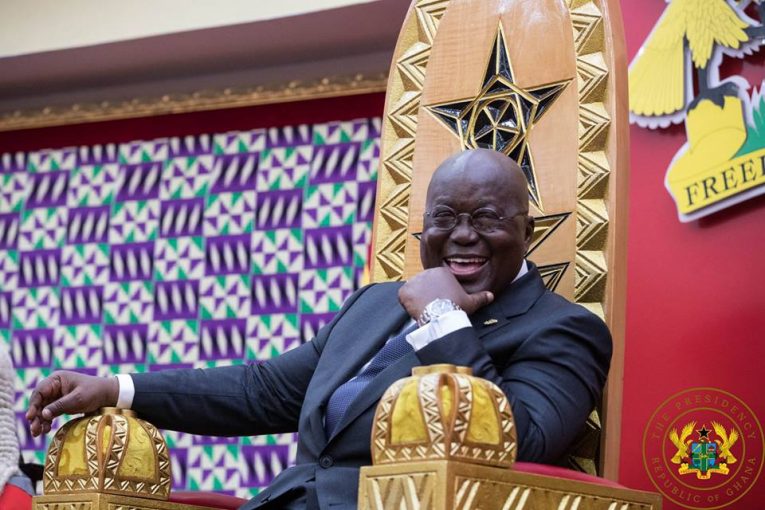
In the annals of Ghanaian democracy, moments of sharp rebuke between the executive and the legislature are not unprecedented. Yet, the recent acerbic critique delivered by the country’s parliament to President Nana Akufo-Addo’s administration has reverberated far beyond the chambers of government. Laden with biting rhetoric, the address has ignited a national conversation about governance, accountability, and the proper tone for inter-branch dialogue in a democratic society.
While many see this development as a necessary wake-up call for an administration perceived as out of touch with the realities of ordinary Ghanaians, others worry that the confrontational tone risks undermining the collaborative spirit essential for progress. Was this an act of accountability or an unwarranted display of antagonism? More importantly, what does it mean for the future of Ghanaian governance?
Central to the parliamentary critique was Ghana’s faltering economy. Once a beacon of stability in West Africa, the country has faced significant economic challenges in recent years. Rising inflation, spiraling debt, and a depreciating cedi have left many Ghanaians struggling to make ends meet. According to recent data, inflation stands at over 40%, with food prices surging beyond the reach of ordinary citizens. The national debt, meanwhile, has ballooned to unsustainable levels, prompting debates about the country’s fiscal management.
For many parliamentarians, the government’s handling of these issues has been inadequate. They accuse the administration of failing to implement bold, effective policies to address the economic downturn. Instead, they point to a pattern of blame-shifting and superficial interventions that have done little to alleviate the suffering of ordinary people.
Their grievances are not without merit. The government’s promises of job creation and economic stability have yet to materialize in meaningful ways. For the average Ghanaian, the disconnect between political rhetoric and lived reality is glaring. Parliament’s address, therefore, can be seen as a reflection of widespread public frustration, a sentiment shared by many citizens who feel abandoned by their leaders.
While the substance of parliament’s critique is difficult to dispute, its delivery has drawn mixed reactions. The speech was unrelenting in its condemnation of the administration, painting a picture of leadership that is both incompetent and indifferent to the plight of the populace. For supporters of the address, this unvarnished critique was long overdue. They argue that the gravity of Ghana’s challenges demands bold, unflinching truth-telling, even if it ruffles feathers.
Critics, however, see things differently. They contend that the tone of the address was unnecessarily combative, risking a breakdown in the relationship between the executive and the legislature. In their view, accountability does not necessitate antagonism. Instead, they call for a more collaborative approach, one that prioritizes solutions over grandstanding.
Indeed, history offers lessons on the pitfalls of excessive partisanship in governance. Democracies thrive when their institutions work together, even amidst disagreements. When accountability devolves into hostility, it becomes harder to build consensus around the policies needed to address pressing issues.
The recent parliamentary critique underscores the critical role of the legislature in Ghana’s democracy. As a check on executive power, parliament has a responsibility to hold the president and his administration accountable. This includes scrutinizing policies, monitoring the use of public funds, and ensuring that government actions align with the interests of the people.
However, this responsibility must be exercised judiciously. While robust debate and critical oversight are essential, they should not come at the expense of constructive engagement. The goal should always be to advance the public good, not to score political points or deepen partisan divides.
Parliament’s speech to Akufo-Addo, though reflective of genuine frustrations, raises questions about the balance between accountability and respect. How can the legislature fulfill its oversight role without jeopardizing the collaborative spirit necessary for effective governance? Striking this balance is no easy task, but it is one that Ghana’s leaders must navigate carefully.
For ordinary Ghanaians, the political drama unfolding in Accra may feel disconnected from their daily struggles. Many are less concerned with parliamentary speeches than with the rising cost of living, the lack of jobs, and the erosion of their purchasing power. They are tired of rhetoric and eager for results.
A professional colleague who recently visited Ghana on official assignment said sundry discussions with market women, taxi drivers, and young professionals, usually culminates in a common theme: a deep sense of frustration with the political class. He said, “A shopkeeper in Accra’s bustling Makola Market said, “We need leaders who will focus on fixing problems, not fighting among themselves,” saying that the sentiment captures the weariness of a populace that feels caught in the crossfire of political gamesmanship.
Parliament’s address, while cathartic for some, risks being seen as yet another instance of political posturing if it is not followed by tangible actions. Citizens want to see solutions, policies that create jobs, stabilize prices, and restore confidence in the economy. Anything less will deepen the sense of disillusionment that already pervades the national mood.
For President Akufo-Addo, the parliamentary critique should be seen as a wake-up call rather than an affront. While the tone may have been harsh, the underlying message is clear: the status quo is not working, and urgent action is needed to address Ghana’s challenges.
This requires a shift in approach. The government must move beyond rhetoric and focus on implementing policies that deliver real, measurable benefits to citizens. This includes investing in key sectors like agriculture, manufacturing, and technology to create jobs and drive economic growth. It also means addressing systemic issues like corruption and inefficiency, which continue to undermine public trust.
Equally important is the need for better communication. The administration must do a better job of engaging with citizens, explaining its policies, and demonstrating empathy for their struggles. In times of crisis, leadership is as much about perception as it is about action. Ghanaians need to see that their leaders understand their pain and are committed to easing it.
As Ghana navigates this challenging period, the path forward lies in unity and collaboration. The executive and the legislature must put aside their differences and work together to address the nation’s pressing issues. This requires humility on all sides, a willingness to listen, to compromise, and to prioritize the needs of the people over personal or political ambitions.
The stakes could not be higher. Ghana stands at a crossroads, with its economic and social stability hanging in the balance. The decisions made in the coming months will shape the country’s trajectory for years to come. Whether through fiery speeches or quiet negotiations, the ultimate goal must be the betterment of Ghana.
The scathing address delivered by parliament to Akufo-Addo’s administration is a moment of reckoning for Ghanaian governance. It highlights the deep frustrations of a populace grappling with economic hardship and a political class that must do better to meet their needs.
While the critique may have been harsh, it also serves as a reminder of the importance of accountability in a democracy. Leaders must be willing to face scrutiny, to accept criticism, and to adapt their approaches in response to changing circumstances. At the same time, those delivering the critique must do so in a manner that fosters collaboration and constructive engagement.
Ghana’s democracy is strong, but it is not immune to the challenges of division and discord. By working together, its leaders can overcome these challenges and build a brighter future for all citizens. The time for action is now, and the nation is watching.


















You must be logged in to post a comment Login