Africa
As Rivers’ Lawmakers Have Collectively Grown Big Teeth, Do They Have Big Lips To Cover It? -By Isaac Asabor
In the end, the elders remind us, a child who refuses to stop crying may not be in pain anymore; he may simply have grown addicted to attention. Rivers State deserves leaders who know when to bare their teeth, and when to close their mouths. In fact, proverbial put, Rivers need leaders who collectively grow big teeth, and have bigger lips to cover it.

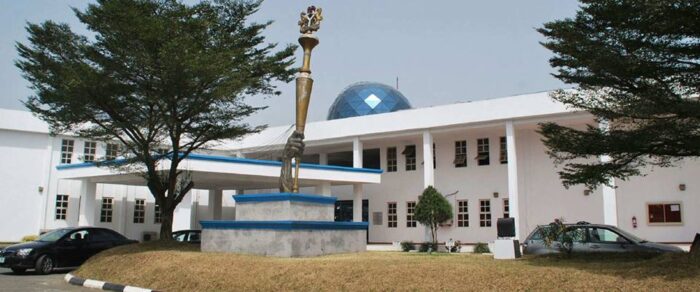
The elders say that when a child’s teeth grow faster than his lips, he will smile himself into trouble. That proverb captures, with uncomfortable accuracy, the current posture of the Rivers State House of Assembly. The lawmakers have bared their political teeth, sharp, pointed, and menacing, but the question remains whether they possess the restraint, wisdom, and institutional discipline, the “lips”, to cover them. Power, in African thought, is not merely about display; it is about control. Moreover, unchecked power often ends up biting its owner.
In every society, disagreement between leaders is inevitable. Democracy itself is built on contestation. In fact, there is a line between disagreement and fixation, between oversight and obsession. Rivers State appears to have crossed that line. What should have been a manageable political dispute between Governor Siminalayi Fubara and the legislature has hardened into a prolonged standoff, defined less by governance than by brinkmanship. The Assembly’s repeated recourse to impeachment threats has turned a constitutional safeguard into a political cudgel.
Another proverb warns that a child who cries endlessly soon forgets why he started crying in the first place. The Rivers lawmakers appear trapped in that cycle. What began as grievances, some legitimate, others clearly political, has become an all-consuming mission. Appeals for calm have poured in from respected elders, professional groups, and prominent Rivers indigenes. Even the President of the Federal Republic of Nigeria, President Bola Ahmed Tinubu, intervened, an extraordinary step that should have forced reflection. Instead, the quarrel has only intensified, as if restraint itself were now seen as weakness.
In African wisdom, stubbornness is not courage. A man who refuses advice, the elders say, walks alone into danger. Impeachment is not a toy to be picked up whenever tempers flare. It is the gravest instrument available to a legislature, meant for clear, egregious misconduct, not for settling scores or enforcing loyalty. When lawmakers reach for it too quickly, they reveal either a shallow grasp of constitutional responsibility or a calculated attempt to intimidate. Neither interpretation speaks well of the institution.
There is a saying that when two elephants fight, it is the grass that suffers. In Rivers State, the grass is governance. While lawmakers flex muscles and the executive digs in, unemployment remains stubborn, infrastructure gaps widen, and economic anxiety deepens. Citizens watch leaders quarrel over power while everyday problems wait unattended. A legislature obsessed with impeachment sends a troubling signal: that removing a governor matters more than improving lives.
Power, African elders remind us, is like holding fire in the hand. Whether you grip it tightly or loosely, you must know when to let go. The Rivers Assembly seems to have misunderstood this truth. The office of governor is not a ceremonial stool; it is backed by a popular mandate. To attack it recklessly is to weaken the entire political structure. Legislatures that forget the balance between authority and restraint often discover, too late, that they have undermined themselves.
The crisis also exposes a deeper confusion between personal interest and institutional duty. When lawmakers act as if the Assembly exists to prosecute factional battles rather than serve the public, suspicion naturally follows. As the proverb goes, when a blind man threatens to throw stones, he must be standing on one. The ferocity and haste of the impeachment push raise questions that have little to do with constitutional purity and much to do with political calculation.
African political wisdom values patience. Systems are designed to slow excess, not accelerate it. Procedure is not an inconvenience; it is the fence that keeps power from running wild. When lawmakers treat due process as an obstacle rather than a guide, democracy becomes theatre, loud, dramatic, and empty.
Equally damaging is the erosion of dignity. Institutions lose authority when they trade decorum for spectacle. There is an old saying that when a king begins to shout in the marketplace, something has gone wrong with the palace. Public threats, retaliatory gestures, and endless escalation suggest stress, not strength. They signal a system eating itself.
Beyond the political class, the consequences are real. Investors grow wary of instability. Civil servants become unsure whose directives will matter tomorrow. Ordinary Rivers people, already squeezed by economic hardship, see leaders consumed by a fight that offers them no relief. Political warfare is expensive, and citizens always pay the bill.
Respect for office is not optional in a democracy. Governor Fubara may not command universal loyalty within the political elite, but his mandate comes from the people. To treat that mandate casually is to insult the electorate itself. African tradition frowns on elders who quarrel in public while children watch; it teaches that leadership carries an obligation to model restraint.
This brings us back to the proverb in the headline. Big teeth are useless if there are no lips to cover them. Political bravado without foresight is reckless. Those who escalate crises often assume that today’s alliances are permanent and today’s advantage eternal. History teaches otherwise. Power shifts. Protectors disappear. Yesterday’s hunters become today’s prey.
Impeachment, once normalized as a political shortcut, rarely spares its inventors. Precedents have a way of returning, sharpened and redirected. Different hands may wield a weapon forged in anger today, but tomorrow may tell a different story. Wise lawmakers think beyond the moment; reckless ones think only of victory.
At its core, the Rivers crisis is not just about one governor or one Assembly. It is a test of political maturity. Can leaders subordinate ego to institution? Can ambition bow to stability? Can power be exercised without constantly being displayed? African wisdom answers plainly: the man who knows he is strong does not need to shout.
There is still room for recalibration. Dialogue has not expired. Reason has not vanished. Nevertheless, time is not patient with those who waste it. The longer this standoff drags on, the deeper the scars it leaves on governance, public trust, and Rivers State’s democratic standing.
In the end, the elders remind us, a child who refuses to stop crying may not be in pain anymore; he may simply have grown addicted to attention. Rivers State deserves leaders who know when to bare their teeth, and when to close their mouths. In fact, proverbial put, Rivers need leaders who collectively grow big teeth, and have bigger lips to cover it,