
Africa
Believe It Or Not, Nigeria’s Real Nightmare Is The Politicians Who Weaponise Tribe And Religion -By Isaac Asabor
Nigerians should begin to understand the fact that politicians remain Nigeria’s greatest problem because they have mastered the art of division. But they only succeed because Nigerians allow them to. When citizens finally refuse to be manipulated, when they refuse to see each other as enemies, politicians will lose their most potent weapon.

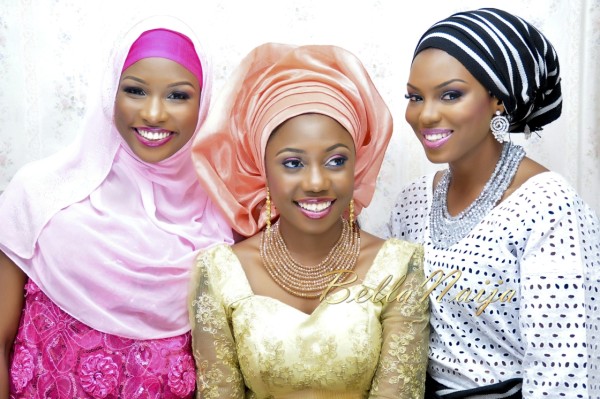
Nigeria’s greatest problem has never been its diversity. It has never been its ethnic plurality, its patchwork of cultures, or its colourful array of religious beliefs. These things, if anything, are the country’s natural strengths, its unmatched competitive advantage. The real curse has always been the people who deliberately turn these strengths into weapons: politicians who have mastered the destructive art of weaponising identity for power.
Today, Nigeria is frighteningly divided, more divided than at any other time in recent memory, and it is no accident. It is not a social mishap or an unfortunate coincidence. It is a direct outcome of years of reckless political behaviour and a cynical strategy of divide-and-rule embraced by the ruling class. When politicians incite division for votes, society pays the price long after the ballots are counted.
Politicians remain Nigeria’s greatest problem because they profit from disunity. They inflame the emotions that create fear, bitterness, and suspicion, and then pretend to offer themselves as the only solution. It is a vicious cycle that has plunged the country into a depth of mistrust that now threatens national cohesion.
To understand the depth of Nigeria’s current division, one must look beyond everyday arguments on social media or the silent, simmering tensions in neighborhoods across the country. The deeper issue lies in the political choices made at the highest levels, choices that consistently put electoral advantage above national stability.
For decades, political actors have fed Nigerians a toxic narrative: your neighbour is your problem; your fellow citizens are your enemies; only your tribe or religion can protect you. As these falsehoods gained legitimacy, they reshaped how citizens see one another. Instead of being Nigerians first, people have been conditioned to see themselves primarily as Hausa, Igbo, Yoruba, Fulani, Christian, Muslim, or traditionalist. This is not a natural evolution of identity. It is an engineered outcome.
At this juncture, it is germane to ask, “How do politicians keep using tribe and religion? The answer to the foregoing question cannot be farfetched as the formula is simple, crude, and effective, especially in a country with deep-rooted social divisions. Aptly put, politicians divide people emotionally, then conquer them politically.
In fact, identity politics gives politicians ready-made voter blocs. It eliminates the need for competence, performance, or accountability. Why show results when you can bank on tribal sentiments? Why build infrastructure when you can build fear? Why address unemployment, inflation, or insecurity when you can simply tell a community that you are their “son,” their “brother,” their “protector,” or their “defender” against the imagined threats from other ethnic groups?
This model ensures that failure has no consequences. A politician who ruins the economy can still win elections as long as he can successfully paint an opponent as an “outsider.” An incompetent leader can still enjoy blind loyalty simply because he shares a surname, hometown, or religious affiliation with the people he is deceiving.
Expectedly, dividing the people along religious and tribal lines, which is invariably political manipulation, has huge and disastrous consequences. Without a doubt, Nigeria is living through the consequences of these irresponsible tactics. And the costs are staggering.
For instance, many Nigerians now approach national conversations with a mindset shaped not by reason or facts but by ethnic or religious lenses. Every policy, appointment, or security decision is instantly interpreted through tribal fault lines. It is almost impossible to discuss national issues without people taking sides based on where they come from, not what is true.
In a similar vein, nation-building requires trust and shared purpose. But in Nigeria today, the sense of collective destiny has been badly eroded. Citizens do not see themselves as one people striving for a common future. Instead, they see themselves as clusters of ethnic camps caught in a perpetual contest of “us versus them.”
Still in a similar vein, the public square has become a battlefield. Politicians drop inflammatory statements like fuel, knowing supporters will ignite them into flames. The moment divisive speech gains traction, political actors retreat into strategic silence, watching the chaos they created unfold.
Also, it is in the interest of self-serving politicians to keep the country dysfunctional. A united, economically empowered population would be far harder to manipulate. Therefore, they maintain a cycle of hardship, and then exploit the frustration by diverting public anger toward ethnic and religious scapegoats.
Given the backdrop of the foregoing view, one cannot but ask, “How come Nigeria became more divided than ever? This preceding question can easily be understood, particularly when seen from the perspective of the fact that Nigeria has always been diverse, but this current level of division is unprecedented because political campaigns aggressively centre tribe and religion.
Besides, the media and social platforms amplify partisan narratives, while state institutions are often staffed based on loyalty, not merit and political actors openly threaten or demonize regions they cannot control.
Not only that, elections framed as ethnic battlegrounds, not democratic contests. In fact, the result is a nation where every political dispute becomes an ethnic war and every national tragedy is read through religious bias.
Perhaps the most infuriating part of all this is the sheer hypocrisy of Nigerian politicians. They preach division to the masses while enjoying unity among themselves. A Yoruba politician who incites his community against the Igbo will have Igbo godfathers funding his campaign. A Northern political figure who accuses Southerners of marginalizing the North will happily form alliances with southern elites.
They divide us during election cycles but unite when sharing political spoils. To them, tribe is a political weapon; it is not a principle. Religion is a rallying tool; it is not a moral compass. Thus, Nigerians are the ones paying the price. Explanatorily put, while politicians enjoy the benefits of orchestrated conflict, ordinary citizens suffer the consequences:
To a large extent, businesses avoid expansion into “hostile” regions, while families discourage inter-ethnic marriages, and students grow up absorbing narratives of suspicion. In addition to the foregoing, communities become segregated along ethnic lines, and people assume the worst about each other.
The saddest part? Many Nigerians now defend politicians who harm them simply because they share ethnicity or religion. It is a self-destructive loyalty that keeps the political class powerful and the citizens powerless.
At this juncture, it is expedient to opine that Nigeria will not progress until the citizens recognize the bitter truth that says the country is not failing because it is diverse; it is failing because politicians are exploiting that diversity.
From independence till now, the story remains the same, political elites playing the same old game, and the masses falling for it again and again.
At this point, it is expedient to ask, “What must Nigerians do to stem the tide of widening division?” To answer the foregoing question, it is germane to say if Nigeria is to move forward, citizens must reject tribal baiting during elections, demand competence, not ethnic affiliation, hold leaders accountable regardless of tribe or religion, and stop voting emotionally and start voting intelligently.
Also, Nigerians should start challenging divisive rhetoric, whether from politicians, clerics, or community leaders as well as teaching younger generations that identity is not a political tool but a cultural strength.
Without any iota of exaggeration, Nigeria will only heal when the people stop dancing to the tune played by the political class.
Nigerians should begin to understand the fact that politicians remain Nigeria’s greatest problem because they have mastered the art of division. But they only succeed because Nigerians allow them to. When citizens finally refuse to be manipulated, when they refuse to see each other as enemies, politicians will lose their most potent weapon.
In fact, Nigeria’s real liberation will not come from a new constitution or a new president alone. It will come when citizens stop allowing politicians to control their minds through fear, tribe, and religion.
Until then, the country will remain a giant with broken limbs, wounded not by its diversity but by those who profit from turning Nigerians against themselves.
















You must be logged in to post a comment Login