Forgotten Dairies
Beyond The Headlines: Why Nuhu Ribadu’s Performance As NSA Deserves Recognition -By Adewole Kehinde
The rescue of abducted citizens has also become one of the defining features of Ribadu’s tenure. Under his watch, the Office of the National Security Adviser (ONSA) coordinated numerous rescue missions that led to the safe return of thousands of kidnapped Nigerians.

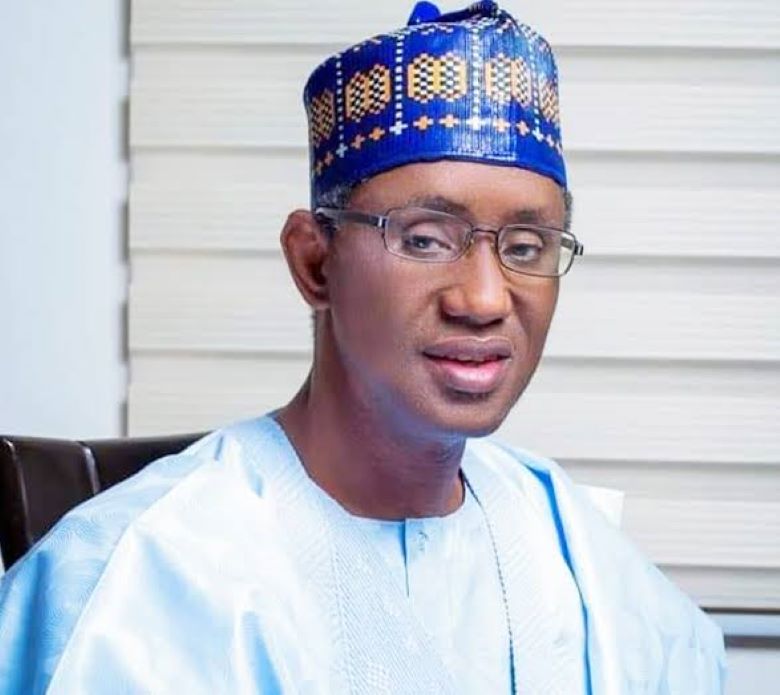
As Mallam Nuhu Ribadu marks three years in office as Nigeria’s National Security Adviser (NSA), it is both appropriate and necessary to reflect on a tenure that has redefined the country’s approach to national security and strengthened public confidence in the fight against insecurity.
When President Bola Ahmed Tinubu appointed Ribadu as National Security Adviser in June 2023, Nigeria was grappling with multiple security challenges, including terrorism, banditry, kidnapping, separatist agitations, oil theft, and organized criminal networks operating across different regions of the country. Expectations were high, given Ribadu’s reputation as a disciplined public servant and anti-corruption crusader. Three years later, the results of his stewardship have justified that confidence.
Perhaps the most remarkable achievement of Ribadu’s tenure has been the significant degradation of terrorist and bandit networks that once operated with alarming impunity. Under his leadership, security forces have successfully neutralized more than 13,500 insurgents and bandits across various theatres of operation. These gains have not only weakened criminal organizations but have also restored hope to communities that had endured years of violence and fear.
Equally noteworthy is the success recorded in the area of de-radicalization and reintegration. Through coordinated efforts involving security agencies and relevant stakeholders, more than 124,000 insurgents and their family members have surrendered and entered rehabilitation programmes. This demonstrates a balanced strategy that combines military pressure with non-kinetic measures aimed at addressing the root causes of violent extremism and ensuring sustainable peace.
One of Ribadu’s most enduring contributions has been his ability to transform Nigeria’s historically fragmented security architecture into a more unified and intelligence-driven network. For decades, operational silos among security and intelligence agencies often undermined efficiency and delayed responses to emerging threats. Ribadu has worked tirelessly to foster collaboration, information sharing, and joint operations among the military, intelligence agencies, police, and other security institutions.
This improved coordination has enhanced operational effectiveness and ensured that security agencies work towards common national objectives rather than pursuing isolated mandates. The result has been a more agile and proactive security framework capable of responding swiftly to threats across the country.
The rescue of abducted citizens has also become one of the defining features of Ribadu’s tenure. Under his watch, the Office of the National Security Adviser (ONSA) coordinated numerous rescue missions that led to the safe return of thousands of kidnapped Nigerians.
Among the most notable were the successful rescues of the Kuriga schoolchildren and the students of the Federal University of Gusau. These operations demonstrated not only the effectiveness of intelligence-led security interventions but also the commitment of the government to ensuring that victims of criminal abductions are safely reunited with their families. For many Nigerians, these rescues represented tangible evidence that the nation’s security institutions were becoming more responsive and capable.
Beyond conventional security challenges, Ribadu has also demonstrated a clear understanding of the relationship between economic stability and national security. His leadership has extended to tackling economic sabotage and activities capable of undermining Nigeria’s financial system.
A notable example was the enforcement action against the cryptocurrency exchange Binance, which was aimed at protecting the value of the naira and safeguarding the nation’s economic interests. While debates may continue regarding the broader implications of such actions, there is little doubt that Ribadu approached the issue from the standpoint of defending Nigeria’s economic sovereignty and national security.
His tenure has also witnessed substantial improvements in Nigeria’s international security partnerships. Recognizing that modern security threats are increasingly transnational, Ribadu has prioritized intelligence sharing, strategic cooperation, and defence collaboration with key global partners.
Particularly commendable is his role in forging a robust Joint Working Group on national security with the United States, a development that has strengthened bilateral cooperation on intelligence, counterterrorism, and capacity building. Equally significant was Nigeria’s hosting of the UK–Nigeria Security and Defence Dialogue in Abuja, which further enhanced strategic engagement between both countries and created new opportunities for cooperation in addressing evolving security challenges.
These diplomatic and security engagements have elevated Nigeria’s profile as a responsible partner in regional and global security efforts while providing critical support for domestic security operations.
No security leader operates in a perfect environment, and Nigeria’s security challenges remain complex and evolving. However, fairness demands that progress should be acknowledged where it exists. The security situation confronting Nigeria today, while still challenging, is considerably more manageable than what existed three years ago. The gains recorded in counterterrorism, hostage rescue, intelligence coordination, de-radicalization, economic security, and international cooperation are neither accidental nor insignificant.
Mallam Nuhu Ribadu’s tenure as National Security Adviser has been characterized by purpose, coordination, innovation, and measurable results. His leadership has demonstrated that effective security management requires not only force but also intelligence, collaboration, strategic thinking, and strong political will.
As he completes three years in office, Nigerians have every reason to commend his service and encourage the continuation of policies and reforms that have contributed to strengthening the nation’s security architecture. While much work remains to be done, the achievements of the past three years provide a solid foundation upon which a safer, more secure, and more stable Nigeria can be built.
Adewole Kehinde is a public affairs analyst and commentator on governance, security, and national development. Email: kennyadewole@gmail.com 08166240846