
Africa
For Nigeria, the Stars Have Departed -By Patrick Iwelunmor
Nigeria stands today like a wounded giant, staggering yet alive, flawed yet full of promise. The stars have departed, but they can return. What the nation needs now is not another cycle of lamentation but a courageous march toward rebirth. With honesty, discipline and visionary leadership, Nigeria can still reclaim its greatness. But the window is narrowing and history will not forgive another generation of squandered potential.

There are moments in the life of a nation when the darkness feels unnervingly complete, when the familiar constellations that once offered direction seem to vanish at once. Christopher Okigbo understood this condition of despair when he wrote that famous poem. Today, that image hangs over Nigeria like a heavy omen. For a country so lavishly endowed, a country whose map is littered with blessings that many nations can only envy, the deepening darkness is not the consequence of a lack of gifts but a lack of guardians. Every state boasts at least one natural resource capable of lifting its people out of poverty. From mineral belts to fertile plains, from inland waterways to the once-mighty oil reserves, Nigeria has never lacked what it needs to flourish. What it has lacked, and still lacks, is the disciplined and visionary leadership required to convert possibility into prosperity for more than two hundred million citizens.
The tragedy is made even more unforgivable by the fact that Nigeria’s greatest resource has never been its crude oil or its minerals but its people. Dynamic, intelligent, creative and resilient, Nigerians form a mosaic of identities that ought to have been a national treasure. Since independence, we have celebrated our cultural diversity as a strength. Yet our leaders have twisted this diversity into a tool of manipulation. Ethnicity is weaponised, religion is traded like currency, and the result is a broken national consciousness where unity is fragile and suspicion thrives.
Recent events have further exposed the fragility of the state. When retired naval officer Commodore Kunle Olawunmi spoke of political complicity in the sponsorship of insurgency, Nigerians did not dismiss him. They recognised the sound of truth, painful and familiar. He was not ranting; he was revealing a rot many had sensed but feared to articulate. His revelations echoed the lament of a patriot who had watched the country decay from the inside and could no longer remain silent.
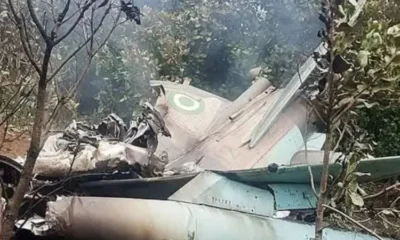
The murder of Brigadier General Mohammed Uba by ISWAP fighters forced the nation to confront an even more unsettling reality. The Nigerian Army, once revered as a symbol of honour and discipline, appears to have been infiltrated and compromised. Reports that terrorists intercept military intelligence are not merely troubling; they point to a system collapsing from within. A country is in grave danger when those entrusted with its defence cannot distinguish between allies and adversaries. It is a dangerous hour when the enemy is both outside the gates and within the inner sanctum of strategy.
As if these tragedies were not enough, Nigerians awoke to news of a horrifying attack on worshippers in Eruku village in Kwara State, where bandits took the lives of four innocent people. Incidents like these justify Nigeria’s designation as a country of particular concern. They also underline a darker truth: the state is losing its monopoly over violence and citizens are left to navigate a landscape of fear. And while the dust and climate of anxiety triggered by the abduction of twenty-five schoolgirls in Kebbi State had yet to settle, factions of the PDP were seen on live television exchanging blows, not necessarily out of any love for the party but in the desperate pursuit of stomach infrastructure.
It is no surprise that the atmosphere feels unbearably heavy. Insecurity, economic hardship and leadership failures have settled on the country like an immovable weight. A nation once vibrant with music, laughter and ambition now feels cloaked in melancholy. From Sokoto to Bayelsa, from Lagos to Maiduguri, exhaustion has become a national temperament. Nigerians love their country fiercely but often feel betrayed by its inability to love them back. And as Ola Rotimi’s Ovonramwen Nogbaisi would say, loving someone who does not love you in return is like shaking a huge iroko tree to make tiny dew drops fall, a Sisyphean labour in futility.
Even football, the last surviving symbol of unity, has not been spared. The Super Eagles’ failure to qualify for two consecutive World Cups feels like a metaphor for national decline. A country once celebrated for flair, skill and resilience now stumbles in the same manner its institutions do. One social commentator captured the national mood when he said that if someone explains Nigeria’s problems to you and you understand, your chances of going mad are very high. Beneath the humour lies an unsettling truth.
Yet even in this gathering darkness, Nigeria remains salvageable. The stars may have departed, but they have not died. The crisis is not one of destiny but of leadership. To rebuild, the country must embrace sincere institutional reform. Security agencies must be freed from political interference so that competence, not loyalty, determines appointments. Intelligence systems must be rebuilt, compromised officers removed and modern, data-driven strategies adopted. Only then can security rise above guesswork and outdated methods.
Governance must also be reimagined. The country cannot survive on systems designed for a bygone era. A new political culture anchored in transparency, accountability and measurable outcomes is urgently required. The judiciary must reclaim its independence. Anti-corruption agencies must enforce justice without fear or favour. Local governments must be empowered to drive development where it matters most.
Economic revival demands an equally bold shift. Nigeria must begin to treat diversification not as a slogan but as a national emergency. Agriculture, mining, manufacturing, tourism and the creative industries can drive growth if given stable policies, functional credit systems, modern infrastructure and a business environment that does not punish ambition.
More importantly, Nigeria needs a cultural reawakening. Citizens must be encouraged to see themselves not as pawns in political games but as stakeholders in a shared destiny. Civic education must be strengthened. Hate speech must be confronted. Merit must be restored as the foundation of progress. A nation cannot heal if its people retreat into ethnic fortresses every time crisis looms. Healing begins when identity becomes a bridge rather than a weapon.
Nigeria stands today like a wounded giant, staggering yet alive, flawed yet full of promise. The stars have departed, but they can return. What the nation needs now is not another cycle of lamentation but a courageous march toward rebirth. With honesty, discipline and visionary leadership, Nigeria can still reclaim its greatness. But the window is narrowing and history will not forgive another generation of squandered potential.




















You must be logged in to post a comment Login