Global Issues
From Emissions to Liability: The Legal Radicalism of US Climate Superfunds -By Fransiscus Nanga Roka
The United States has perfected the art of climate speech without climate justice for far too long. It has honed the act of worried wringing hands, while allowing average folks to bear the cost. The problem with climate superfunds is not that they go too far, but rather than they finally seem to cut through the bullshit. Thus they threaten to reveal the original falsehood of fossil fuel: those who profited from fuelling climate damage could get rich from the flames while leaving ordinary citizens holding the hose.

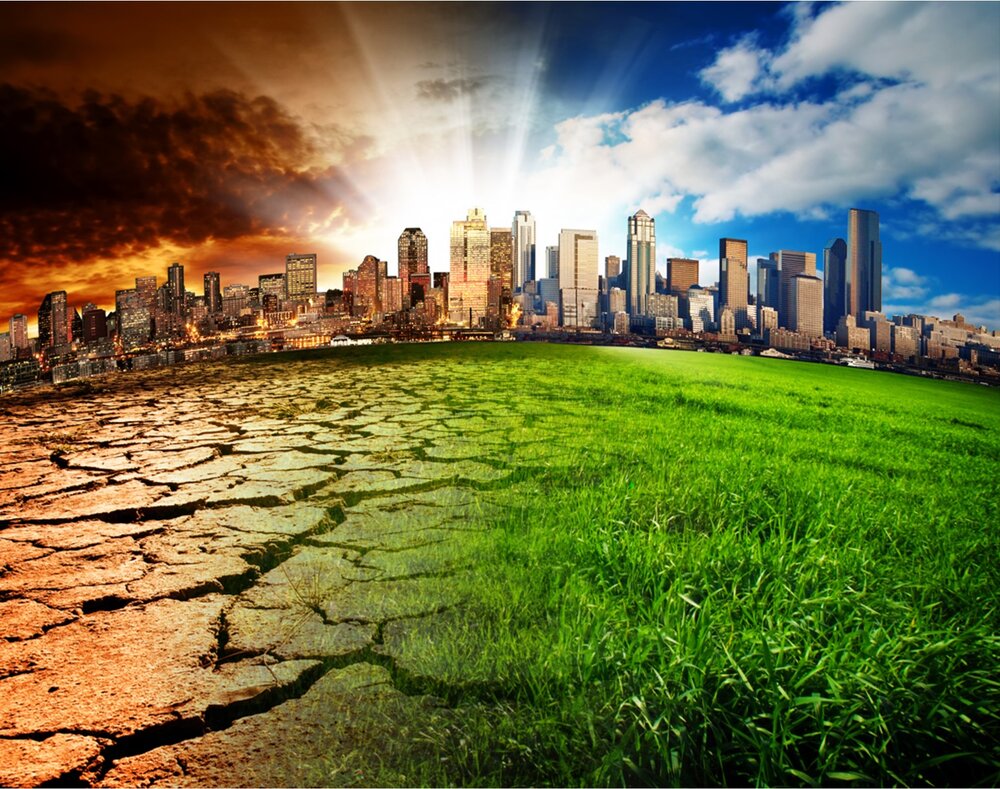
The fossil fuel industry spent decades selling the world a very simple story: climate destruction is (or was) everybody’s problem, therefore nobody should foot the bill. Meanwhile oil giants continued to rake in mega profits, governments received their royalty and tax revenue with little rancor for the most part, reported by agenda driven mainstream media, the users are urged ad nauseam about personal responsibility while hiding the true price of planetary degradation left (more or less) on society. Catastrophic flooding of towns, eroding coastlines collapsing into the sea bits by incidentally purchased property and twisted trees staggering again here a flooded house in Wales; burned forests where children play wilfully unsafe near blackened countryside bursting out charcoal cliffs crackling air mass glowing amber all showing what is actually pushed apart. Such arrangement was never economically honest. It was never morally defensible. And finally, it is now being contested in the courts.
That is what renders US climate superfund laws politically incendiary and legally revolutionary. They do not just simply ask polluters to change their future emissions. More dangerously they hit on the fact who pays for all of this wreckage that has already arrived? This is the question that has stymied political actors for years, as we wobble on a sword of climate measured in carbon parts per million: once climate change manifests itself from vaguely atmospheric abstraction to fully realized financial liability, then those who control government lose all pretense at theater. And here comes the talk of “net zero by 2050” that has, all along, sounded like what it often was: a device to postpone action with some spit-and-polish to make it sound morally decent.
This rage directed towards climate superfunds is telling. They have been dubbed punishing, radical, anti business even lawless by critics. But what exactly is extreme? Charging the public for costs associated with climate adaptation by those very enterprises responsible for enormous carbon emissions? Or letting those same corporations privatize profits, while socializing catastrophe? It is not radical to make powerful actors pay for harm. What is radical or what has always been radical, really is the legal and political permissiveness that let a few industries actively assist in destabilising the climate then authoritatively scuttle off from paying up.
The superfund structure is brilliant perfection, a replacement for climate’s favorite excuse diffuse responsibility with direct accountability. Climate politics stripped away the tread of complexity for years. Emissions are global. Supply chains are tangled. Causation is cumulative. Everyone uses energy. So, we are told, assigning blame is just too hard or complicated. But that argument has always served more as an analysis exit than anything. Complexity became immunity. Scale became excuse. The bigger the injury, they could more readily then assert that no one was ever truly accountable.
Climate superfund laws say no to that cowardice. They claim historic contribution matters, they argue knowledge is important, and profit too, all public harm or loss needs to be accounted for. They announce that carbon capitalism, which has long eluded the consequences of its destruction, will not depart quietly but it is departing with much noise. And that hubbub is exactly what scares the hell out of defenders of reaction.
Because once liability enters the chat, everything changes. That leads issuers & investors to stop reading climate risk as abstractions in disclosure language and more as a potential source of litigation. Clearly standoffs over regulation but as statehouses become courts, not on restitution. Corporate public relations campaigns start to feel a little embarrassing when compared with seawalls, disaster recovery budgets and moving expenses. We are past the question of whether firms will publish shiny sustainability reports. The question is whether they can keep profiting from a business model with its social costs too glaring to conceal.
Opponents predict economic anarchy, of course. They always do. Any effort to attach accountability on the permanent ruling class is denounced as an attack on prosperity. However the graver threat to prosperity is climate breakdown. Washed out roads, unaffordable insurance and heat-struck labor have little to do with growth, nor could storm damage or the collapse of municipal budgets inspire it. Climate superfunds threaten not the economy as such, but a specific part of it. To the narrower and uglier design: a system where private wealth is sheltered while public systems bear the pain.
And as I mentioned, that deeper and broader scandal is worth being honest about. Climate superfunds are only radical because the baseline has been so obscene. In any sane legal order, the notion that major actors whose irresponsible behaviour contributed to mass social harm should be bearing at least part of the cost of remedying it would be uncontroversial and banal. It would be expected. And it wouldn’t be labelled as “ideological warfare”. It is less an indication of the quality of legislation than how long we have lived in a world where impunity has become the norm.
Of course, these laws on their own won’t address the climate crisis. They will be contested, watered down, attacked and in certain instances just overturned. Big sectors do not walk away quietly, and politicians who rely on their cash seldom have an awakening of principle. But that does not lessen the value of a moment. Climate superfunds are an inflection point in legal imagination. They shift the discussion from an abstract duty to a concrete debt, futuro mythic aspiration into present obligation, emissions back onto liability. And that, really, is why they are important.
The United States has perfected the art of climate speech without climate justice for far too long. It has honed the act of worried wringing hands, while allowing average folks to bear the cost. The problem with climate superfunds is not that they go too far, but rather than they finally seem to cut through the bullshit. Thus they threaten to reveal the original falsehood of fossil fuel: those who profited from fuelling climate damage could get rich from the flames while leaving ordinary citizens holding the hose.
Fransiscus Nanga Roka
Faculty of Law University 17 August 1945 Surabaya Indonesia