
Africa
From Fear To Violence: Nigeria’s Descent, When Hell Invades Benue -By Prince Charles Dickson Ph.D
Governor Alia is half-right: unfettered self-defense risks anarchy. But his alternative—centralized policing—ignores why current forces fail. The solution lies between these poles: state-sanctioned, community-led protection. Train farmers to guard farms under army oversight. Fund early-warning systems via local peace committees. Prosecute attackers and complicit officials.

“There are only two things to worry about,
either you are healthy or you are sick.
If you are healthy, then there is nothing to worry about.
But if you are sick there are only two things to worry about,
either you will get well or you will die. If you get well,
then there is nothing to worry about. But if you die,
there are only two things to worry about,
either you will go to heaven or to hell.
If you go to heaven, then there is nothing to worry about.
And if you to go hell, you’ll be so darn busy shaking hands with your friends you won’t have time to worry.”
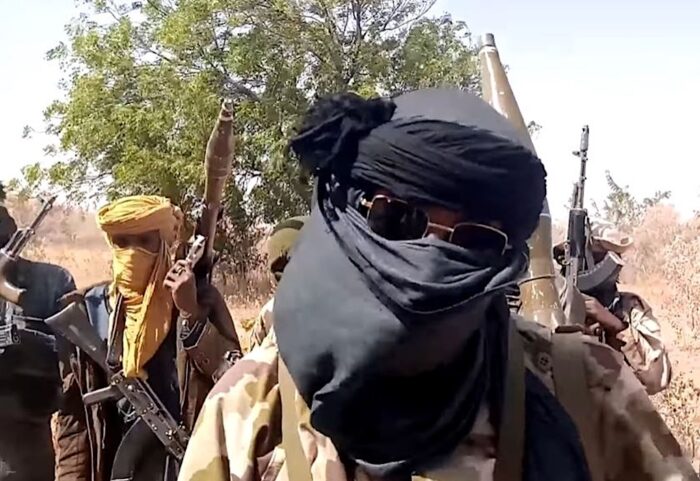
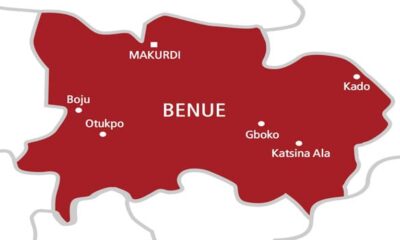
The old adage offers a deceptively simple hierarchy of worries: health versus sickness, life versus death, heaven versus hell. For millions in Nigeria’s Benue and Plateau states, this existential calculus has become a daily reality. When sickness takes the form of relentless violence, death arrives not as a natural end but as a machete-wielding stranger in the night. And hell? Hell is now a burning village in Yelwata, where in June 2025, over 200 Christians—mostly women, children, and displaced families—were slaughtered by militants. Survivors now face cholera and typhoid outbreaks, their water sources poisoned by corpses. If this inferno continues unchecked, Nigeria will witness a terrifying transition: from fear to violence, as citizens abandon the state and take up arms in self-defense.
The Yelwata attack was not an anomaly but an escalation in a campaign Human Rights Watch describes as “ethnic cleansing”. Eyewitnesses detail how 40+ gunmen on motorcycles encircled the village, systematically torching homes and executing families. One survivor, Godwin Amatembe, recounted how his sister and her children burned alive after attackers barred their escape. The perpetrators, according to Catholic archivist Fr. Remigius Ihyula, operated from neighboring Nasarawa State with impunity, aiming to “clear land to claim it”. This violence is religiously charged: 97% of Yelwata’s residents were Catholic, targeted on dates like Christmas, Easter, and Palm Sunday. Yet international media often obscure this, attributing killings to “farmer-herder tensions” or “climate change”. As one priest lamented: “40 of my people were not killed because of global warming, but because they were Christians”.
The State’s Failure: makes it look like from condolences to complicity as Nigeria’s institutions oscillate between frustration and futility: Regarding the senate “We are tired of writing condolence letters,” declared spokesperson Yemi Adaramodu after the Benue massacre. On issues of security forces: Despite military deployments, attackers operate for hours unchallenged. Survivors report soldiers arriving only after massacres end. The state Governor Hyacinth Alia rejects self-defense pleas, calling instead for “community policing”, while critics accuse Nasarawa’s government of harboring militants.
The Pentecostal Fellowship of Nigeria (PFN) summarizes this collapse: “The current security system has failed us… What is happening in Benue is not a case of two parties fighting; it is an invasion”. When the state cannot—or will not—protect citizens, the descent from fear to retaliatory violence becomes inevitable.
There is always a tipping point, as self-defense replaces self-preservation. The truth is that the voices demanding armed self-defense is growing louder, groups like HURIWA endorse community-led defense forces, citing the success of Borno’s Civilian Joint Task Force against Boko Haram. The Chief of Defence Staff Gen. Christopher Musa proposes recruiting “trustworthy youths” as vigilantes under military oversight. And protests erupt as IDPs are slaughtered in “safe” camps.
Governor Alia warns against “sentiments and emotions,” fearing anarchy. But when a state cannot stop children from burning alive, moral arguments against self-defense ring hollow. The path from victim to avenger shortens with each unattended mass grave.
For me, and many analysts, practitioners in the space, there is no time than now to really discuss community policing, as one of the bridges back from the brink,
kinetic solutions alone fail because they treat symptoms, not roots. Sustainable security requires community ownership.
The fact is that local intelligence works, as Gen. Musa stressed, communities must “root out insiders giving information to attackers”. Hybrid vigilantism can be regulated. Civilian forces under military supervision (like Borno’s CJTF) reduce collateral damage. We just need to improve on it.
The warning is there, we need to choose if it is shaking hands in Hell or building heaven on earth. The worry-adage ends with hell as a place of “shaking hands with friends.” But in Nigeria, hell is a mother watching her children butchered. If community policing fails, a dangerous outcome amongst many remains: State Collapse, citizens arm en masse, igniting sectarian civil war.
Governor Alia is half-right: unfettered self-defense risks anarchy. But his alternative—centralized policing—ignores why current forces fail. The solution lies between these poles: state-sanctioned, community-led protection. Train farmers to guard farms under army oversight. Fund early-warning systems via local peace committees. Prosecute attackers and complicit officials.
Whether it is Benue, Plateau, Katsina or Zamfara, Sokoto or Borno states, we keep playing at the last crossroads. Benue’s survivors have passed through the adage’s tiers: from healthy lives to sickness (trauma), to near-death (massacres), to hell (displacement and disease). The final worry—violence or peace—hangs on Nigeria’s next move. Adopt community policing not as a slogan but a survival strategy, or watch citizens transition from victims to avengers. As Fr. Ihyula warned, this is a “slow genocide”. Only the community, armed with legitimacy and tools—not just weapons—can halt it. If they succeed, there will be nothing left to worry about. If not, the handshakes in hell will be those of vengeance—May Nigeria win!
—






















You must be logged in to post a comment Login