
Entertainment
How Hollywood, Bollywood, Nollywood And Ghallywood Are Shaping Economies, by Isaac Asabor
In fact, the question of whether Ghallywood has gained international recognition cannot be farfetched as international film companies are taking notice of Ghana’s film landscape. For instance, the “Beasts of No Nation,” a Netflix film shot in Ghana and starring Idris Elba, showcased the country’s potential.

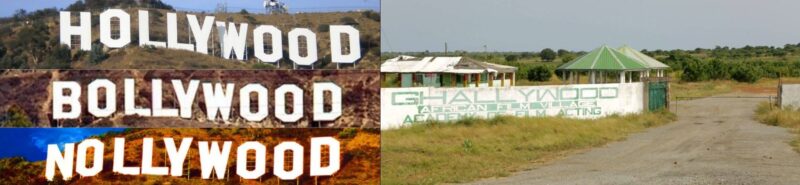
In the global theater of economic growth, film industries have taken the center stage. From the glitz of Hollywood to the vibrant colors of Bollywood and the dynamic energy of Nollywood and Ghallywood, these cinematic powerhouses wield immense influence. It is against the foregoing backdrop that it is expedient in this context to explore how America, India, Ghana and Nigeria have harnessed their film industries to boost their economies.
Given the foregoing, Hollywood, unarguably considered to be the American dream machine has no doubt contributed immensely to American economy, particularly in the areas of jobs and wages as Hollywood employs a staggering 2.74 million people, spanning special effects technicians, makeup artists, writers, and more. As gathered, these jobs contribute over $242 billion in annual wages.
In fact, as to American local boost, it is expedient to disclose that when a film shoots on location in America that it injects up to $1.3 million per day into local economies. Iconic films like “Black Panther” and “This Is Us” have not only entertained but also fueled tourism and revenue growth.
As to its GDP contribution to America’s economy, particularly during the pre-pandemic era, Hollywood added a whopping $504 billion to the U.S. GDP, making it a vital creative engine.
In a similar vein, Bollywood India’s Cinematic Extravaganza has been making India’s economy vibrant, particularly in the area of film output, where it is said to have been churning out around 2,500 films annually, captivating audiences worldwide. In fact, its influence extends beyond India, shaping accents and cultural references in other countries.
Without any iota of exaggeration, there was a revenue surge in 2021, when Bollywood’s projected worth reached $6.4 billion, making it the second-largest film sector globally. It is a cultural export that resonates with the Indian diaspora and beyond.
In a similar vein, particularly as to GDP boost, Nollywood’s inclusion in Nigeria’s GDP (after rebasing in 2014) revealed its true impact. In 2013, Nigeria’s GDP surged from $285.5 billion to $510 billion, thanks to sectors like Nollywood and music.
Certainly! Nollywood has remained a vibrant film industry, particularly as it has been introducing a wave of talented actors and actresses, even as there has been prolific output, principally as it produces over 2,000 movies annually, generating an estimated $1.2 billion in revenue. These low-budget films, often shot on video, resonate with audiences across Africa and beyond.
In the area of GDP Contribution, it is on record that in 2021, that Nollywood contributed 2.3% (about 239 billion naira) to Nigeria’s GDP, even as projections indicate it will surpass $1 billion in export revenue earnings.
On the impact which the Nollywood is making locally, it can be said that filming locations benefit from increased business activity, including accommodation, transportation, and local labor.
In fact, it can be opined in this context that film industries are not just about entertainment; they are economic catalysts. Therefore, it is not an exaggeration to add that as Nigeria looks to Nollywood for inspiration, there is no denying the fact that it can leverage its cinematic prowess to drive growth, create jobs, and tell compelling stories that resonate globally with lights, camera, and economic action!
Without a doubt, Ghallywood; the Ghanaian film industry, has been making significant strides in recent years. In fact, exploring how Ghallywood has been contributing to Ghana’s economy shows that it has been making significant impact, and it has been rated to be a multi-million dollar industry that has the potential to meaningfully contribute to Ghana’s GDP. Without a doubt, the appetite for films reflecting Ghanaian life is stronger than ever, leading to increased production and viewership.
Frankly speaking, while specific GDP figures directly attributed to Ghallywood are not readily available, the industry’s growth is promising. In fact, analyzed from historical perspective, film in Ghana began in the 1920s, with cinemas initially accessible only to the upper class, and by the 1960s, the Ghana Film Industry Corporation (GFIC) was established, promoting local film production. Thereafter, independent filmmaking gained momentum in the 1980s, leading to the birth of Ghallywood.
In fact, the question of whether Ghallywood has gained international recognition cannot be farfetched as international film companies are taking notice of Ghana’s film landscape. For instance, the “Beasts of No Nation,” a Netflix film shot in Ghana and starring Idris Elba, showcased the country’s potential.
On its future prospects, critics believe that Ghallywood’s impact on Ghana’s economy is just beginning, noting that as the industry continues to grow, it could contribute significantly to the country’s GDP.
Given the foregoing backdrop, it is not an exaggeration to opine that Ghallywood’s emergence and increasing popularity position it as a potential economic powerhouse for Ghana, with room for further growth and development.
Certainly! The governments of Nigeria and Ghana can play pivotal roles in fostering the growth and development of their respective film industries. Without a doubt, somestrategies they could consider cut across financial support which entails establishments of film funds or grants to provide financial assistance to filmmakers. This could encourage more productions and improve overall quality, even as tax incentives for film production companies can also attract investment.
The governments of both countries can respectively enhance infrastructures in the film industries and invest in modern film studios, sound stages, and post-production facilities, even as it would also be profitable to develop training centers to enhance technical skills and nurture talent.
In a similar vein, the governments can through copyright enforcement strengthen intellectual property laws to combat piracy and protect filmmakers’ rights as well as collaborate with industry stakeholders to raise awareness about copyright infringement.
Also, there are the needs for promotion and marketing by supporting film festivals, both locally and internationally, to showcase Nollywood and Ghallywood films.
Still in the same vein, both film industries can be supported through collaboration with tourism boards to promote film locations and attract international filmmaker
Also to be done in support of the film industries in both brotherly countries is to strengthen education and training, by introducing film-related courses in schools and universities as well as organizing workshops, seminars, and mentorship programs for aspiring filmmakers.
As for co-productions and collaboration, there should be encouragement towards joint productions between Nollywood and Ghallywood as well as facilitation of talent exchange to allow actors and crew members to work across borders.
Given the foregoing, it is incumbent on both countries to ensure that regulations are streamline by simplifying bureaucratic processes for obtaining permits and licenses, and creating a conducive environment for film production by reducing red tape.
Remember, Nollywood and Ghallywood have occasionally collaborated on successful projects like “Half of a Yellow Sun,” “The Wedding Party,” and “Beasts of No Nation.” Therefore, by aligning policies and supporting their creative communities, both countries can elevate African cinema globally.

























You must be logged in to post a comment Login