
Africa
Ignore The Messenger, Confront The Message: Trump’s Warning On Killings In Nigeria Deserves A Serious Response -By Isaac Asabor
In the end, it does not matter who sounded the alarm. What matters is that the alarm is real. The killings in Nigeria are real. The pain is real. The failure of leadership is real. If it takes a Trump to say it aloud, then let his words echo until our leaders wake up to their duty. Because, while they argue over who said what, Nigerians are still dying, every single day.

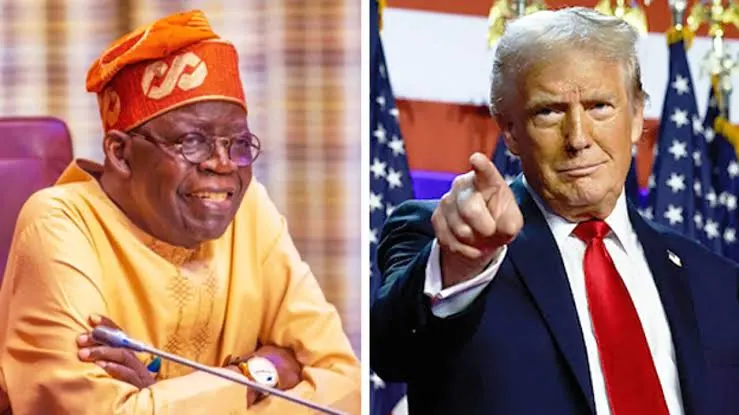
When U.S. President Donald Trump speaks, the world often trembles, and listens, sometimes out of curiosity, sometimes out of fear and disbelief. His words, more often than not, ignite controversy, and many dismiss them as political theater. But occasionally, amid the bluster and bravado, there is a kernel of truth buried in his rhetoric. That truth recently resurfaced when Trump drew attention to the killings in Nigeria. His tone might have been typical Trump, blunt, even abrasive, but the message itself deserves Nigeria’s undivided attention.
The truth, whether uttered by a friend or foe, remains truth. Nigerians have no reason to romanticize or demonize the messenger when the message itself speaks to a grim reality, that killings in Nigeria are not just real, but rampant, and that the government’s consistent failure to stem the tide is costing lives daily. For too long, our leaders have found comfort in denial, defensive posturing, and empty promises. But this is not the time to argue over Trump’s motives; it is time to confront the crisis he pointed to, the bloodletting that has turned many parts of Nigeria into killing fields. In fact, it is time to work with him if he is willing.
Let us be clear: Nigeria’s security situation has degenerated far beyond what any serious government can downplay. From the murderous raids of bandits in Zamfara and Katsina to the Boko Haram atrocities in Borno, Yobe, and Adamawa, from the incessant farmer-herder clashes in Benue and Plateau to the escalating separatist-related violence in the Southeast, the pattern is unmistakable, Nigeria is bleeding. Entire communities have been wiped out overnight, highways have become hunting grounds for kidnappers, and the sanctity of human life has been eroded to a frightening degree.
Yet, each time international figures like Trump raise the alarm, Nigerian officials instinctively retreat into defensiveness, branding such remarks as “foreign interference” or “misinformation.” This defensive reflex is not just misplaced; it is dangerous. The Nigerian government must rise above the temptation to “shoot the messenger.” What Trump said may not be comfortable to hear, and his phrasing might have been laced with his characteristic arrogance, but the underlying message that Nigeria is drowning in blood is painfully accurate.
The killings in Nigeria are not an illusion created by opposition parties or foreign media. They are the lived reality of millions of Nigerians who go to bed each night uncertain of seeing dawn. They are the reality of villagers in Southern Kaduna whose homes are torched while the government issues recycled press statements. They are the reality of commuters abducted on the Abuja–Kaduna highway, of farmers slaughtered in their fields in Borno, and of women and children displaced by conflict and forced to live in squalid camps with no hope of return.
What has made the situation even more disheartening is the government’s persistent pattern of trivializing tragedy. After every major attack, Nigerians have come to expect a familiar cycle: condemnation, condolence, and silence. Then, a few weeks later, another massacre occurs, and the script repeats itself. This endless loop of inaction has bred impunity. Killers, emboldened by a state that appears more interested in optics than justice, continue to strike with little fear of consequence.
Trump’s statement, whether motivated by genuine concern or political posturing, is a mirror, an unflattering reflection of Nigeria’s shame. Instead of breaking that mirror, our leaders should stare hard into it. They should ask themselves why the international community continues to see Nigeria as a country at war with itself. They should ask why, despite trillions of naira spent on defense and security, armed groups still control swathes of Nigerian territory. They should ask why rural farmers now pay “taxes” to bandits in order to access their own farms.
Nigeria’s leaders cannot afford to respond with the same tired chorus of “we are on top of the situation.” They are not. The situation is on top of us, crushing lives, economies, and hope. Even the National Bureau of Statistics (NBS) has hinted that insecurity remains a major drag on economic productivity, scaring investors and crippling agriculture in the North. The World Bank, too, has repeatedly linked Nigeria’s food inflation and mass displacement to unchecked violence in the countryside. These are not foreign conspiracies; they are hard data that point to one conclusion, Nigeria’s internal security has collapsed in slow motion, and official denial will not make it go away.
We cannot ignore the irony that it takes outsiders like Trump to remind Nigerian leaders of what Nigerians themselves have been screaming for years. But if that is what it takes to wake the political class from its moral slumber, then so be it. The test of leadership is not how one reacts to flattery, but how one responds to uncomfortable truths. If Trump’s comments sting, perhaps it is because they touch a nerve of guilt, the guilt of years of unfulfilled promises to protect citizens, the guilt of misplaced priorities that favor political survival over human survival.
Nigerians are not asking for miracles. They are asking for a government that takes human life seriously. They are asking for leaders who will not respond to massacres with photo ops and perfunctory condolences. They are asking for genuine reform, in policing, intelligence gathering, and military accountability. They are asking for the courage to name and shame the enablers of violence, no matter how politically connected they are. They are asking for justice, not spin.
The Nigerian Constitution is unambiguous: the primary purpose of government is the security and welfare of the people. Everything else, from infrastructure to foreign policy, flows from that foundation. When that foundation collapses, as it has, no amount of propaganda can disguise the rot. The time for denial is over. Whether the message comes from Trump, the United Nations, or the ordinary citizen crying for help, the response must be the same, urgency, empathy, and action.
Moreover, Nigeria’s leaders must realize that insecurity is not just a law-and-order issue; it is a symptom of deeper national decay, poverty, inequality, unemployment, and injustice. Each unpunished killing chips away at public trust and strengthens the narrative that Nigeria has become a failed state in everything but name. When citizens begin to arm themselves for self-defense, it is a sign that they no longer believe the government can protect them. And that is a dangerous threshold for any nation to cross.
Ignoring Trump’s personality while addressing his message is not an act of submission to foreign pressure; it is an act of national self-respect. It is an acknowledgment that the safety of Nigerians matters more than the ego of politicians. The federal and state governments should treat Trump’s words not as an insult, but as a wake-up call, a challenge to prove him wrong by restoring law and order, by showing the world that Nigeria is not a land of perpetual violence, but a country capable of self-redemption.
History is full of examples of nations that fell apart not because they lacked resources, but because their leaders refused to confront hard truths. Nigeria stands at such a crossroads today. The killings Trump spoke of are not just statistics; they are human lives, mothers, fathers, children, all with dreams cut short. Each time we bury our dead without demanding accountability, we normalize barbarity. Each time the government dismisses criticism instead of fixing the problem, it betrays the very essence of governance.
Trump has said his piece, and he will move on. But Nigeria cannot afford to move on without reflection. The blood that soaks the soil of Zamfara, Plateau, Benue, and Borno is not partisan. It cries for justice, not rhetoric. Nigerian officials should, for once, set aside political defensiveness and focus on the substance of the criticism. The world is watching, but more importantly, Nigerians are watching, and waiting for leadership that values their lives more than its image.
In the end, it does not matter who sounded the alarm. What matters is that the alarm is real. The killings in Nigeria are real. The pain is real. The failure of leadership is real. If it takes a Trump to say it aloud, then let his words echo until our leaders wake up to their duty. Because, while they argue over who said what, Nigerians are still dying, every single day.
Until that ends, no one, not Trump, not the international community, and certainly not the Nigerian people, will be convinced that this government is truly in control.
The message is clear: ignore the messenger, confront the menace. Nigeria’s survival depends on it.





















You must be logged in to post a comment Login