
National Issues
Just Asking: Is Eno’s N310 Million Gift To Non-Protesting Youths An Attempt To Quell Dissent?, by Isaac Asabor

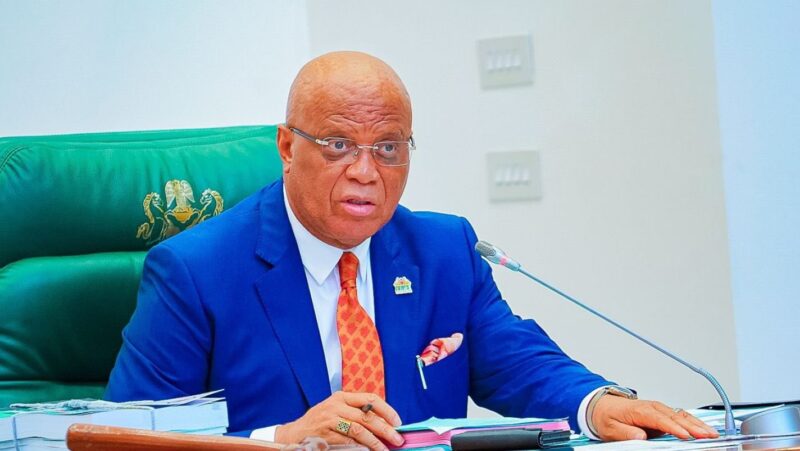
Recently, Governor Umo Eno of Akwa-Ibom State made headlines for announcing a N310 million gift to youths in the state. This generous gesture, aimed at non-protesting youths, has sparked widespread debate. While some see it as a commendable initiative to empower young people, others wonder if the real motive is to silence potential dissent and discourage youth from voicing their frustrations about the state of the economy and governance.
In a country where protests have become a powerful tool for change, particularly for young Nigerians, the timing of this gift raises eyebrows. Is this a well-intentioned move to reward those who remain peaceful and cooperative, or is it a subtle attempt to stifle any rising opposition?
Akwa-Ibom, like many other states in Nigeria, is grappling with significant economic challenges. High unemployment rates, rising inflation, and a lack of basic amenities have left many young people frustrated and disillusioned. In this context, the youth have been at the forefront of calling for better governance, with their voices often channeled through protests and demonstrations.
Across Nigeria, youths have made it clear that they are no longer willing to stay silent in the face of economic hardship. The nationwide #EndSARS protests in 2020 were a strong testament to the power of organized youth resistance. For many young people in Akwa-Ibom and across the nation, protests have become a democratic tool to voice their grievances and demand change.
Given this backdrop, the timing and nature of Governor Eno’s N310 million gift to non-protesting youths is concerning. Is the gift truly meant to empower, or is it a strategic move designed to quell any potential dissent and silence critical voices?
While the governor’s administration has presented the N310 million initiatives as an empowerment program, there is a growing belief that this may be a classic case of a “Greek gift”, a seemingly generous offer with hidden motives. Specifically, critics argue that by targeting non-protesting youths, the government is attempting to create a divide among the young population, rewarding silence and submission while potentially penalizing those who dare to speak out.
In a democracy, the freedom to protest and dissent is a fundamental right. However, gifts like this, offered exclusively to non-protesting youths, undermine this principle by subtly discouraging young people from exercising their democratic rights. In a functioning democracy, the role of the government should be to listen to all voices, especially those of its younger generation, rather than offering incentives to keep them quiet.
This strategy is inherently undemocratic, as it discourages youth participation in governance by creating a financial disincentive for dissent. By rewarding only those who remain silent, the administration is sending a dangerous message: silence and submission will be rewarded, while protest and dissent will be ignored or, worse, punished.
Governments have a responsibility to engage with their citizens, especially the youth, in a manner that encourages dialogue and constructive criticism. However, when financial incentives are offered to a select group, based on their willingness to remain silent, this undermines the very fabric of democracy. It creates an atmosphere where youths may feel coerced into silence in exchange for short-term financial gain, even when their frustrations with governance are valid.
This tactic, often referred to as a “divide-and-conquer” strategy, is particularly harmful in the context of a democratic society. In Akwa-Ibom, where many young people are grappling with unemployment, inflation, and inadequate infrastructure, the prospect of financial empowerment can be enticing. However, when such empowerment comes with the implicit expectation of silence, it shifts from being a tool for positive development to a means of control.
The ability to protest and express discontent is a cornerstone of democracy, and any move that seeks to silence these voices, whether through direct suppression or more subtle financial incentives, should be viewed as an assault on democratic values.
Protests, marches, and civil activism have long been recognized as vital tools for holding governments accountable, especially in societies where dialogue and engagement between the government and its citizens are limited. In Akwa-Ibom, as in many parts of Nigeria, the youth have often found themselves at the forefront of such activism, demanding better governance, job creation, improved infrastructure, and social justice.
By offering N310 million to non-protesting youths, Governor Eno’s administration may be attempting to preemptively quash any potential uprisings or public demonstrations. But such a move risks deepening the disconnect between the government and its people. Instead of seeking to silence dissent, the government should focus on addressing the root causes of youth frustration, unemployment, poor infrastructure, and limited economic opportunities.
It is essential to remember that the youth are the future of any nation, and their active participation in governance and political discourse is crucial. If young people are discouraged from speaking out or protesting, they may lose faith in the democratic process altogether, leading to greater disillusionment and disengagement in the long run.
Governor Eno’s N310 million gestures could have been a powerful tool for genuine youth empowerment if it had been designed to benefit all youths, regardless of their political stance or willingness to protest. However, by explicitly excluding protesting youths, the administration has risked turning what could have been a positive initiative into a political tool of suppression.
True empowerment involves providing opportunities that enable young people to thrive independently, equipping them with skills, education, and access to resources that can improve their quality of life. Financial gifts with strings attached do little to create long-lasting change. Rather, they only serve to suppress genuine grievances and create a sense of complacency among beneficiaries.
In a democracy, the youth must be allowed to speak their minds, whether through peaceful protests, social media advocacy, or other forms of expression. Governor Eno’s N310 million gift may appear generous on the surface, but its underlying message is concerning. Silencing dissent by offering financial rewards to those who remain quiet undermines the democratic process and risks creating a generation of young people who are disengaged from political discourse.
Rather than trying to silence dissenting voices through financial gifts, the government should engage with the youth directly, listen to their concerns, and create sustainable programs that address their challenges. In the long run, only genuine engagement and true empowerment will ensure the growth of democracy and development in Akwa Ibom and beyond.

























You must be logged in to post a comment Login