
Forgotten Dairies
Living In Fear: The Growing Challenge Of Insecurity In Nigeria -By Eruavworho Eseoghene Anita
Nigeria has been through dark times before. Civil war, military rule, economic collapse the country has a stubborn resilience outsiders often miss. But resilience is not resignation. Living in fear is not inevitable. The farmer in Zamfara deserves to plant his crops without calculating survival odds. The trader deserves to travel without rehearsing escape routes. The child in Borno deserves to walk to school without her mother’s heart in her throat.


Every morning, millions of Nigerians do the same quiet math before stepping outside. Is today the day? The farmer in Zamfara looks at the dirt path to his fields and wonders if men on motorcycles have already taken the road. The trader catching a bus from Abuja to Kaduna mentally maps the safe stops. The mother in Borno pauses at the school gate, weighing her daughter’s education against a fear that has become as ordinary as the sunrise.
This is what insecurity actually looks like. Not the dramatic headlines that blur after a while, but the slow wear on everyday life. Insecurity in Nigeria stopped being an event long ago. It is a condition now a low fever that never breaks. Armed insurgents in the Northeast, bandits in the Northwest, cultists in the South, criminals behind screens. No region has been left untouched. And maybe that is the hardest part: the sense that nowhere feels truly safe anymore.
In the Northeast, Boko Haram and ISWAP have spent over fifteen years turning villages into graveyards and schools into targets. The military has reclaimed major towns, but the insurgents adapt. They melt into the bush and hit where defences are thin. Civilians remain permanently caught in the middle. Move to the Northwest and banditry has grown from cattle rustling into something far more organised. Armed groups with military-grade weapons control forest camps and run kidnapping like a business. Security expert Professor Oyesoji Aremu put it plainly: Nigeria recorded about 2.2 million kidnapping incidents in one recent year, with ransom payments hitting an estimated ₦2.2 trillion. In just one week this June, police logged over fifty bandit attacks and two dozen kidnappings across Kaduna, Katsina, Zamfara, and Kebbi. Among the victims were thirty-nine people from Zamfara who had entered Fadama Forest to negotiate peace with a notorious bandit leader. They went in as mediators. They came out as captives.
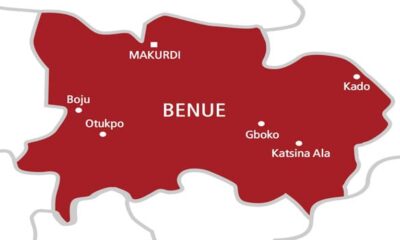
The Middle Belt has its own pain. Farmer-herder conflicts, driven by shrinking land and water, have turned into ethnic and religious violence. Benue, Plateau, Taraba, and parts of Kaduna are now shorthand for massacres that barely make the front page anymore. Down South, cult violence and armed robbery keep claiming young lives, while cybercrime damages Nigeria’s name abroad. Even the South-West, long seen as calm, is feeling banditry creep in. The crisis is spreading, not shrinking.
So why is this happening? The truth is messier than any single cause. Nigeria’s insecurity is a web of failures, each feeding the others. Start with unemployment. Over a third of young Nigerians have no work. When a bandit crew offers a teenager a gun and a cut of ransom money, the moral math changes. Poverty does not excuse violence, but it explains where recruits come from. Then there is corruption, which has hollowed out the state’s ability to respond. In the first four months of 2026 alone, the Federal Government put ₦57.78 billion toward security projects. Yet implementation was so weak that many programmes barely moved, with execution rates in some areas under three per cent. The money is there. The will to spend it properly is not.
Policing is another wound. The officer-to-citizen ratio is embarrassingly low, and officers are often underpaid, undertrained, and running on empty. Borders are so porous that weapons flow in almost as easily as smuggled fuel. Intelligence work stays reactive cleaning up after attacks instead of stopping them. Meanwhile, politicians keep playing the ethnic and religious card for votes, turning security failures into chances for division.
The cost is paid in lives, but also in quieter ways. The Northwest and Middle Belt used to be Nigeria’s breadbaskets. Now farmers leave their fields because tending crops has become dangerous. Food prices rise. Food security drifts away. Education is another hidden casualty. After the Chibok abductions in 2014, the world said never again. But similar mass kidnappings have kept happening in Sankara, Jangebe, and others that barely made international news. Parents in the North are keeping children home more often. A generation risks growing up without school. Healthcare in conflict zones has collapsed. Businesses work under the shadow of extortion. Foreign investment has dried up. The Pentecostal Fellowship of Nigeria recently said the country has “gradually lost its sense of value for human life.” It landed like a national diagnosis.
There is no magic fix, but there are places to start. The government needs to get serious about security sector reform, not more committees, but actual change. Better pay for officers. Real training. Modern equipment. And accountability for abuses that turn communities against the forces meant to protect them. The recent state police bill is a step forward, though implementation will make or break it. Technology and intelligence need investment too. Drones over known bandit camps. Data analytics to spot attack patterns. The South-West’s Amotekun Corps has shown that community-based security works when rooted in local trust.
But security measures alone will not end this. The root causes joblessness, poverty, alienation need attention. Genuine youth empowerment. Vocational training that leads to actual jobs. Governance that is transparent instead of extractive. A young man with honest work is far less likely to pick up a gun. Everyone has a role. Businesses can invest in community development. Traditional rulers can mediate before disputes become massacres. Citizens can resist seeing every security problem through an ethnic lens.
Nigeria has been through dark times before. Civil war, military rule, economic collapse the country has a stubborn resilience outsiders often miss. But resilience is not resignation. Living in fear is not inevitable. The farmer in Zamfara deserves to plant his crops without calculating survival odds. The trader deserves to travel without rehearsing escape routes. The child in Borno deserves to walk to school without her mother’s heart in her throat.
This will take a national agreement that every Nigerian life matters equally, no matter region or religion. It will take leaders who treat security as a public trust, not a campaign slogan. And citizens who refuse to let fear become their default setting. If Nigeria stays on this path, the ransom economy grows, ungoverned spaces multiply, and shared nationhood frays past repair. But it does not have to end there. The time for decisive, collective action is now. The shadows are long, but they are not permanent. A safer Nigeria is possible. The only question is whether we have the will to build it.
























You must be logged in to post a comment Login