Africa
Ned Nwoko’s Legislative Scorecard: Raising The Bar For Representation In Nigeria -By Isaac Asabor
If his early years are anything to go by, the remainder of his tenure promises even greater impact. In an age where mediocrity has too often been normalized in Nigerian politics, Senator Ned Nwoko’s record serves as both a challenge and an inspiration—a reminder that the bar of representation can, and indeed must, be raised.

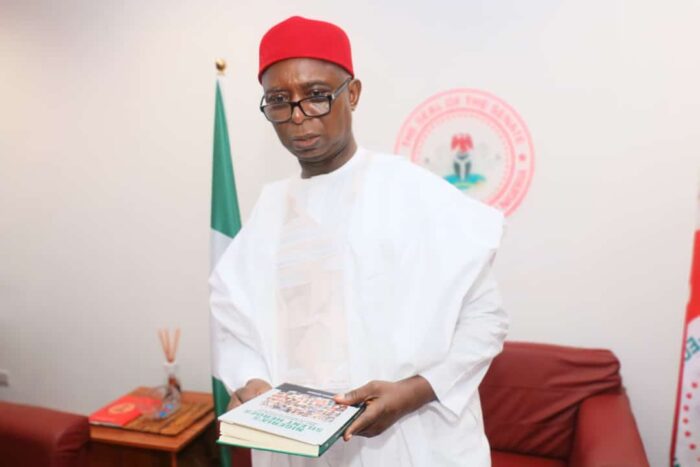
In a democracy, the legislature is the pulse of accountability and the engine room of reform. Yet in Nigeria, this arm of government has long suffered from a crisis of credibility. For many citizens, the National Assembly represents bloated budgets, allowances shrouded in secrecy, and lawmakers whose impact rarely trickles down to those they claim to serve. Against this backdrop, the two-year scorecard of Senator Ned Nwoko, representing Delta North, stands out as a quiet revolution.
Unlike many of his contemporaries, Nwoko has approached his mandate with a mixture of foresight, responsibility, and an uncommon global outlook. Elected in 2023, he pledged to make his representation “not ordinary,” and his record thus far reflects a lawmaker who understands that true service must be both measurable and impactful. Two years in, his trajectory already offers a compelling case study in how one legislator can reshape expectations and set new standards.
In the Nigerian Senate, bills and motions often serve as the true test of a lawmaker’s seriousness. Many legislators coast through their tenure with little more than perfunctory contributions. Nwoko, by contrast, has emerged as a consistent voice of reform.
His flagship advocacy has been around public health, particularly the fight against malaria. Few Nigerians are unaware of his long-standing commitment to eradicating the disease that continues to claim thousands of lives annually. In the Senate, he has transformed this personal passion into concrete legislative action, sponsoring motions that call for increased federal funding, cross-sector collaboration, and stronger partnerships with international health agencies. By framing malaria eradication as both a health priority and an economic necessity, he has broadened the conversation beyond medical interventions to include issues of productivity, national planning, and quality of life.
Beyond health, his legislative footprint extends to education. Nwoko has sponsored and supported bills aimed at improving funding for universities and research centers. In a country where intellectual flight—popularly referred to as brain drain, is depleting human capital, his insistence that Nigeria must incentivize knowledge creation speaks volumes. He has called for reforms in research grants, university autonomy, and federal support for innovation hubs, arguing that Nigeria’s development will forever stall unless the country deliberately invests in its brightest minds.
While his national interventions have attracted attention, Nwoko has not lost sight of the bread-and-butter issues affecting his constituents in Delta North. His tenure has brought visible federal presence to the region, ensuring that Delta North is not relegated to the margins of national development.
Infrastructural improvements stand out prominently. Through his efforts, federal projects in road construction and rehabilitation have been extended to several communities, easing the age-old burden of poor connectivity. Farmers who previously struggled to transport produce to nearby markets now find easier access, traders commute more efficiently, and rural dwellers are less isolated.
Healthcare delivery has equally improved. Nwoko has facilitated the siting and upgrading of health centers, with emphasis on rural areas where medical facilities are often inadequate. These interventions are not cosmetic; they are responses to the daily struggles of constituents who must travel long distances for basic care.
Education remains a cornerstone of his constituency focus. Schools in Delta North have benefitted from federal support championed by his office, from classroom renovations to supply of instructional materials. Youth empowerment programs, structured around skills acquisition, digital training, and small-scale entrepreneurship, have also been rolled out, equipping young people with tools to compete in today’s economy.
Importantly, Nwoko has approached constituency projects not as publicity stunts but as targeted interventions with measurable benefits. The emphasis has been on scale, sustainability, and alignment with broader developmental goals. This stands in sharp contrast to the common spectacle of token giveaways that too often pass for “empowerment” in Nigerian politics.
One of the most distinctive features of Nwoko’s representation is his global perspective. Unlike many lawmakers who confine themselves to constituency issues or domestic politicking, he has consistently framed Nigeria’s challenges within an international context.
Take debt relief, for instance. Nwoko has been one of the more vocal Nigerian senators advocating for comprehensive debt forgiveness for African nations. His argument is simple yet compelling: many African economies, Nigeria included, are shackled by unsustainable debt servicing obligations that crowd out spending on health, education, and infrastructure. By pressing for debt relief and restructuring, Nwoko positions Nigeria not as a passive borrower but as a leader in the continental conversation about economic justice.
Climate change and environmental sustainability have also featured prominently in his interventions. Coming from a region that has grappled with the twin burdens of oil exploitation and environmental degradation, he has consistently argued for stronger environmental protections, renewable energy investments, and federal commitment to global climate accords. His position is that Nigeria must not lag behind in the global transition to sustainable energy, particularly given the risks posed by desertification, flooding, and rising sea levels.
By taking up these causes, Nwoko demonstrates that a Nigerian senator can simultaneously be a constituency advocate, a national reformer, and an international statesman. His politics are not parochial; they are expansive, rooted in the understanding that Nigeria’s fate is tied to global currents.
One of the sharpest criticisms Nigerians direct at their lawmakers is the perception of mediocrity. Many see the Senate as little more than a retirement home for political heavyweights or a staging ground for political ambition, with little to show in terms of tangible service. Nwoko’s scorecard disrupts this narrative.
Instead of focusing on self-promotion or grandstanding, he has anchored his work on measurable results. Constituents can point to roads, schools, and health centers facilitated through his office. Nigerians can cite bills and motions that address systemic challenges. And the international community can recognize a senator who speaks with clarity on issues of debt relief and global health.
This results-oriented approach sets him apart. It also raises the uncomfortable question: if one senator can achieve this much in two years, why do so many others fail to deliver even a fraction of such impact? In that sense, Nwoko is not merely building a legacy; he is setting a benchmark that exposes the inadequacies of others.
Nwoko’s example offers several lessons for Nigeria’s political class. First, it proves that representation is not about ceremonies but about substance. By focusing on issues that matter, health, education, infrastructure, global partnerships, he demonstrates that lawmakers can be agents of transformative change.
Second, his balance of constituency service with national and international advocacy shows that it is possible to serve local needs while engaging global challenges. Nigerian politics too often collapses into the local, ignoring the interconnectedness of today’s world. Nwoko’s global outlook is a reminder that Nigeria must engage beyond its borders if it hopes to thrive.
Third, his results-oriented approach underscores the importance of accountability. Constituents deserve not just to be told that their senator “spoke on the floor” but to see tangible outcomes. By delivering measurable projects and policy interventions, Nwoko redefines what accountability should look like.
Two years may seem like a short time in the life of a senator, but it is long enough to establish patterns and define priorities. For Senator Ned Nwoko, the pattern is clear: foresight in policy, loyalty to constituents, and responsibility to both nation and continent. His legislative scorecard reveals a lawmaker who has raised the bar for representation, proving that politics need not be about noise or theatrics but about results and responsibility.
As Nigeria struggles with economic uncertainty, insecurity, and declining public trust in governance, the country needs legislators who will not only debate but deliver. In his first two years, Nwoko has provided a template for what that looks like. His work in health, education, infrastructure, and international advocacy offers hope that excellence in representation is still possible.
If his early years are anything to go by, the remainder of his tenure promises even greater impact. In an age where mediocrity has too often been normalized in Nigerian politics, Senator Ned Nwoko’s record serves as both a challenge and an inspiration—a reminder that the bar of representation can, and indeed must, be raised.