
Global Issues
Nelson Mandela Day: Exploring Fact and Opinion in African Leaders Deaths -By Paulson C. Okwumabua
The majority, 13 leaders (65% of those who died abroad, or 36% of the total 36), sought treatment in Europe, specifically in Belgium (Meles Zenawi), France (Léon M’ba, Malam Bacai Sanha, Levy Mwanawasa, Edem Kodjo, Gnassingbé Eyadéma en route), Germany (Hamed Bakayoko), Romania (Kwame Nkrumah), Switzerland (Abdelaziz Bouteflika), and the United Kingdom (William Tubman, Julius Nyerere, Michael Sata, Muhammadu Buhari).

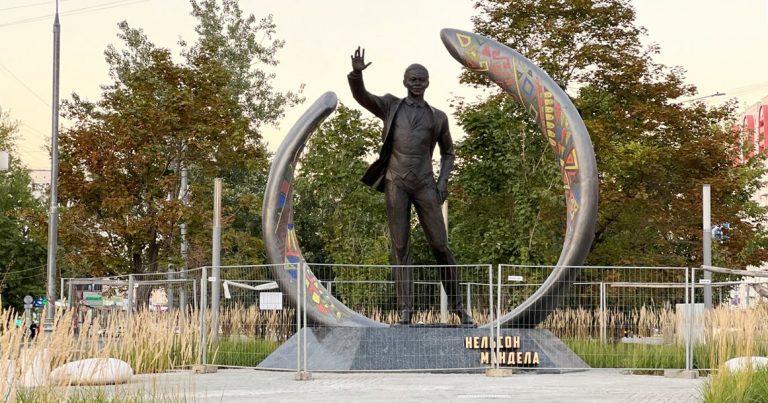
“The graves of great men are the lessons of the living.”
As the United Nations (UN) and the world marked Nelson Mandela International Day yesterday, this article, inspired by the occasion, seeks not only to recount the deaths of African presidents, but also to draw lessons from their stories and legacies, balancing hard evidence with the voices and emotions of those left behind.
On this auspicious occasion of Nelson Mandela International Day, as we reflect on the passing of African leaders, both past and present, it is timely to engage in a conversation that balances fact and opinion in interpreting their legacies.
To this end, I generated a reliable dataset of African presidents and prime ministers from 29 African countries who died between 1960 and 2025, as sitting or former leaders from online news and reports and this was used to survey 36 African leaders.
Leaders’ Secret Causes of Death and the Lessons We Miss
Fact: From the survey, in over half of the cases — 19 out of 36 leaders (53%) — the circumstances surrounding their deaths were not officially disclosed by either the respective governments or their families.
These cases span 17 countries — including Algeria, Burundi, Côte d’Ivoire, Egypt, Ghana, Guinea, Guinea-Bissau, Kenya, Liberia, Malawi, Mali, Nigeria, Sudan, Tanzania, Togo, Tunisia, and Zambia — representing 59% of the 29 countries surveyed.
Opinion: In most countries across Africa and beyond, leaders are not constitutionally required to disclose details about their health. However, the secrecy surrounding their deaths has often deprived nations of timely opportunities for reflection and open conversations about health and illness.
For example, in 1985 when President Ronald Reagan was diagnosed with colon cancer, the details were shared openly with the public. This led to a lot of media coverage and public talks about health and diet. As a result, more people went for check-ups, and the number of serious colon cancer cases dropped the following year.
By contrast, when leaders conceal the true cause of their illness or death, it may help protect the image of the deceased and their family. Calling it just “a brief illness” could help avoid shame, but it also adds to the stigma around sickness. This phenomenon is not limited to Africa.
While citizens don’t need to know every minor illness their leaders have, but if a leader dies from an illness, the cause should be shared. Doing so helps reduce stigma around illness and gives people a chance to learn from the experience.
Dying Abroad: A Persistent Pattern Among African Leaders
Fact: The same survey revealed that of the 36 African leaders who died between 1960 and 2025, 20 died abroad while seeking medical treatment, accounting for 56% of the total list surveyed.
The majority, 13 leaders (65% of those who died abroad, or 36% of the total 36), sought treatment in Europe, specifically in Belgium (Meles Zenawi), France (Léon M’ba, Malam Bacai Sanha, Levy Mwanawasa, Edem Kodjo, Gnassingbé Eyadéma en route), Germany (Hamed Bakayoko), Romania (Kwame Nkrumah), Switzerland (Abdelaziz Bouteflika), and the United Kingdom (William Tubman, Julius Nyerere, Michael Sata, Muhammadu Buhari).
Four leaders (20% of those who died abroad, or 11% of the total) died in Asia, in Saudi Arabia (Zine El Abidine Ben Ali), Singapore (Robert Mugabe), Turkey (Amadou Toumani Touré), and the United Arab Emirates (Sadiq al-Mahdi).
Three leaders (15% of those who died abroad, or 8% of the total) sought treatment in Africa, in Egypt (Mahmud Jibril) and South Africa (Ambrose Dlamini, Hastings Banda).
One leader (5% of those who died abroad, or 3% of the total) died in North America, with Ahmed Sékou Touré seeking treatment in the United States.
Opinion: The fact that over half (56%) of the African leaders in the survey died while receiving treatment abroad paints a troubling picture about the state of healthcare systems across much of the continent. Many leaders don’t trust the healthcare systems in their own countries. African governments often fail to invest in sustainable healthcare because their leaders have escape routes.
Europe was the top destination for African leaders seeking medical treatment abroad. This shows that many African countries still rely heavily on Europe—not just for politics and the economy, but also for healthcare and survival.
Despite this, a few leaders receiving treatment in Egypt and South Africa is a positive sign that some African countries are advancing their healthcare systems. It gives hope and shows the importance of investing in strong local medical centers.
Deaths of African Leaders While in Power
Fact: More than half (20 out of 36) of the African leaders surveyed died while still serving as presidents, accounting for 56% of the total recorded deaths.
Approximately 70% of the presidents who died while in office were between the ages of 60 and 83.
When considering causes of death, heart-related conditions were the leading cause of death among sitting presidents, accounting for approximately 35% of the total cases. Cancer followed as the second leading cause at 15%, while stroke accounted for 10%.
Opinion: Africa has experienced more deaths of leaders while in office than any other continent—a trend one may think may be partly explained by the fact that it has the largest number of countries globally, thereby increasing the likelihood of the magnitude of such occurrences.
However, when considering the period from 1960 to 2025, Africa, with its 54 countries, surprisingly still recorded significantly more presidential deaths in office than the combined total from the 144 countries across the other six continents. Therefore, it appears African countries are like 5 times or more likely to experience a leader’s death in office than non-African countries.
The significantly higher rate of African presidential deaths in office can be attributed to a combination of factors such as limited access to quality healthcare during global pandemic and nationwide shutdown, health challenge before entering office, the advanced age of many leaders, high-stress and hostile political environments, and delays in the transition of power. These conditions can collectively contribute to the vulnerability of sitting leaders and increase the likelihood of death while in office.
Mandela’s Message Still Matters: Justice and the Fight Against Poverty
“While poverty persists, there is no true freedom,” said Mandela.
Mandela’s life and words continue to inspire, offering lessons for Africa’s present and future. Nelson Mandela International Day, celebrated every year on July 18—Mandela’s birthday—was declared by the UN in 2009 to honor his legacy of peace, justice, freedom, and the fight against poverty.
Mandela’s message still matters. By embracing Mandela’s call for justice and dignity, Africa can honour its fallen leaders by building a future where no one—leader or citizen—must seek salvation abroad.
Paul C. Okwumabua
Centre for Distance learning,
Obafemi Awolowo University, Ile-Ife.
Pokwumabua@oaucdl.edu.ng or Okwumabua1234@gmail.com






















You must be logged in to post a comment Login