
National Issues
Nigeria’s Food Crisis Will Not End Until Farmers Can Farm in Peace -By Viola Hyelamoda
The path forward requires consistency rather than temporary solutions. Policies must survive political transitions. Investments in agriculture should extend beyond annual budget announcements to measurable improvements in farmers’ lives. Above all, those who cultivate the nation’s food must be able to do so safely.

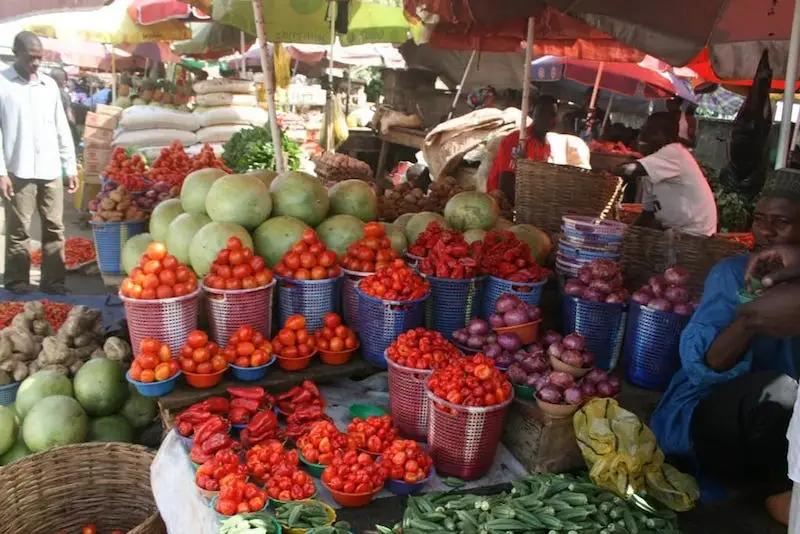
Long before food reaches the shelves of a supermarket or the stalls of a neighbourhood market, it begins its journey on a farm. Yet for many Nigerian farmers, that journey has become increasingly uncertain.
In many farming communities, the day starts before sunrise. A farmer steps onto his land with hope that the rains will come at the right time, that fertiliser will be available, and above all, that he will return home safely. For thousands of smallholder farmers across Nigeria, producing food has become more than an occupation—it has become a daily test of resilience.
Meanwhile, hundreds of kilometres away, families in cities and towns face another reality. At the market, buyers quietly reduce the quantity of rice, tomatoes, beans or garri they purchase because prices have risen beyond what their incomes can comfortably support. Consumers often blame traders, while traders point to transport costs. But the roots of the problem stretch much deeper than the marketplace.
Nigeria’s food challenge begins on the farm.
Agriculture remains one of the country’s most important economic sectors, employing millions of Nigerians and providing livelihoods for rural communities. Smallholder farmers produce a substantial share of the nation’s food, yet they continue to work under conditions that limit productivity and discourage investment.
Insecurity remains one of the greatest obstacles. In several parts of the country, farmers have been forced to abandon or reduce cultivation because of attacks, displacement or fear of violence. Land that should produce maize, rice, vegetables and other crops sometimes lies idle, reducing supply and placing additional pressure on food prices.
Climate change has compounded these difficulties. Unpredictable rainfall, prolonged dry spells and devastating floods have affected planting seasons and harvests. Farmers who rely almost entirely on rainfall often have few alternatives when weather patterns change unexpectedly. For many rural households, one failed harvest can erase months of labour and push families deeper into poverty.
Poor infrastructure presents another challenge. Rural roads remain difficult to navigate in many farming communities, increasing transportation costs and causing delays that reduce the value of perishable produce. Limited storage facilities contribute to post-harvest losses, meaning food that could have reached consumers is wasted before it leaves the farm.
Despite these challenges, Nigeria possesses enormous agricultural potential. The country has vast arable land, diverse ecological zones and a large domestic market capable of supporting a thriving agricultural economy. What has often been missing is sustained implementation of policies that place farmers at the centre of national development.
Government initiatives aimed at improving food production are welcome, but agriculture cannot be transformed through seasonal interventions alone. Farmers need year-round access to improved seedlings, irrigation systems, extension services, affordable credit and modern farming equipment. These investments are not expenses; they are long-term commitments to national food security.
The private sector also has an important role. Financial institutions can expand access to agricultural financing. Technology companies can provide digital tools that improve productivity and market access. Agro-processing industries can create value chains that reduce waste while increasing farmers’ incomes. Strong partnerships between government and private investors are essential if agriculture is to become more competitive.
Young Nigerians should also see agriculture differently. Too often, farming is viewed as work for those with limited options. In reality, modern agriculture increasingly depends on innovation, technology and entrepreneurship. Across Africa, young agripreneurs are using digital platforms, precision farming and improved processing techniques to build profitable businesses. Nigeria should create an environment where more young people are encouraged to do the same.
Food security should never be discussed only when prices rise. It should remain a national priority because access to affordable and nutritious food affects health, education, productivity and economic stability. A country that struggles to feed its population cannot fully realise its development ambitions.
The path forward requires consistency rather than temporary solutions. Policies must survive political transitions. Investments in agriculture should extend beyond annual budget announcements to measurable improvements in farmers’ lives. Above all, those who cultivate the nation’s food must be able to do so safely.
The measure of a nation’s commitment to food security is not the number of speeches delivered about agriculture. It is whether farmers can plant without fear, harvest without unnecessary losses and earn a decent living from their labour.
When farmers thrive, markets become more stable, food becomes more affordable, rural communities become stronger and the economy becomes more resilient.
Nigeria’s journey towards food security will not begin in conference halls or policy documents. It will begin in the fields where millions of farmers work every day to feed a nation. Until they receive the protection, investment and support they deserve, the country’s food crisis will remain far from over.
Viola Hyelamoda is a Part two student in the Department of Mass Communication, University of Maiduguri.





















You must be logged in to post a comment Login