
Africa
Nigeria’s Unity Must Be Earned, Not Enforced – A Critique of Hollow “Sacrosanct” Rhetoric -By Jeff Okoroafor
An op-ed dissecting Nigeria’s “sacrosanct” unity. Critiques Northern elite rhetoric, systemic inequality in education & security, and the Sultan of Sokoto’s failure to condemn Muslim terrorist groups. Calls for justice-based unity.

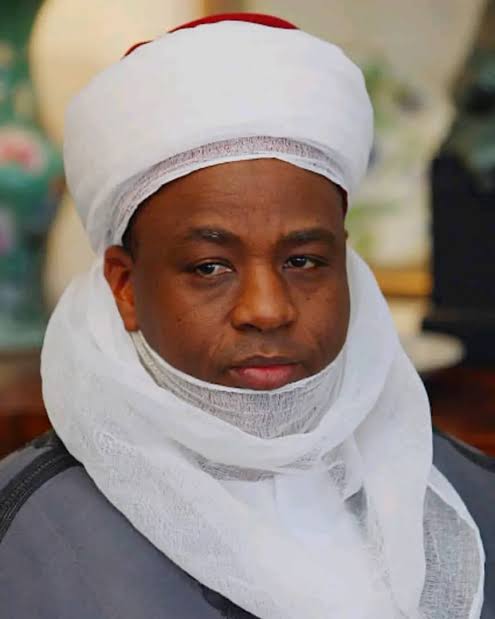
The recent statement by a Northern leaders’ platform, reportedly headed by the Sultan of Sokoto, reiterating that Nigeria’s unity is “sacrosanct” in response to comments by U.S. President Donald Trump, is a familiar refrain in our national discourse. It is a slogan of cohesion, often deployed by the same political and traditional elite whose policies and silences have systematically eroded the very foundations of a genuine, functional union. The irony is not just palpable; it is corrosive. To understand Nigeria’s existential crisis, one must move beyond the mantra of unity and examine the structures of injustice, inequality, and impunity that make the slogan ring hollow.
The anatomy of this forced union reveals a nation where unity is “sacrosanct” in rhetoric but sacrificial in practice for everything that makes a nation work: merit, equity, justice, and security. The consensus among many Southern and Middle Belt communities is not a rejection of unity *per se*, but a rejection of a unitary facade that masks a deeply asymmetric federation. This is illustrated by several critical issues. The policy of differential cut-off marks for university admissions, with lower requirements for Northern states, is a state-sanctioned inequality that rewards geographic origin over academic merit. It disadvantages Southern students while doing little to address the root causes of educational disparity in the North, such as the refusal to modernize the almajiri system. Furthermore, credible reports of religious barriers, such as Christians being deemed ineligible for Vice-Chancellor positions in certain Northern universities, expose a unity that is conditional on religious dominance.
Perhaps the most damning evidence of the hypocrisy shrouded in “sacrosanct” unity is the security crisis and the selective condemnation that surrounds it. For over a decade, Nigeria has been ravaged by terrorism—Boko Haram, ISWAP, and banditry—originating and largely contained within the Northern region. These groups, claiming a religious mandate, have killed tens of thousands, displaced millions, and destroyed economies across the North and beyond. The silence of many Northern elites, including traditional and religious leaders like the Sultan of Sokoto, has been deafening. The Sultan, as the spiritual leader of Nigerian Muslims and a co-chair of the Nigeria Inter-Religious Council (NIREC), holds immense moral authority. Yet, his explicit, persistent, and unequivocal condemnation of the ideology and violence of these Muslim terrorist groups is a matter of public record that is conspicuously faint. While he has occasionally spoken on the suffering caused by banditry, a consistent, fearless theological rebuke of the extremist ideology that fuels terrorism—and the networks that sometimes subtly enable it—remains lacking. This silence is interpreted, rightly or wrongly, as complicity or prioritization of regional and religious solidarity over national citizenship and the sanctity of all Nigerian lives. When leaders fail to clearly and consistently condemn terror from within their cultural or religious sphere, they forfeit the moral standing to preach national unity.
This deficit of moral courage parallels a broader meritocracy deficit. The appointment of individuals with questionable qualifications to sensitive national security and governance roles, based on patronage and ethno-religious consideration, is a national security risk. It erodes competence, fosters corruption, and signals that the system values loyalty over ability. Meanwhile, allegations of corruption or links to terrorism among powerful Northern figures are often treated with levity, with accused individuals celebrated in their communities rather than held accountable by the law. Culturally, tolerance remains a major fault line. The phenomenon of nomadic herders grazing cattle on farmlands and even in urban centers like Abuja, often with impunity, symbolizes a cultural imposition that other regions are forced to endure. Conversely, Southern cultural expressions or religious practices are frequently met with rejection or violence in the North under claims of blasphemy or moral offense. Unity cannot be a one-way street of tolerance.
The Sultan of Sokoto’s position is particularly pivotal in this context. He is not just a traditional ruler; he is arguably the most influential Muslim leader in sub-Saharan Africa. His platform’s insistence on an indivisible Nigeria carries weight. However, leadership demands more than defending geographical boundaries; it requires defending the principles that make coexistence within those boundaries possible. By not using his profound influence to consistently and forcefully denounce the theological underpinnings of Boko Haram and ISWAP, push for the dismantling of the almajiri system through a structured, modern educational replacement, advocate for a merit-based federal character that lifts standards rather than lowers them, and call out elite complicity in the security crisis, the message conveyed is that unity is about preserving a status quo of power relations, not about building a just society.
For unity to be truly sacred, it must be rooted in justice. The current model of “forced unity” is unsustainable and breeds resentment. A path forward requires restructuring for true federalism, where regions or states have significant control over their resources, security, and education to reduce the vicious winner-takes-all struggle at the center. National policy must enshrine merit, reforming the quota system to become a tool for uplifting the disadvantaged, not for penalizing the accomplished. A ruthless, merit-driven overhaul of the security architecture is needed, coupled with a judicial war on corruption and terrorism financing, regardless of the suspect’s origin or religion. Finally, moral leadership from traditional institutions is essential. Leaders like the Sultan must evolve from being ethnic or religious champions to being national moral compasses. This means condemning evil unequivocally, even—especially—when it comes from “within.” True peace is built on truth, not silence.
In conclusion, Nigeria’s unity is not sacrosanct because a political elite declares it to be so. It can only become sacrosanct when a market woman in Onitsha feels as secure and represented as a farmer in Sokoto; when a Christian from Plateau has the same path to leadership as a Muslim from Kano; and when a Southern student’s hard work is weighted equally with that of a Northern peer. The Sultan of Sokoto and other Northern leaders have a historic choice: they can continue to defend a brittle, unjust unity that serves narrow interests, or they can champion a bold, reformist agenda that makes unity desirable for all. The latter requires courage—the courage to condemn terror, reject mediocrity, and embrace fairness. Without these, the word “sacrosanct” is not a prayer for Nigeria, but its epitaph. Unity must be earned, not enforced. And time is running out to earn it.

Jeff Okoroafor
Jeff Okoroafor is a social accountability advocate and a political commentator focused on governance, accountability, and social justice in West Africa.



















You must be logged in to post a comment Login