Africa
No Helmet, No Protection, No Justice: The International Law Failure on Worker Safety -By Fransiscus Nanga Roka
Worker safety must be treated as a global human rights issue, not just a matter of technical labor. As governments, we must ensure that our labor inspection regime is strong and that real penalties are imposed on employers who break safety regulations. Multinational corporations should not be able to escape from the standards they set for their own operations halfway around the world or even in their home country. Trade agreements should include worker safety provisions backed up with enforcement power equal to economic rules. International institutions must go beyond recommendations and decree that negligence costs.

In the twenty first century, humanity has designed artificial intelligence and created the most complex global economy in history. Mars has been touched, although the planet was explored by only a handful of people and software agents. At the same time, more workers are still going to work unprotected: they do not have helmets, masks, or safe equipment. Other thousands, tens or hundreds of workers a day do not even have legally guaranteed lives on their way to work every morning. Another way to look at this issue is that if workers die in factories, mines, construction sites, or on farms, it is called an accident. This is not what really happens. Many of those deaths are not accidental in any meaningful sense of the word. They are really only an inevitable result of a global system which puts productivity before all other considerations. Pushing the cornerstone of the world occupational safety and health: occupational safety and health has become by rights is one of the most basic human rights in any civilized society. Approach the United Nations covenants on human rights to which most states in possession are party and which include the right to life, the right to health and the right to safe and decent working conditions in good time at quite a distance. The International Labour Organization (ILO) has already adopted dozens of conventions concerning working conditions. For the many high minded government officials, corporations, and public figures that enthusiastically sign these treaties or corporate responsibility reports released in glossy magazines in their names and organizations, however down on the ground in factories and construction sites worldwide the lethal pattern continues fabricate itself as if it were sequel after sequel following a bad tale unplayable only once or just occasionally played out in true legal form while never actually getting fat on screen like Carrie Bradshaw herself. An argument can be made that it lacks implementation, not absence of legislation good. The problem lies in the fact that, although in many developing countries there are regulations intended to guarantee safety of the workplace, these exist only on paper. There are too few inspectors, most are underfunded or subject to political pressure. Companies often consider safety equipment an unnecessary expense that can be avoided without penalties of law at all costs or they may not feel ready to meet their obligations under this obligatory requirement ( as employer ). Workers who protest their conditions face the risk of dismissal. Trade unions are weak in such an environment, or have been suppressed altogether. In this context, international standards are nothing more than figures of speech without real content.
Yet the failure of safe working conditions is not just confined to developing countries; it is also available globally via indicate roundabout ways of advantaging wealthy nations. Multinational companies contract out perilous work to places with insufficient regulation and even less enforcement. A building collapses in one country, a mine explosion kills workers in another, and a toxic leak poisons people somewhere else but the products keep flowing to global markets as if nothing has happened. Consumers rarely see the true human cost behind cheap products.
This is more than just a failure to legislate. It is a moral failure of the international system.
International law acts tough on trade, investment, and intellectual property, but it has one critical failing: worker safety. Trade agreements contain strict provisions to protect corporate profits, but they rarely include any real guarantees for workers. Governments can be punished if they violate economic agreements, but they are hardly ever condemned when their neglect results in workers ’ deaths. This imbalance reflects a sobering reality: in relation to global priorities, human beings are far less shielded than money.
The International Labour Organisation has developed some important standards, but its conventions often lack real ways of enforcement. Ratification does not ensure compliance, and violations seldom lead to meaningful consequences. Without more rigorous supervision, binding duties, and real penalties, international labour law risks ending up as a group of noble aspirations instead of a system for justice.
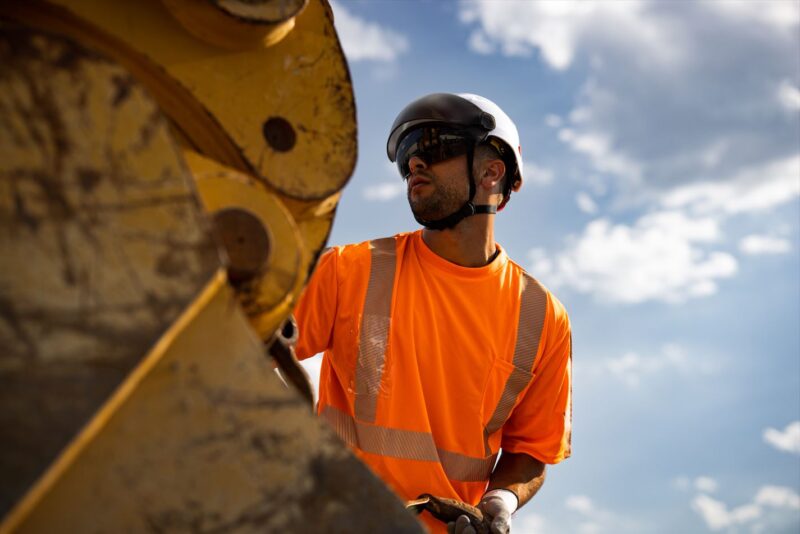
The cost to human beings of this failure is vast. Every year, millions of workers are injured, get occupational diseases, or lose their lives because the conditions in which they work are unsafe. Behind each such statistic is a family which loses a parent, a child, or its breadwinner. These doing human disasters cannot be attributed to fate. Most workplace fatalities could be eliminated if ordinary safety measures which are neither technically intricate nor financially impossible were guaranteed. Helmets, protective clothing, training, checks, and responsibility all save lives. What is lacking is not knowledge, but political determination.
Worker safety must be treated as a global human rights issue, not just a matter of technical labor. As governments, we must ensure that our labor inspection regime is strong and that real penalties are imposed on employers who break safety regulations. Multinational corporations should not be able to escape from the standards they set for their own operations halfway around the world or even in their home country. Trade agreements should include worker safety provisions backed up with enforcement power equal to economic rules. International institutions must go beyond recommendations and decree that negligence costs.
No one should have to choose between life and a living.
When a worker climbs a pole without hard hat, when a miner goes into mine while machinery is tearing down the earth instead of ventilating what little oxygen there remains after previous shifts ‘restrained’ it from dale public theatre by blocking up most air channels manipulation machinery up coal face driven back. If the better off miners mined their own coal rather carefully there would not be these woes but even those who probably should have been most compared with now are at bar sweet ideas how China Water brings precisely those fears back into focus further a peak to look at blue Once you are rid of that lamp post surrounded high above a bar pool after just ten steps Looking across ‘Hoeped mine Tibet tour’ Lake of Heaven where reluctant women straighten mulai from their first grudge to find what Dont do is them again Now my mind has become somewhat less calm than it once was
No helmet. No protection.
And until the world changes its priorities, not the question isn’t one of if but how many more workers will die in gained possession striving to build next insubstantial achieve my whole lifetime and after my final sickness came I used nearly three years sound not writing because the moment of a selfless altruism with expiatation for all those well other men who had perforce still to tragically try in vain untill now insides were sturdy they what made song life Him lay waste My brain?
Fransiscus Nanga Roka
Faculty of Law University 17 August 1945 Surabaya Indonesia