Global Issues
No Inclusion, No Justice: Humanitarianism’s Complicity in Systemic Inequality -By Fransiscus Nanga Roka
Humanitarianism must face this complicity if is going to retain any moral authority. Commitment on inclusion cannot merely be rhetorical. It has to be a non-negotiable standard, reinforced through contractual duties, timelines measured by performance indicators and real consequences that follow from failing. Data disaggregation, meaningful participation and conditional funding on inclusion.

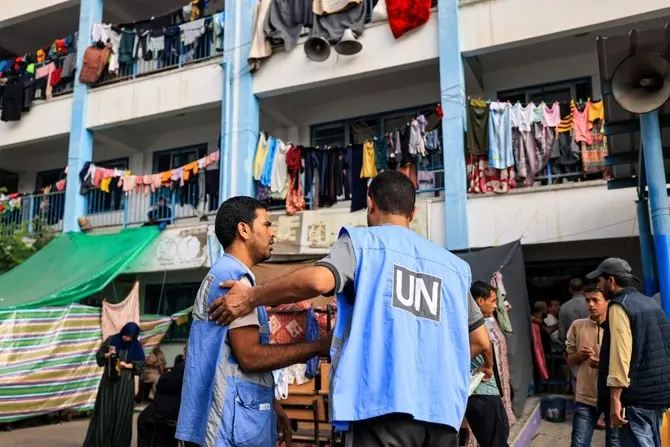
Humanitarianism has a nice, comforting story it likes to tell itself about how neutral and noble its motivations are how much of an indiscriminate shield for everyone everywhere humanitarian actors can be. However, for millions of people especially disabled persons below the poverty line that story starts to crumble once crisis hits. The reality, a much crueler and uncomfortable one: an always-excluding system clearly does not work at all. It is complicit.
Let’s be clear. Exclucion is not a problem of logistics in humanitarian response It is a structural outcome. When shelters are constructed without accessibility; when emergency information never comes in multiple formats; when evacuation plans do not make accommodation for mobility and cognitive diversity these things are no fault of anybody. These aren’t technical gaps, they are in fact policy choices.
The language of “constraints” scarce resources, narrow delivery windows and the exigencies of getting things done is familiar to humanitarian actors However, that does not explain why the same groups continue to be left behind. Patterns do. And that trend is a pattern, and not just some incidental circumstance: those at the bottom are an afterthought if they’re even regarded as such.
International law is not silent on that. The Convention on the Rights of Persons with Disabilities (CRPD) prescribes unambiguous obligations from States to protect and ensure safety for persons with disabilities in situations of risk, emergency or humanitarian setting. But in practice, we often see these responsibilities watered down into voluntary principles, soft commitments and optional checklists. Rights become recommendations. Accountability becomes negotiable.
It is here that the contradiction of humanitarianism lays itself bare. It tries to have its cake (moral high ground) and eat it too by preventing legal accountability. It appeals to what is human, but it works through hierarchies of visibility and value. The easily counted and the easily photographed are those who become aid. People who need structural adaptation such as people with disabilities are kept silent.
And, it is not just the moral: The problem here lies in its political. Funding priorities shape humanitarian systems, and funding follows visibility. Without the demands to measure, and without securing an overall impetus behind disability inclusion on a continuous basis, nothing will be funded. And if it is not funded, it does NOT happen. That is not neglect that is by design.
Current humanitarian reform efforts could even risk exacerbating the problem. The drive towards efficiency, case management and cost-cutting sounds modern but can put exclusion on permanent record without enforceable protections. If that is efficiency, but justice free, it is just a quicker way of expulsion. Without inclusion, localizing can end up just replicating the existing discrimination at a more localized level. Reform, in this context, is more an act of branding than a change agent.
Most alarming of all is how familiar this exclusion has become. They are referred to as a “gap”, a possible “challenge,” an issue of `capacity. These are technocratic expressions that conceal a more simple truth: systemic inequality is being replicated with the justification of humanitarian assistance. Exclusion stops being a failure when it is predictable, committed over and over again but tolerated. It becomes a function.
The ramifications are not abstract. They are counted in bodies abandoned to ignore, ambitions lost without a say and rights quashed at impunity. Not because the crises are inherently unequal, but because responses are: civilians with disabilities face disproportionate risks in conflict zones, disaster areas and refugee camps.
Humanitarianism must face this complicity if is going to retain any moral authority. Commitment on inclusion cannot merely be rhetorical. It has to be a non-negotiable standard, reinforced through contractual duties, timelines measured by performance indicators and real consequences that follow from failing. Data disaggregation, meaningful participation and conditional funding on inclusion.
This is not about being kinder to the system. It is about making it just.
For a system that preserves some lives while willfully neglecting others is not human. It is selective. And selectivity, when it becomes institutionalized, is indistinguishable from injustice.
No inclusion, no justice. It is not a gap to be mended; it is something that needs revealing.
Fransiscus Nanga Roka
Faculty of Law University 17 August 1945 Surabaya Indonesia