
Economy
“Oga, Dem Won Take Hungry Kill Us?”, by Isaac Asabor

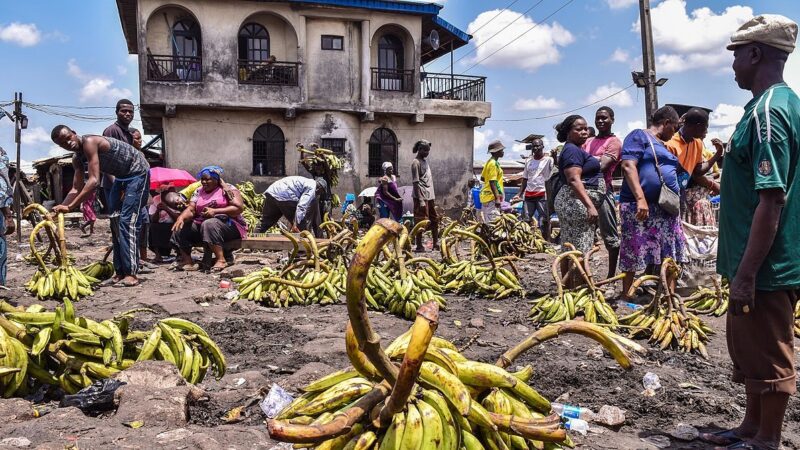
As the scorching sun beat down on the bustling Alamutu market at Idioro, Mushin, in Lagos recently, the familiar rhythm of life felt unsettlingly different. As I navigated the narrow paths between stalls selling everything from tomatoes to pepper, I made my way toward the familiar shop of an elderly woman who had sold plantain at the market for as long as I could remember. For years, I had been a loyal customer, drawn not only by the quality of her plantain but by her warmth and friendly disposition, a constant bright spot in the chaotic marketplace.
Usually, she would greet me with a wide smile, her eyes lighting up with recognition, and a cheerful, “Oga, welcome!” But today, something was different. The once-vibrant energy that defined her presence had dimmed. As I approached her stall, I noticed she sat quietly on her worn-out stool, staring ahead as if lost in thought, her usually lively face now etched with fatigue and sadness.
“Good afternoon, Mama,” I greeted her, expecting the usual spark in her response. She looked up slowly, her eyes heavy with the weight of her burdens. “Oga,” she muttered under her breath, her voice tinged with frustration and helplessness, “Dem won take hungry kill us?”
Her words hit hard. There was no exaggeration in her tone, just a raw, simple truth. Her question was not merely about the rising cost of goods, it was a reflection of the daily struggles she and millions of other Nigerians were enduring, since May 29, 2023 when the ongoing President Bola Ahmed Tinubu-led administration was inaugurated. Her question the one that spoke of hunger, not just in the stomach but in the heart, a hunger for a better life that seemed to slip further away with each passing day.
I paused for a moment, unsure of how to respond. What could I say to someone who had spent her life working hard, only to find herself in a deeper struggle now than ever before? Her question, though simple, carried the weight of Nigeria’s current economic hardship, a hardship that could be felt in every corner of the market, and across the country.
Other market women around her stall, who had overheard our conversation, began to chime in, eager to share their own frustrations.
“Oga, na true she talk o!” said one woman selling pepper nearby. “Since dis fuel matter start, everything don cost. E no be small thing. Even we, wey dey sell for market, no fit buy enough for our house. Na how we go survive?”
Another woman who sold tomatoes spoke up, her voice filled with concern, “Before, I fit buy rice, beans, and still manage small change for house. But now? I nor fit buy anything again. E be like say every day price dey change for market. Even customers nor dey come like before. Oga, everybody just dey struggle.”
The elderly plantain seller sighed deeply and added, “We dey work, we dey sweat, but every time, e be like say the money we make nor dey reach anywhere. Things don change. Before, I go sell, go home, and buy food for my children. But now, I no fit buy half of wetin I dey buy before.”
Her words were echoed by a woman selling yams across the path. “Every day for this market, we dey suffer,” she said, shaking her head. “You go see customers, they go come look, ask for price, then waka pass. Everybody dey complain say things too cost.”
The lament in their voices was not just about the rising cost of food, it was about a shared sense of hopelessness. These were women who had been the backbone of their families, toiling day in and day out to make ends meet. But the economic situation had pushed them to the brink. No matter how hard they worked, it seemed as though they were running in place, with no way out of the cycle of poverty.
A woman selling fruit nearby added, “Oga, we nor even dey sure of tomorrow. Government talk say dem go help, but where the help dey? Na hunger we dey see for here. Na so we go dey continue?”
Their concerns were not t just limited to food prices. They spoke of rising rent, school fees, and basic utilities that had become nearly impossible to afford. The cost of transportation had skyrocketed since the removal of fuel subsidies, further complicating their daily struggles. “To even enter bus now na big wahala,” said one of the women. “Before, I fit enter bus go market with small money. Now, I go use all my profit take transport go house. Ask me, wetin remain for us?”
The feeling of collective despair hung heavy in the air. These women, the lifeblood of the market, were tired. They had endured hardship before, but this time, it felt different. It felt as though the future was slipping out of their hands, leaving them in a state of perpetual uncertainty.
One of the older women, who had been quiet throughout, suddenly spoke up. “Na so life don turn for this our country. We don tire. Government nordey feel the hunger wey we dey face. E easy for dem to talk say ‘e go better,’ but we no fit chop that kind talk. Wetin we go do now?”
Her words sparked murmurs of agreement from the others. It was clear that these market women were at a breaking point, their resilience tested by an economic crisis that had made survival increasingly difficult. Their faces, once animated with the spirit of the daily hustle, now bore the weariness of people who had been pushed too far.
As I left the market that day, I could not come to grip with the mood of my plantain seller, who invariably remains my customer and the haunting question she had asked: “Oga, dem won take hungry kill us?”
Her words echoed in my mind long after I had left. They were not just the lament of a market woman; they were the cry of a nation, of a people struggling to keep their heads above water in an economy that had failed them. How long can we expect them to hold on? How long can we continue to turn a blind eye to their suffering?
The time has come for more than just promises of a better tomorrow. These women, and millions like them, need real solutions, now. The question is not whether Nigeria can overcome this crisis, but whether the voices of those crying out for help will be heard before it is too late.
For these women, the market is not just a place of business; it is their lifeline. But as prices rise and incomes dwindle, that lifeline is becoming thinner and thinner. And unless something changes, the weary voices of the market will only grow louder, echoing the same heartbreaking question, “Oga, dem won take hungry kill us?”




























You must be logged in to post a comment Login