
Africa
‘Pray for Maiduguri’?, by Sesugh Akume

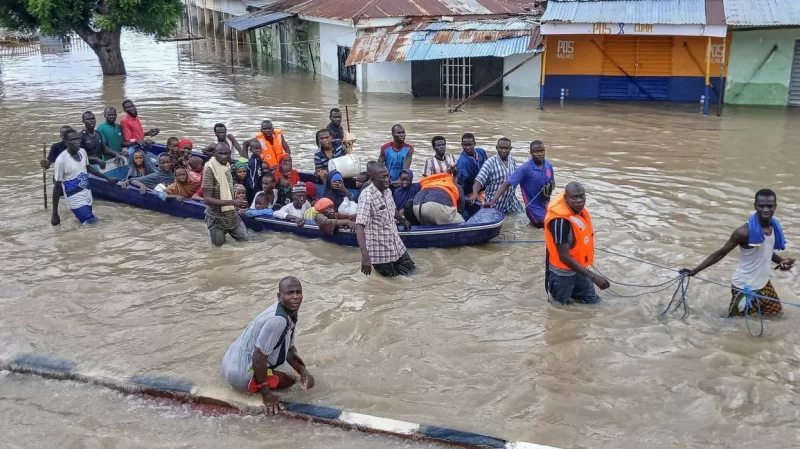
In the wake of the massive flooding in Maiduguri, capital of Borno, northeast Nigeria, from around 9 September where more than a million persons have been displaced and dozens dead, gory images of the disaster of the submerged area were shared widely, especially on social, along with the call to action and hashtag, #PrayForMaiduguri.
This scale of flooding in was primarily caused by the collapse of the Alau Dam, exacerbated by heavy rainfall. The dam overflowed, releasing a significant volume of water that inundated approximately seventy percent of Maiduguri, leading to widespread destruction of thousands homes, businesses, schools, infrastructure, etc, as the authorities say the situation is considered the worst flooding event in Maiduguri in three decades.
The Alau Dam Is owned and managed by the Chad Basin Development Authority (CBDA), a federal government agency responsible for the development and management of water resources in the Chad Basin area of Nigeria. The dam, constructed between 1984 and 1986, was designed to provide water for irrigation and domestic use in Maiduguri and surrounding areas, as well as to help control flooding in the region.
The Borno state government collaborates with the CBDA to oversee the dam’s operations and address any issues that arise, particularly concerning flood risks and water management.
The dam has undergone various ‘maintenance efforts’ over the years— on paper, that is—and its significant budget allocations for repairs totalled almost one billion naira over the past twelve years, with specific allocations in 2012, 2013, 2016, 2018 and, in fact, the last major ‘rehabilitation effort’ occurred on 29 July, when the last tranche of money was allocated, just weeks before the dam’s collapse.
KashimShettima, who was formerly governor of Borno (2011–2019), and a senator for Borno Central (2019–2023) years before becoming vice president, who led a federal government delegation to Maiduguri, visited the palace of the Shehu of Borno, which was also hit by the flood, and then went to the Bakassi Internally Displaced Persons (IDP) camp where thousands of displaced victims take refuge.
He said the government would support the IDPs with fifty trucks of rice, and added that the government would collaborate with the North East Development Commission and other agencies to ensure the victims don’t spend more than two weeks at the camp. Whether the rice is supposed to cook itself and served as meals or how precisely the dispossessed and completely disoriented victims are to proceed with that remains a mystery. And, in fact, whether indeed the fifty trucks of rice indeed arrived remains a valid question.
And, as someone had comically put it, the solution to every problem in Nigeria, in the eyes of this regime, is rice. Complain about the hardship, unliveable conditions, increased cost of living, and you’re given rice to share; complain about police brutality, it’s rice; bad governance, rice.
As usual with politician speak, Shettima expressed his ‘deepest sympathies’ and assuring the IDPs that the federal government would prioritise their welfare, and enjoined them to take what befell them as an ‘act of God’.
Before the Alau Dam failed, several warning signs indicated imminent failure. First, the Nigerian Meteorological Agency (NiMet) had earlier warned about an expected heavy rainfall. Nothing was done about this and, there had been flooding in the area with twenty-seven thousand victims displaced, as international agencies and others had already began mobilising resources to help the flood victims.
As a result the rains, the dam experienced unusually high water levels which raised alarms about its capacity to hold additional water.
Second, reports indicated that parts of the dam were compromised, with channels breaking down and flooding surrounding farmlands. This structural failure was a clear sign of the dam’s inability to manage the excess water effectively.
These and other factors collectively pointed towards an impending crisis, highlighting the urgency for timely intervention to prevent the catastrophic failure.
A week before the dam collapse that exacerbated the crisis, Bukar Tijani, secretary to the Borno State Government, assured residents, on behalf of the governor, BabaganaZulum, that Maiduguri was safe and not under any threat from flooding. He stated that the Alau Dam had not broken nor faced any such threat, and that the government was actively working with the chad Basin Development Authority to manage the situation and prevent flooding.
He emphasised that there was no cause for alarm, this, despite concerns about the dam’s overflow, resulting in flooding already going on in nearby areas. When things got out of hand and the floods began ravaging Maiduguri, BabaganaZulum, the governor, was seen in folded trousers purportedly helping out, but in reality doing what he does best, posing for populist pictures.
The Alau Dam has a history of a similar incident occurring in the past which resulted in significant flooding, loss of lives and property, etc. Were we a normal people, this historical precedent should have prompted closer monitoring and preventive measures but, no. This is Nigeria.
In September 1994, the Alau Dam collapsed due to heavy rains, leading to severe flooding with nearly half of Maiduguri submerged and displacing approximately four hundred thousand people. This was after the dam had previously overflowed in 1992.
To be sure, a dam meant, among other things, to control flooding overflowed six years after completion, and the entire area was flooded with half the city submerged on the eighth year of its completion, the exact reason it was built to prevent! Thirty years on, the very same thing reoccurred, only this time with greater devastation.
A normal people would’ve said in 1994, ‘Never again!’ and taken steps to fix things and prevent a reoccurrence.
First, there would’ve been consequences for mix up that caused a new dam to overflow and even collapse, as well as the failure in emergency management that resulted in the loss of lives and property. Someone would’ve resigned, others prosecuted and imprisoned; the dam would’ve been expanded to increase its capacity.
There would’ve been in place a system of regular inspections and maintenance of the dam to promptly identify and correct structural weaknesses long before they can ever led to failure.
And, equally, a robust monitoring system to track water levels and dam integrity implemented, to provide early warnings, and all early warnings would’ve been acted upon on urgently.
Drainage infrastructure in Maiduguri would since have been upgraded and regularly maintained to help manage excess rainwater effectively, as well as, clearing blocked drainage systems regularly, and constructing temporary flood barriers to reduce the impact of heavy rainfall.
There would’ve been continuous community awareness by educating residents about flood risks and safety measures, including timely communication regarding potential flooding and evacuation, as against lying, downplaying imminent danger, and covering up.
Evacuation plans would’ve been in place, as well as systems of coordination between emergency management agencies of the local, state and federal governments to ensure swift, seamless evacuation and dignifying aid distribution during crises.
What one has seen in this recent disaster has been nothing but bumbling incompetence and inhumanity all round, and with a touch of arrogance. A demeaning video of bread loaves thrown at hapless, stranded citizens by government offices, which evokes images of feeding stray dogs handouts by benefactors, can’t escape my consciousness no matter how hard I’ve tried to erase them and forget about it.
Apart from the usual perfunctory soundbites politicians mutter when such incidents occur, I’ve not heard where these issues have been raised with this disaster, nor am I convinced that the exact same scenario won’t repeat in September 2054, as 2024 has been a replay of 1994.
Neither, am I convinced more flooding won’t be happening in other parts of Nigeria this year with the same consequences as Maiduguri, as I don’t see anything lessons learned and things looking to be done differently after this.
When, therefore, we say ‘Pray for Maiduguri’, what precisely do we mean? Because none of these issues is addressed by prayer. Besides, Nigeria is the second most prayerful country in the world (Afghanistan recently took over by one percent). If these issues were addressed by prayers, at what point would the answers begin coming in?
Sesugh Akume, a public policy analyst, writes from Abuja



























You must be logged in to post a comment Login