National Issues
On Onanuga’s Bubble Of Privilege -By Isaac Asabor
If Nigeria’s leaders and their spokesmen wish to convince citizens that better days await them, they must first prove that they can see the difficult days people are living through now. Until then, the view from the bubble of privilege will continue to look very different from the reality on the ground.

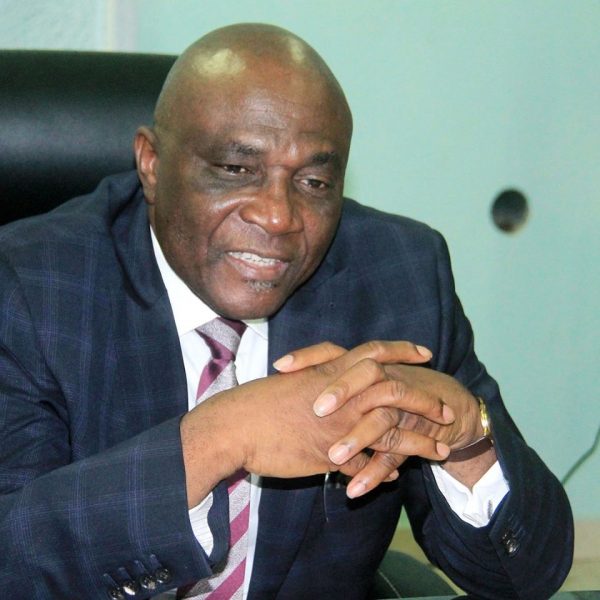
When presidential spokesman Bayo Onanuga recently declared that he does not see the hunger many Nigerians complain about, he may have unknowingly exposed one of the greatest dangers in governance: the danger of living inside a bubble of privilege.
For the sake of clarity, it is germane to explain that a “bubble of privilege”, as can be seen on the headline of this piece, is a condition in which individuals become insulated from the harsh realities experienced by the majority of society. Shielded by status, power, wealth, or proximity to authority, they often develop a worldview that is disconnected from the daily struggles of ordinary people. Within such a bubble, personal comfort can easily be mistaken for collective well-being, and isolated experiences can be projected as national realities.
Those living within a bubble of privilege are often removed from the economic pressures, social inequalities, and institutional challenges confronting the wider population. Because they do not personally encounter these hardships, they may underestimate their severity or even question their existence. Privilege can create a form of detachment in which the suffering of others becomes abstract, distant, or invisible.
Such insulation frequently leads to a narrowed perspective. Individuals in positions of influence often interact primarily with people who share similar backgrounds, privileges, and viewpoints. Over time, this creates an echo chamber that reinforces existing beliefs while limiting exposure to alternative realities. The result is a worldview that reflects the experiences of a privileged few rather than the circumstances of the broader society.
One of the most enduring features of privilege is that it often remains invisible to those who possess it. Advantages arising from social status, political connections, economic security, or access to power can appear normal and deserved. Consequently, success, comfort, and opportunity may be viewed solely as the products of personal effort, while the structural advantages that facilitated them remain overlooked.
When confronted with evidence that challenges their perceptions, individuals within a bubble of privilege may respond with skepticism, defensiveness, or outright dismissal. Accepting that millions of others experience a reality starkly different from their own requires acknowledging that their understanding of society may be incomplete. For many, this can be uncomfortable, as it disrupts long-held assumptions about how the world works.
Escaping such a bubble requires deliberate effort. It demands listening to voices outside one’s immediate social and professional circles, engaging with people whose experiences differ markedly from one’s own, and recognizing that personal experience is not always a reliable measure of collective reality. It also requires humility, the willingness to accept that what is visible from the corridors of power may bear little resemblance to what is happening in homes, markets, workplaces, and communities across the country.
In the context of governance, this concept carries profound implications. Public officials and their spokespersons are expected not merely to represent government policies but also to understand and articulate the lived experiences of the citizens they serve. When those in authority appear unable to recognize widespread hardship because it is absent from their immediate environment, they risk governing from a position of detachment rather than understanding, and from perception rather than reality.
It is against this backdrop that criticisms of Bayo Onanuga’s remarks on hunger and economic hardship should be viewed. His comments have reignited concerns about whether those at the highest levels of government are seeing the Nigeria that millions of citizens experience daily, or merely the Nigeria visible from within the comfortable confines of power. Such a disconnect lies at the heart of a bubble of privilege, a place where the absence of personal suffering is mistaken for the absence of suffering itself, and where distance from hardship breeds disbelief in its existence.
To be fair, every government has a right to defend its policies. Every spokesperson is expected to project optimism and highlight achievements. That is part of the job description. However, there is a profound difference between defending government policies and dismissing the lived experiences of citizens. The tragedy of privilege is that it often blinds its beneficiaries to realities that others confront daily.
Nigeria today is not suffering from a shortage of evidence about economic hardship. The evidence is visible in crowded markets where shoppers now buy food in tiny portions because family budgets can no longer accommodate bulk purchases. It is visible in households that have quietly removed protein from their meals. It is visible in the growing number of graduates unable to find decent jobs and in workers whose salaries lose value before they even receive them.
One does not need a special survey to see these realities. A simple conversation with traders, artisans, transport operators, teachers, and civil servants reveals a nation struggling under the weight of rising living costs. Yet, from the comfort of government offices and official convoys, such realities can appear distant.
History repeatedly teaches that the most dangerous leaders and advisers are not necessarily those who are malicious but those who become insulated. They stop hearing ordinary voices. They begin to mistake official statistics for everyday realities. They surround themselves with people who share similar privileges and perspectives. Eventually, they become convinced that what they see is all there is to see.
This is not unique to Nigeria. Throughout history, governments have fallen into the trap of believing economic indicators while ignoring human suffering. Citizens, however, do not live inside spreadsheets. They live in markets, homes, buses, schools, hospitals, and workplaces.
A mother trying to stretch a week’s food budget does not experience the economy through policy briefs. A commercial driver does not measure economic progress through government presentations. A young graduate searching endlessly for employment does not evaluate reforms through official talking points. They experience reality through prices, opportunities, and survival.
The irony is that even supporters of the current administration acknowledge the existence of hardship. Many who defend President Bola Tinubu’s economic reforms do so by arguing that the pain is temporary and necessary for long-term gains. That is a legitimate argument. What becomes difficult to defend is the suggestion that the pain itself is largely imaginary. When millions of people complain simultaneously about rising costs of living, the proper response is not disbelief. It is inquiry. It is empathy. It is engagement.
The role of government communication should not be to tell citizens that their suffering does not exist. Rather, it should be to explain why difficult policies were adopted, what relief measures are being implemented, and when people can reasonably expect improvement. So, dismissing public complaints risks creating an impression that those in power are disconnected from the consequences of their own decisions.
The problem with privilege is not wealth itself. The problem arises when privilege becomes a lens that distorts reality. A man who never worries about the next meal may genuinely struggle to understand hunger. A person whose transportation, housing, healthcare, and security are guaranteed by public office may find it difficult to grasp the daily anxieties of ordinary citizens. That is why humility is essential in public service.
A government spokesperson should serve as a bridge between leaders and citizens, not as a wall separating them. The moment officials begin to question whether widespread hardship exists, they risk sending a message that the voices of struggling Nigerians are exaggerated, irrelevant, or unworthy of attention.
Such a message can deepen public frustration far more than any economic statistic can repair. Perhaps Onanuga’s remarks reveal less about Nigeria and more about the environment in which powerful officials operate. It is an environment where comfort can obscure suffering, where proximity to power can create distance from reality, and where daily interaction with privilege can make hardship seem invisible.
But hunger does not disappear because a government official does not see it. The trader who skips meals to keep her business afloat sees it. The father struggling to pay school fees sees it. The pensioner watching the value of savings evaporate sees it. The young Nigerian abandoning dreams because opportunities remain scarce sees it. Their experiences are not political slogans. They are realities.
The true test of leadership is not whether it can celebrate success. It is whether it can acknowledge pain while pursuing solutions. Governments earn trust not by denying hardship but by demonstrating that they understand it and are committed to addressing it.
If Nigeria’s leaders and their spokesmen wish to convince citizens that better days await them, they must first prove that they can see the difficult days people are living through now. Until then, the view from the bubble of privilege will continue to look very different from the reality on the ground.