
Africa
Parliamentary Diplomacy and Inclusive Interfaith Dialogue in Nigeria -By Leo Igwe
Perpetrators like those who murdered Yohanna Shuaibu in Kano in 2021 and Deborah Samuel in Sokoto in 2022 are never brought to justice. Parliamentary diplomacy can address these missing links and other forces that weaken trust in interfaith relations.
Parliamentarians should facilitate inclusive interfaith dialogue and guarantee equality, dignity, and non-discrimination for persons from faith or no faith traditions.

The Inter-Parliamentary Union will hold its second conference on interfaith dialogue in Rome in June. It is pertinent to reflect on the significance of interfaith conversations, communications, and cooperation. In particular, I ask: can parliamentary diplomacy help further interreligious dialogue in Nigeria? Nigeria is religiously pluralistic, and religious attacks and sectarian violence often take place. Faith-based abuses are rampant. IPU is a global organization of national parliaments. It empowers parliamentarians to promote peace, democracy, and sustainable development. Parliamentarians are key stakeholders in statecraft and can utilize their positions to foster inclusive dialogue and promote effective governance.
Unfortunately, parliamentary diplomacy has not robustly been deployed to further inclusive interfaith dialogue. Interreligious dialogue in Nigeria is anything but inclusive. The exercise has exclusively been a “Chrislamic” affair, that is, a dialogue between Christians and Muslims. That should not be the case because millions of Nigerians do not profess Christianity and Islam. Leaders of other religions and belief groups deserve seats and slots at the table of interfaith dialogue in Nigeria. At the moment, Christian and Muslim actors constitute the Nigeria Interreligious Council (NIREC), excluding traditional religious groups, and atheist and humanist belief constituencies in the country. This situation must change if Nigeria must rise to the challenge of realizing an inclusive interfaith dialogue.
In the past couple of years, I have invested in promoting understanding, and positive and cooperative interactions between people of different religions and beliefs. I have called for a more inclusive interfaith dialogue, especially the inclusion and representation of other faith and belief communities in NIREC. These appeals have fallen on deaf ears. But I have not given up.
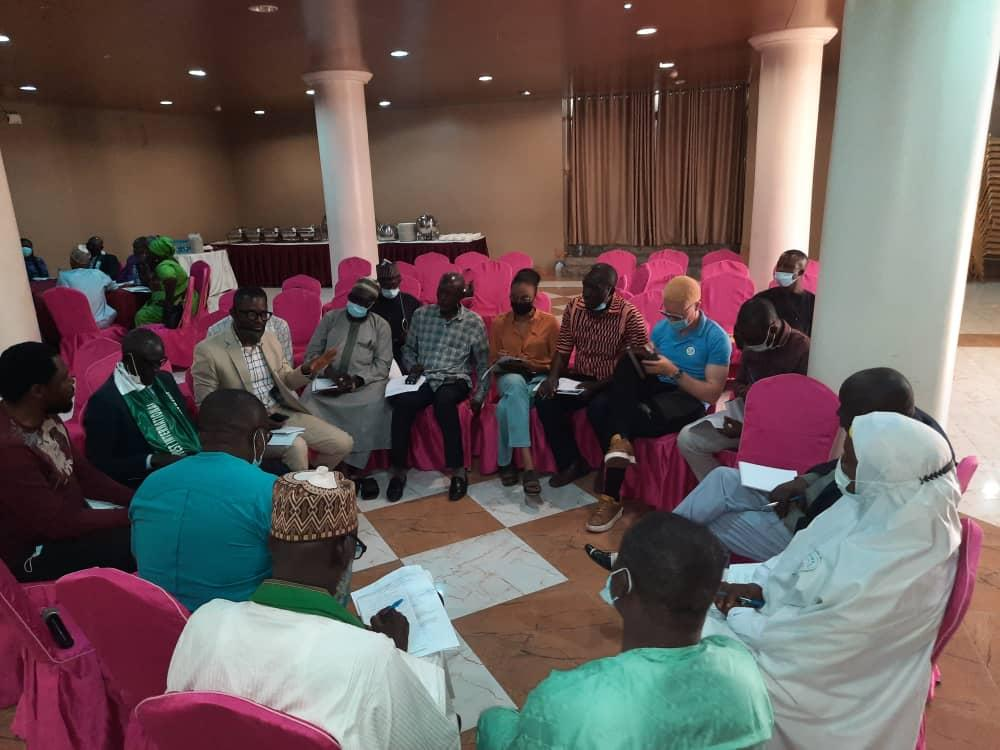
In furtherance of interfaith/belief harmony, understanding, and cooperation, I organized with James Wuye and Imam Ashafa of the Interfaith Mediation Center in Kaduna the first interfaith/belief dialogue between people of different religions and beliefs in Nigeria in 2021. For the first time, believers and nonbelievers met in the same room, sat side by side, and discussed issues of common interest. Parliamentarian diplomacy can be a resource in this respect. It can facilitate a more inclusive interfaith dialogue in Nigeria.
Meanwhile, the king of Morocco has called for the evolution of interreligious dialogue. The king acknowledged that the dialogue between Abrahamic religions was out of step with the times, and the religious and belief realities of the 21st century. As the king rightly pointed out, the paradigm of life and living is shifting and changing, so must interfaith relations and, yes interfaith dialogue. In Nigeria, interreligious dialogue needs to evolve. NIREC needs to be inclusive. NIREC has existed for many years, and interfaith dialogue has been going on for some time. Still, the goals of this dialogue are far from achieved.
Hence, for this year’s conference, IPU urges a strengthening of trust in interfaith relations, an embrace of hope for a common future.
To realize this goal, parliamentarians should take measures to remove all obstacles to free exercise of freedom of religion or belief. There cannot be a robust interfaith relation in a situation where people cannot fully exercise their right to believe or not believe. There cannot be a meaningful dialogue where individuals cannot profess, change, express in public or private their religious belief or nonbelief. In Muslim-dominated areas, sharia is enforced. Mistrust of other faith and belief communities is entrenched. While non-muslims can embrace Islam, convert, and become Muslims. Muslims are forbidden to renounce the faith. Apostasy is considered a dishonor to the religion and the Ummah, and an offence against the ‘state’. Open and public dissent or criticism is easily designated as blasphemy which is a crime punishable by death. Extrajudicial attacks and murder of alleged blasphemers take place with impunity.
Perpetrators like those who murdered Yohanna Shuaibu in Kano in 2021 and Deborah Samuel in Sokoto in 2022 are never brought to justice. Parliamentary diplomacy can address these missing links and other forces that weaken trust in interfaith relations.
Parliamentarians should facilitate inclusive interfaith dialogue and guarantee equality, dignity, and non-discrimination for persons from faith or no faith traditions.
Leo Igwe is a humanist, and sent this piece from Ibadan



















You must be logged in to post a comment Login