Opinion
Pat Utomi at 70: The Burden and Beauty of a Conscientious Public Life -By Oluwafemi Popoola

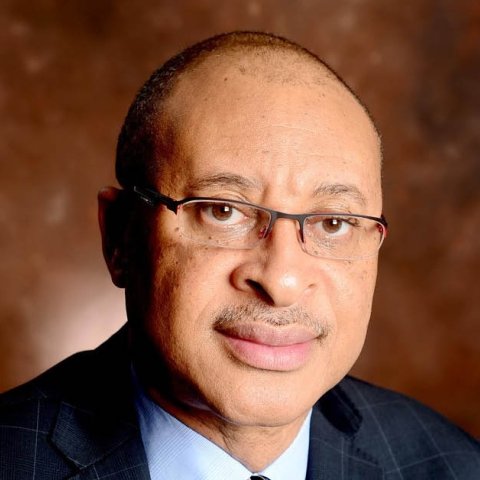
At seventy, society expects a man to step back, to observe quietly, to leave the battles to younger hands. The age is reserved for reflection, retreat, and well-earned rest from the storms of public life. But Prof. Patrick Okedinachi Utomi clearly missed that invitation to silence. He remains incurably vocal. He is outspoken as ever, still unsettling the status quo, still interrogating power, still demanding that Nigeria rise above its worst instincts. Age has not softened his convictions. It has rather hardened them.
While others age into resignation, Utomi has aged into urgency, carrying ideas that defy time and a conscience that refuses to go quiet.
My own journey into his orbit began in a rather symbolic way. The first time I met Prof. Pat Utomi in person was in 2024, at the official unveiling of the New Tribe Movement in Lagos. By then, I had interacted with him repeatedly through virtual meetings as Community Manager of the New Tribe and a member of the planning committee for that landmark event. Yet, as with reading Plato versus meeting Socrates (if such a thing were possible), the physical encounter was different. Some people are brilliant online and disappointing in person. Prof. Utomi is the opposite. His presence completes the argument.
He is, quite frankly, a rare breed: intensely cerebral yet refreshingly humane. When I was introduced to him as a former member of the Media Strategy Team of former Vice President Prof. Yemi Osinbajo and as the Community Manager of the New Tribe, the very movement he birthed, he shook my hand warmly, looked me straight in the eye, and welcomed me with sincerity that could not be outsourced. In Nigeria, where handshakes are often performative, his felt like a statement of values.
That moment, brief as it was, captured the essence of Pat Utomi: a man who sees people, not titles. He even took time to introduce his wife, a small but profound gesture that revealed the private civility behind the public intellectual. Edmund Burke once wrote that “manners are of more importance than laws,” and in that instant, Utomi’s manners quietly preached his philosophy of leadership.
To understand Prof. Utomi at 70 is to understand a life lived at the intersection of ideas, values and moral responsibility. Trained as a political economist, he has spent decades insisting that economics without ethics is merely organized greed. Long before “nation branding” became fashionable PowerPoint jargon, Utomi was already interrogating how values shape prosperity.
Adam Smith, often misquoted as an apostle of selfishness, actually warned in The Theory of Moral Sentiments that markets collapse without sympathy and trust. Utomi understood this instinctively. He has built his work around it. His foray into politics was therefore inevitable.
In 2007, when he contested the presidential election under the African Democratic Congress (ADC), it was not ambition in search of power, but conviction in search of structure. He entered the race not because he believed he would win easily, but because ideas deserve ballots too. In a political culture dominated by godfathers and gladiators, Utomi offered something dangerously subversive: policy. Nigerians, unfortunately, were not yet shopping for that product.
Still, history is kind to those who plant seeds even when the harvest is delayed. Utomi’s political intervention helped expand the moral vocabulary of Nigerian elections. He reminded us that leadership is not a wrestling match but a stewardship. As Hannah Arendt argued, politics at its best is the space where conscience meets collective action. Utomi dared to take conscience to the ballot.
Beyond politics, his impact on business education in Nigeria remains profound. Through his pivotal role in the early intellectual and institutional formation of Lagos Business School, Prof. Utomi helped shape a generation of business leaders who were taught not just how to make money, but why they should care. Peter Drucker famously warned that “the best way to predict the future is to create it.” Utomi took this literally — helping to build systems that merged competence with character.
What Prof. Utomi represents today may be his most important contribution. In an era of noise, he represents thought. In a time of cynicism, he represents moral insistence. In a country tempted by despair, he represents what Václav Havel called “the power of the powerless” — the quiet, stubborn refusal to surrender one’s conscience.
The New Tribe Movement is perhaps the most distilled expression of this philosophy. It is not a political party in the traditional sense; it is a moral provocation. It asks Nigerians to become citizens before becoming critics, and builders before becoming beneficiaries. Being part of that movement, and encountering its founder in person, felt like standing inside an idea rather than merely applauding one.
There is, of course, a touch of humor in Prof. Utomi’s seriousness. He has the uncanny ability to quote Karl Marx, the Bible, and market statistics in one breath and somehow make it all sound coherent. If Nigeria were a classroom, Utomi would be the lecturer who insists the exam will come from “outside the box” and then actually means it.
At 70, Prof. Pat Utomi is a reminder that nations are not rescued by miracles but by men and women who refuse to stop thinking. He is not perfect. Saints are boring and tyrants are efficient. But he is principled, and that is rarer. As Isaiah Berlin once noted, “The fox knows many things, but the hedgehog knows one big thing.” Pat Utomi knows his one big thing: that Nigeria can work if Nigerians choose conscience, dignity of the human person, values and thinking.
Happy birthday, Prof. Thank you for choosing the harder road and for inviting the rest of us to walk it with you.
Oluwafemi Popoola is a Nigerian journalist, media strategist, and columnist. He can be reached via bromeo2013@gmail.com