Forgotten Dairies
Pharisees, Sadducees and Nigeria’s Persistent Contradiction -By Adeyemi Temitope Sanya
Nigeria today stands at a similar intersection. Bridging the gap between belief and practice, and between religion and governance, remains one of the country’s most pressing challenges. Until that alignment is strengthened, the coexistence of deep faith and systemic difficulty is likely to persist.


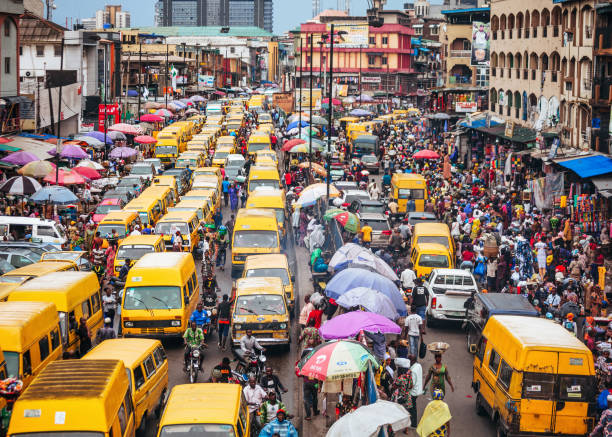
Nigeria presents a striking paradox. It is one of the most religious countries in the world, with over 90% of the population identifying with a religion. Islam and Christianity dominate this space, and religious participation is not only widespread but deeply embedded in daily life. Churches and mosques are filled regularly, and large-scale religious gatherings are a constant feature of the national landscape.
Yet, this strong religious presence exists alongside enduring governance and ethical challenges. Nigeria ranked 140th out of 180 countries in Transparency International’s 2024 Corruption Perception Index, reflecting persistent concerns about accountability and institutional integrity. Public perception surveys have also pointed to low trust in key institutions, including the judiciary and law enforcement.
This contrast between widespread religious commitment and ongoing systemic challenges raises a fundamental question: why has deep religiosity not translated into stronger public ethics and governance outcomes?
A useful lens for examining this tension can be found in the historical distinction between the Pharisees and Sadducees during the time of Jesus Christ. The Pharisees were known for their strict adherence to religious law and tradition. They were visible, influential among the people, and committed to preserving religious standards. However, historical accounts often point to a gap between outward observance and deeper ethical consistency. The Sadducees, by contrast, were closely associated with political authority and institutional power. They occupied influential positions within the temple system and maintained relationships with governing authorities, placing them at the intersection of religion and politics.
Contemporary Nigeria reflects elements of both patterns. On one hand, there is strong public expression of faith. Religious identity shapes community life, social interactions, and personal values. Nigeria is home to one of the largest Christian populations in the world, estimated at over 80 million, as well as a comparably large Muslim population. On the other hand, religion also intersects significantly with politics. Electoral behavior has, at various times, reflected religious and regional considerations, while political actors routinely engage religious leaders and institutions during campaigns because of their influence on public opinion and voter mobilization. In parts of northern Nigeria, the adoption of Sharia law in the early 2000s further illustrates the direct interface between religion and governance within a constitutionally secular state.
These dynamics do not suggest that religion is the cause of Nigeria’s challenges. Rather, they highlight a structural tension between high levels of religious participation and persistent gaps in institutional performance and public accountability. In effect, there is a visible disconnect between personal belief systems and collective governance outcomes.
It is also important to note that many of Nigeria’s conflicts, often framed in religious terms, are driven by multiple factors, including land use, resource competition, and local power structures. Religion may shape identity within these conflicts, but it is not always the primary cause.
The central issue, therefore, is not the presence of religion, but the alignment between belief and practice. A society in which the vast majority of citizens profess strong moral and spiritual frameworks would reasonably be expected to reflect those values in public systems through accountability, transparency, and institutional trust. Where that alignment is weak, the result is the kind of contradiction Nigeria currently experiences.
The historical parallel remains instructive. The Pharisees emphasized religious observance, while the Sadducees operated within structures of power. Both were influential, yet neither resolved the deeper ethical tensions of their time.
Nigeria today stands at a similar intersection. Bridging the gap between belief and practice, and between religion and governance, remains one of the country’s most pressing challenges. Until that alignment is strengthened, the coexistence of deep faith and systemic difficulty is likely to persist.