Business
Re-creating Safety Awareness In Our Societies -By Rofiat Bukola Afolabi
People must recognize the paramount importance of safety, as it encourages diligence, punctuality, and motivation for work. Safety fosters optimism, engenders positive thinking, and intensifies efforts towards survival. It supports sound policies, unifies diverse perspectives, creates a sense of belonging, fosters prosperous activities, and encourages the labor force necessary for economic growth.

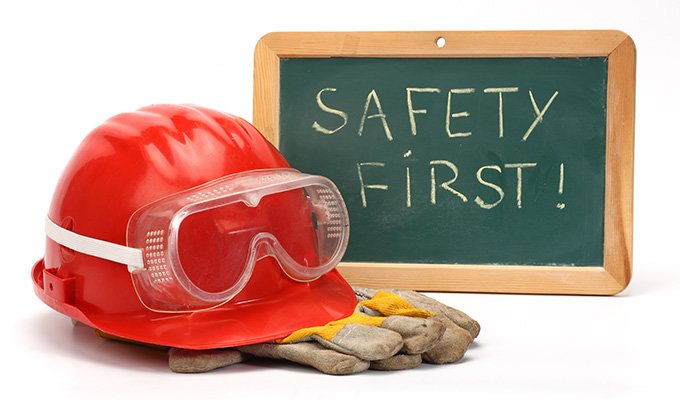
Re-establishing safety awareness within our society has become an urgent imperative, given the escalating insecurity prevailing in Nigeria today. The nation grapples with a multifaceted crisis involving political instability, economic turbulence, and social unrest, fostering a pervasive atmosphere of uncertainty that hampers socio-economic activities. Despite concerted efforts to address these issues, the issue of safety remains a recurrent concern. The populace, from the young to the elderly, lives in fear due to ongoing threats to personal security. Regrettably, Nigeria has witnessed a distressing surge in incidents of human theft, kidnapping, rape, and homicide. These occurrences are inextricably linked to the prevailing socio-economic and political disorder across the country, driven by factors such as poverty, illiteracy, law enforcement practices, government policies, leadership deficiencies, unequal resource distribution, corruption, and unemployment. These factors often reshape people’s perceptions and responses towards actions that are unlawful yet offer a means of survival for some individuals.
Moreover, many of the victims of these brutal crimes are often individuals who have underestimated the importance of safety. It is evident that safety is not prioritized as it should be, which can be witnessed in scenarios such as a young girl sent out late at night by her mother, only to go missing or be subjected to assault. These attitudes and behaviors among Nigerians may stem from a lack of awareness regarding the critical significance of safety. The collective response to safety concerns in Nigeria remains inadequate, with many citizens conditioned to believe that the government alone is responsible for ensuring their safety. However, it is essential to recognize that governmental corruption and mismanagement have often exacerbated safety issues. As Nigerians, we must introspect and question our roles in guaranteeing the safety of our lives and property. Are we genuinely committed to our own safety? From traders who venture out at night to individuals storing flammable materials improperly, drivers neglecting seat belts, corrupt security personnel aiding criminals, and many more, these actions collectively undermine human safety. Prevention remains the most effective solution, and fostering a collective understanding of the underlying social issues and a willingness to change are essential to establish a secure society.
People must recognize the paramount importance of safety, as it encourages diligence, punctuality, and motivation for work. Safety fosters optimism, engenders positive thinking, and intensifies efforts towards survival. It supports sound policies, unifies diverse perspectives, creates a sense of belonging, fosters prosperous activities, and encourages the labor force necessary for economic growth. Without safety, societal development becomes unattainable, leading to anarchy, stagnation, economic regression, dilapidated infrastructure, educational discouragement, restricted movement, labor shortages, and elevated criminal activities.
While safety is included in the curricula under civil and health education in Nigerian primary schools, the focus predominantly revolves around accidental safety, rather than teaching individuals how to secure their lives and property comprehensively. There is an urgent need to expand the curriculum’s scope and depth, extending it to secondary education levels. Safety should be regarded as a subject demanding thorough scrutiny, ensuring that every student carries the knowledge of safety forward even after elementary education. Safety should be conceived beyond mere accident prevention, encompassing economic, health, environmental, domestic, commercial, political, social, religio-cultural, personal, and organizational safety, among others. Pupils should be equipped with the skills to live safely when alone or in challenging environments. By giving due attention to these aspects in our daily lives, the constant threat to safety can be substantially reduced. It is imperative for individuals to scrutinize their actions, from what they consume and wear to their daily routines and interactions with others.
In conclusion, to establish a safe society free from rape, human theft, kidnapping, vandalism, and murder, we must undergo a transformation in our conduct and be prepared to abandon perilous behaviors that endanger our safety and existence.