Africa
Reflections on Death, Leadership, and Zanga Zanga in Nigeria, by Prince Charles Dickson, PhD

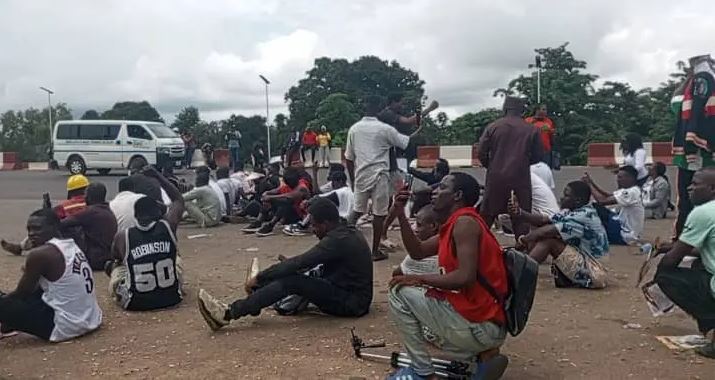
As I mourn the loss of my father, I am reminded of the fleeting nature of life and the importance of living in the present. The politics of his burial and the lavishness that follows are a stark contrast to the simplicity and sobriety that I believe should accompany death. This experience has led me to reflect not only on mortality but also on leadership and the current state of our nation, particularly in light of the ongoing #EndHungerProtests.
Never say it cannot happen to you, and yes it happened to me. My father and I had our misunderstandings, we never agreed on many perspectives, and I eventually grew into understanding that “he never knew better”.
As a father of one adult young man, and another teenage son, there are things I equally could have and still can do better. In a sentence, with his death, a piece of me certainly has died.
Let me proceed to tell us a tale…
Once upon a time there was a man who had been lost in the desert for three whole days without water. Just as he was about to collapse, he saw what appeared to be a lake a few hundred yards in front of him. “Could it be? Or is it just a mirage?” he thought to himself.
With the last bit of strength he could muster, he staggered toward the lake and quickly learned that his prayers had been answered: it was no mirage — it was indeed a large spring-fed lake full of more fresh water than he could ever drink in his lifetime. Yet while he was practically dying of thirst, he couldn’t bring himself to drink the water. He simply stood by the water’s edge and stared down at it.
There was a passerby riding on a camel from a nearby desert town who was watching the man’s bizarre behavior. She got off her camel, walked up to the thirsty man and asked, “Why don’t you have a drink, sir?”
He looked up at the woman with an exhausted, distraught expression on his face and tears welling up in his eyes. “I think I’m dying of thirst,” he said, “But there is way too much water here in this lake to drink. No matter what I do, I can’t possibly finish it all.”
The passerby smiled softly, bent down, scooped some water up with her hands, lifted it to the man’s mouth and said, “Sir, your opportunity right now, and as you move forward throughout the rest of your life, is to understand that you don’t have to drink the whole lake to quench your thirst. You can simply take one sip — just one small sip… and then another if you choose. Focus only on the mouthful in front of you, and most of your anxiety, fear, and overwhelm about the rest will gradually fade.”
In life, we can’t take more than one sip at a time. We all do lots of things that don’t need to be done. It’s necessary to say “NO” to some really good things.
The story of the man who stood by the lake, unable to drink due to the overwhelming abundance of water, resonates deeply. It serves as a poignant reminder that we cannot tackle everything at once. Sometimes, we need to focus on the present moment, take small sips, and trust that the rest will follow.
If I were the President of Nigeria, I would approach the current protests with a similar mindset. Upon receiving notice of nationwide demonstrations, I would promptly address the nation through a live broadcast, acknowledging the citizens’ pain and concerns. I would extend an invitation to the youth for a national dialogue, ensuring inclusivity by selecting representatives from each state, local government area, and diverse interest groups.
By mandating the attendance of governors, ministers, and government officials, I would promote transparency and accountability. The dialogue sessions would be broadcast live on major radio and TV stations, streamed on social media platforms, and open to the public for viewing and participation.
Through this inclusive and transparent process, we would engage in constructive discussions, identify key issues, and collaboratively develop implementable solutions to address the concerns of the Nigerian people. This approach would demonstrate a commitment to listening, empathy, and collective problem-solving.
As I reflect on my father’s passing, I am reminded that death can be a great teacher. It shows us that life is short, and our time is limited. We must prioritize what truly matters and focus on the present moment.
In the context of the #EndHungerProtests, this means acknowledging the suffering of our citizens and working together to address the root causes of hunger and poverty. It means putting aside political differences and coming together as a nation to find solutions. Sadly it does not hold because death and protests are like a metaphor.
In Nigeria, death and protests share a poignant and complex relationship, often serving as metaphors for the nation’s turbulent leadership landscape. Each protest is a symbolic death of hope and trust in a system that repeatedly fails its people, yet also a birth of resistance and a cry for change.
Nigerian leadership has long been characterized by a cycle of neglect, corruption, and inefficiency. Promises of change and development are frequently made but rarely fulfilled, leaving citizens disillusioned and disenfranchised. The deaths of ordinary Nigerians due to inadequate healthcare, poor infrastructure, and violent conflicts are stark reminders of the leadership’s failures. These losses ignite the flames of protests, as people demand accountability and justice.
Protests in Nigeria are more than just expressions of anger; they are calls for rebirth. Each protest represents a collective desire to dismantle the old and build anew, to replace the metaphorical death with the hope of a better future. From the #EndSARS movement to numerous local uprisings, Nigerians repeatedly take to the streets, risking their lives to challenge the status quo.
The response from Nigerian leadership to these protests is often repressive. Rather than addressing the root causes, the government tends to suppress dissent through force, arrests, and media blackouts. This reaction further deepens the divide between the leaders and the led, perpetuating a cycle of death and protest. The silence from leadership in the face of legitimate grievances speaks volumes about their disconnect from the populace.
Death and protests in Nigeria serve as powerful metaphors for the country’s need for transformation. Each death due to systemic failures, and each protest sparked by these tragedies, is a testament to the urgent need for change. Nigerian leadership must move beyond mere rhetoric and take tangible steps towards addressing the underlying issues plaguing the nation.
In essence, the deaths and protests are a call to Nigerian leaders to embrace true leadership—one that listens, responds, and acts in the best interests of the people. Until then, the cycle will continue, with each protest marking another metaphorical death and another plea for rebirth.
My father has run his race, and we are currently running ours…his death is a protest all men must partake in. And as the passerby in the story said, “You don’t have to drink the whole lake to quench your thirst. You can simply take one sip — just one small sip… and then another if you choose.” Let us take small sips towards progress, focus on the present moment, and trust that together, we can create a better future for Nigeria—May Nigeria win.