Africa
Reuben Abati’s Opinion Suggesting Igbo Not Selling Property To Non-Igbo, Not His Identity, by Isaac Asabor

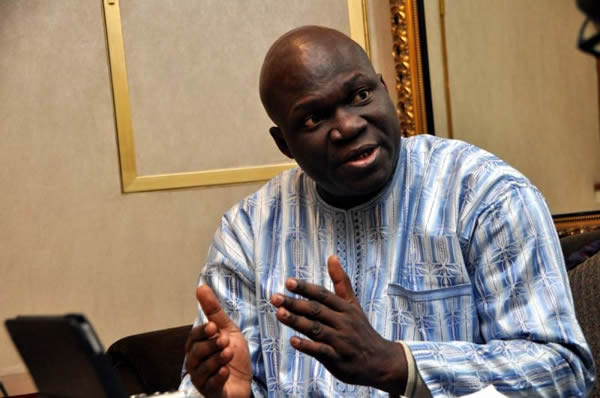
The storm of criticism currently directed at Dr. Reuben Abati over his opinion suggesting that Igbo do not sell property to non-Igbo highlights the volatile nature of public discourse in Nigeria, despite the fact it was unarguably not in his character or identity to make such comment on air. In a country as diverse as ours, the ethnic prism often magnifies words, giving them interpretations that may not have been intended. However, while the sensitivity around ethnicity is understandable, it is crucial to evaluate Abati’s comment within the broader context of his personality, career, and contributions to national discourse.
Abati is unarguably one of Nigeria’s most respected journalists and public intellectuals. With decades of experience in media, governance, and public commentary, his name has become synonymous with thought leadership. From his days as a columnist for “The Guardian” to his tenure as a presidential spokesperson, Abati has consistently engaged with issues that transcend ethnic or regional divides. His body of work reflects a commitment to national unity and constructive dialogue, not the polarizing rhetoric that some now seek to associate him with.
This is why the current uproar over his recent comment deserves a more nuanced analysis. A single moment of poor phrasing, as unfortunate as it may have been, does not erase a lifetime of contributions to national unity. Yet, in the heat of social media outrage, there is a tendency to reduce individuals to their worst moments. This, in Abati’s case, is not only unjust but also detrimental to the larger goal of fostering healthy discourse in Nigeria.
Dr. Reuben Abati has spent decades navigating the complexities of Nigerian society. He has criticized political figures, institutions, and policies across all ethnic divides, showing no favoritism in his advocacy for good governance and social justice. Abati’s focus has always been on the collective good, not on advancing sectional interests.
During his time as a columnist, he wrote extensively on issues that resonate with all Nigerians in the areas of education, healthcare, security, and governance. His writings were often devoid of ethnic biases, reflecting instead a concern for how policies and events affect the average Nigerian. His tenure as a presidential spokesperson further demonstrated his ability to rise above ethnic and regional allegiances to serve the broader Nigerian interest.
It is also worth noting that his public engagements often highlight the richness of Nigeria’s diversity. He has celebrated the industriousness of the Ndigbo, the resilience of the Northerners, the resourcefulness of the Yorubas, and the cultural contributions of other ethnic groups. These are not the actions of a man given to tribalism or divisiveness.
Public figures, especially those in the media, operate in high-pressure environments where words must be delivered on cue. Mistakes are inevitable. A slip of the tongue or a poorly framed argument, though regrettable, does not necessarily reveal one’s true intentions or beliefs. It is entirely plausible that Abati’s comment about the Ndigbo was a faux pas, an unfortunate choice of words rather than a deliberate affront.
Even seasoned public commentators are not immune to the occasional misstep. The dynamics of live broadcasts and public debates often leave little room for second-guessing, and the pressure to deliver compelling analysis can sometimes lead to unintended consequences. Abati is human, and like all humans, he is fallible.
To define him by this single incident is to ignore the broader context of his life and work. Abati’s comment, while unfortunate, does not align with the inclusive and progressive values he has consistently demonstrated.
The Ndigbo are a remarkable people whose contributions to Nigeria cannot be overstated. From commerce to academia, from politics to arts, the Ndigbo have been pivotal in shaping the Nigerian story. It is understandable that any perceived slight against them would evoke strong reactions.
However, in addressing grievances, it is essential to distinguish between an isolated error and a pattern of behavior. Abati’s record does not suggest a history of ethnic bias or divisiveness. Therefore, judging him solely on this incident risks inflating a momentary lapse into an indictment of his character, which would be neither fair nor constructive.
The reaction to Abati’s comment is indicative of a broader issue in contemporary discourse: the rush to outrage. In an era dominated by social media, the pressure to take immediate and often extreme positions has eclipsed the need for thoughtful analysis.
Outrage culture thrives on decontextualization. It isolates incidents from the larger narrative, magnifying their impact while ignoring mitigating factors. In Abati’s case, the focus has been entirely on his comment, with little attention paid to his broader contributions to national unity and intellectual discourse. This is a disservice not only to Abati but also to the principles of fairness and rationality that should guide public debate.
To truly understand who Dr. Reuben Abati is, one must look beyond the headlines and sound bites. His identity is not defined by a single comment but by a lifetime of work that has consistently advocated for inclusivity and progress.
Abati’s writings, public engagements, and professional conduct reflect a deep understanding of Nigeria’s diversity and a genuine desire to see the country thrive. He has critiqued leaders and policies without regard for ethnic affiliation, focusing instead on the collective good. His intellectual contributions have inspired dialogue and provided solutions to some of Nigeria’s most pressing challenges.
This episode serves as a teachable moment, for Abati, for Nigerians, and for public figures in general. For Abati, it is a reminder of the weight that words carry in a multi-ethnic society. For Nigerians, it is an opportunity to practice grace and to resist the urge to reduce individuals to their worst moments.
Public figures must also recognize the responsibility that comes with their platforms. In a country as diverse as Nigeria, words have the power to unite or divide. The sensitivity required in addressing issues of ethnicity cannot be overstated.
In moving forward, Nigerians must resist the temptation to view Abati through the narrow lens of this incident. His comment, though unfortunate, does not define him. It should be seen as an isolated misstep, not as a reflection of his character or intentions.
Abati’s legacy as a true Nigerian without a polarizing disposition remains intact. He has consistently demonstrated a commitment to unity, equity, and justice, values that are far more indicative of who he is than a single poorly framed statement.
As we navigate the complexities of our national identity, let us focus on fostering dialogue and understanding. The energy spent on vilifying Abati could be better directed toward addressing the real issues that affect Nigeria’s ethnic groups, issues of equity, inclusion, and justice.
Dr. Reuben Abati remains a figure whose contributions to Nigeria’s development cannot be overstated. Let us not allow a momentary lapse to overshadow a lifetime of dedication to the Nigerian cause. His comment on the Ndigbo, while regrettable, is not who he is. It is a reminder that even the most seasoned commentators are human and that humanity deserves both accountability and grace.