
Africa
Judicial Overreach and the Fight for Rivers State: How Omotosho, Lifu, and Abdulmalik Created Unnecessary Appeals by Failing to Stay in Their Lane, by John Egbeazien Oshodi

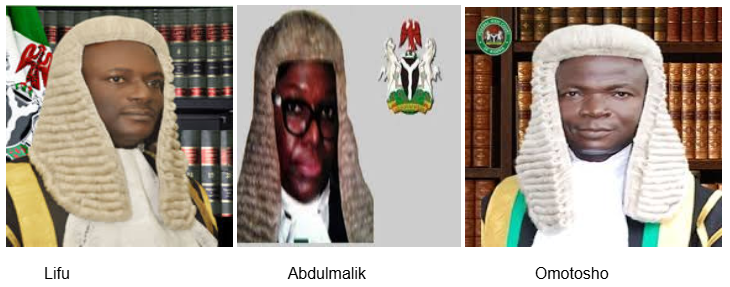
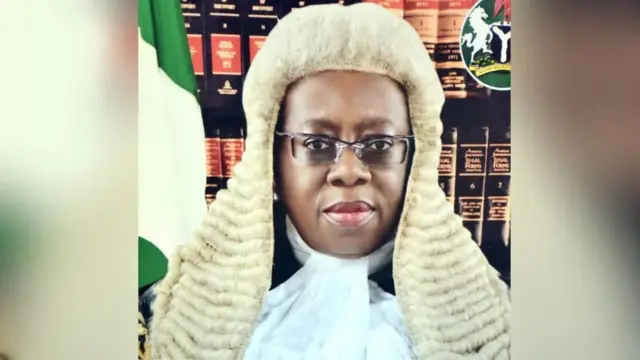
The ongoing governance crisis in Rivers State has laid bare the deep-seated issues plaguing Nigeria’s judiciary. At the center of this turmoil are three Federal High Court judges in Abuja—Justices James Omotosho, Peter Lifu, and Joyce Abdulmalik. While no direct accusations are made, their decisions have become emblematic of jurisdictional overreach, legal confusion, and potential external manipulation. These actions have eroded public trust and undermined the foundational principles of justice, ethics, and democracy.
Judicial Overreach and Section 28
Justice Onyekachi Otisi recently reaffirmed the limited jurisdiction of Federal High Courts, particularly in state matters such as local elections and governance. However, Justices Abdulmalik and Lifu ignored these boundaries, issuing rulings that infringed upon state autonomy. Section 28 of the Electoral Act, which applies exclusively to federal elections, was either misunderstood or deliberately overlooked, further fueling allegations of judicial compromise.
Justice Abdulmalik’s ruling to freeze Rivers State’s monthly allocations from the Central Bank, triggered by a legislative dispute, exemplifies this jurisdictional breach. Her decision disrupted the financial stability of the state and risked undermining governance. Similarly, Justice Omotosho invalidated the Rivers State 2024 Appropriation Bill, a lawfully passed budget, calling it a “constitutional aberration” without due consideration for state legislative authority. Justice Lifu added to the chaos with his September 30 ruling halting the Rivers State local government election, although his order was later overturned.
If They Had Stayed in Their Lane
The crux of this crisis is simple: these judges ventured beyond their jurisdiction. If Justices Omotosho, Lifu, and Abdulmalik had adhered to their responsibilities by addressing the growing backlog of Abuja cases under their purview, this legal chaos could have been avoided. Instead, their interference in state-level electoral, legislative, and political party matters has overwhelmed the appellate system with avoidable appeals. This misstep highlights a judiciary stretched thin—not by necessity but by self-inflicted overreach.
Media Scrutiny and Ethical Concerns
The media has not been silent on this issue. Reports suggest these judges may have been influenced by political figures, particularly in Rivers State, to serve interests outside their judicial mandate. Such claims, while speculative, cast a long shadow on the judiciary’s integrity. If judges are perceived as pawns in political games, their rulings lose credibility, and public confidence in the judiciary crumbles.
Ethically, these actions raise profound questions. A judge’s role is to uphold justice impartially, not to advance personal or external agendas. When judicial decisions appear to serve political interests, the line between governance and manipulation blurs, undermining the rule of law.
The Psychological Toll on Citizens
The decisions by these judges extend beyond legal implications—they carry significant psychological burdens. For the citizens of Rivers State, the uncertainty surrounding governance and financial stability fosters anxiety, fear, and distrust. Public services, salaries, and livelihoods are at stake, leaving residents feeling powerless in a system that should protect their rights.
This erosion of trust in the judiciary—a cornerstone of democracy—deepens feelings of alienation and despair among the populace. The judiciary, meant to be a bastion of justice, becomes yet another source of unpredictability and stress.
Justice Barka’s Defining Moment
The weight of this crisis now rests on the shoulders of Justice Hamma Barka and his panel. They have an opportunity to restore the integrity of the judiciary by overturning the flawed rulings of Omotosho, Lifu, and Abdulmalik. Their decision will either reaffirm Nigeria’s commitment to justice and democratic principles or deepen the judiciary’s slide into mistrust and irrelevance.
Justice Barka must confront the reality that these jurisdictional breaches were not isolated mistakes but symptomatic of a judiciary swayed by external pressures. By standing firm and prioritizing constitutional fidelity, his panel can set a precedent that discourages future overreach.
A Call for Reform and Accountability
This situation demands more than a judicial decision—it calls for systemic reform. Judges must respect jurisdictional boundaries, focus on the cases within their remit, and avoid the allure of political entanglement. Nigeria cannot afford a judiciary that is both ethically compromised and operationally overstretched.
The actions of Justices Omotosho, Lifu, and Abdulmalik underscore the urgent need for accountability and reform. The Supreme Court must address these lapses decisively, ensuring that the judiciary remains a pillar of democracy rather than a tool for political expedience.
This is not merely a fight for Rivers State. It is a fight for the soul of Nigeria’s democracy, the ethical foundation of its judiciary, and the psychological well-being of its citizens. The time for clarity, accountability, and justice is now.
It’s high time Justices Omotosho, Lifu, and Abdulmalik stayed in their lane and focused on the thousands of unresolved cases piling up in Abuja. While fraud cases, constitutional disputes, and criminal trials gather dust in their own jurisdiction, these judges have chosen to meddle in state-level electoral and legislative matters they have no business handling. This misadventure has not only derailed justice in Rivers State but has also left Abuja’s judiciary struggling under an avalanche of neglected cases. Their time and expertise are needed where they belong—in Abuja’s overwhelmed courtrooms—not as rogue arbiters in matters far outside their mandate. It’s time to clean up the mess they’ve left behind, starting with a sharp refocus on the work staring them in the face.

Professor John Egbeazien Oshodi, born in Uromi, Edo State, Nigeria, is an American-based police and prison scientist, forensic/clinical psychologist, public policy psychologist, and legal psychologist. He’s a government advisor on forensic-clinical psychological services in the USA and the founder of the Dr. John Egbeazien Oshodi Foundation for Psychological Health. With a significant role in introducing forensic psychology to Nigeria through N.U.C. and Nasarawa State University, he’s also a former Secretary-General of the Nigeria Psychological Association. He’s taught at esteemed institutions like Florida Memorial University, Florida International University, Nova Southeastern University, and more, and is currently an online faculty member at ISCOM University, Weldios University and Walden University.




















You must be logged in to post a comment Login