
Africa
Sacred Journeys, Earthly Burdens: The Cost of Nigeria’s Pilgrimage Economy -By Prince Charles Dickson Ph.D
As I stirred the sugar into the yogurt, dissolving bitterness into sweetness, I thought of all the ways we hunger. For warmth. For dignity. For the courage to ask for what we need, and the grace to honor those who ask. The world will not slow down. But in its frenzy, we can be oases for one another—pouring hot water into empty vessels, handing over sugar like a promise.

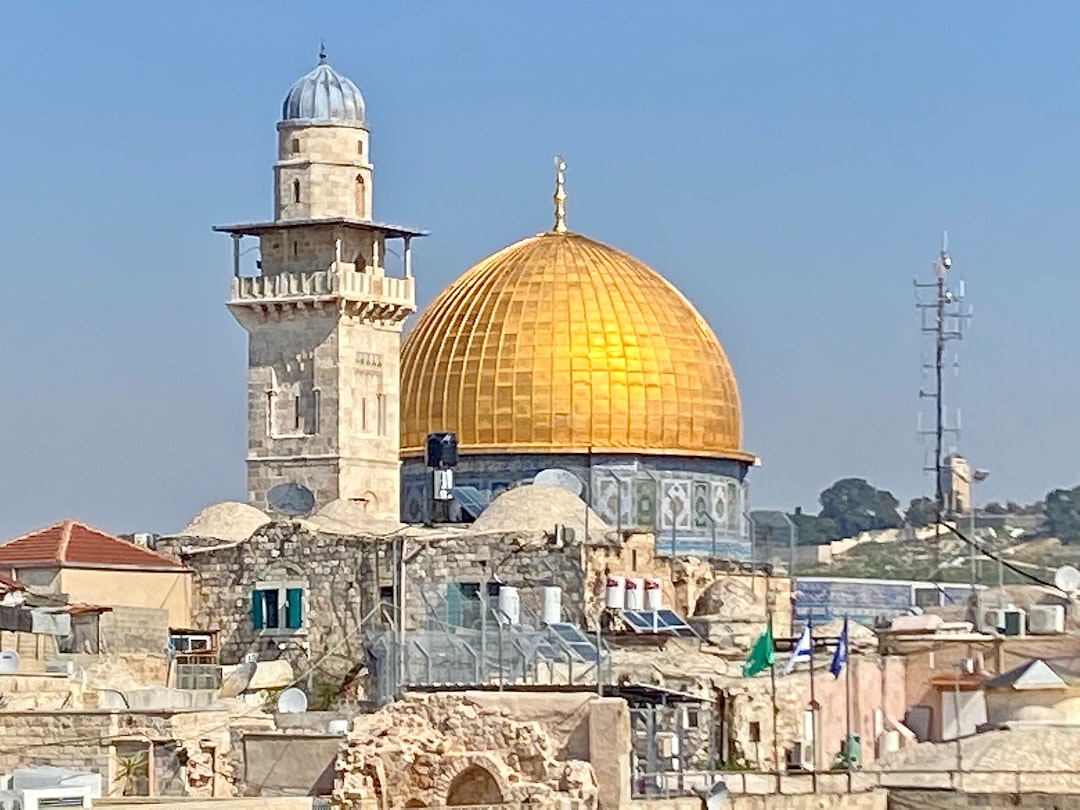
The desert does not care for your prayers. It swallows them whole, along with your sweat, doubts, and wallet weight. Yet here we were—Nigerians in Jordan, then Israel, tracing paths carved by prophets and kings, stepping on stones smoothed by millennia of footsteps. From the Dead Sea’s buoyant bitterness to Bethlehem’s star-marked grottoes, the land thrums with sacred electricity. But as she walked, she couldn’t shake the question: What does this cost us? Not just in naira, but in soul.
You remember the chaos—Abuja’s airport buzzing with first-time pilgrims clutching rosaries and Qurans, tour guides shouting over the din, warnings about “japa temptations” mingling with sermons. For many, this was a once-in-a-lifetime escape: from potholed streets, blackouts, and the gnawing uncertainty of survival back home. Yet even here, in the shadow of Herod’s stones and Galilee’s shores, Nigeria followed us. The tour operators in Jordan haggled like Lagos market women; Israeli border guards scrutinized our green passports with weary suspicion. And beneath it all, the Gaza war hummed like a discordant hymn, a reminder that holiness and human conflict are ancient bedfellows.
Let’s talk numbers. If a single pilgrimage package costs roughly ₦3.5–₦5 million per person. Multiply that by thousands of pilgrims annually, and Nigeria bleeds billions into foreign economies. In Jordan, our guides grinned as they narrated Petra’s history, their pockets fattened by dollars. In Israel, the pilgrimage industry is a well-oiled machine: hotels near Nazareth charge premium rates, Dead Sea mud is packaged and sold as divine therapy, and even the Via Dolorosa has a gift shop. Meanwhile, back home, nurses strike over unpaid wages, and students scratch equations into dust-choked chalkboards.
The Catholic Bishops’ recent call cuts like a knife: “Stop funding pilgrimages. Let faith pay its way.” Their logic is mercilessly practical: why should a nation drowning in debt—where 63% of citizens survive on less than $2 a day—subsidize spiritual tourism for a privileged few? The National Hajj Commission (NAHCON) and Christian Pilgrims’ Board, riddled with corruption scandals, stand as monuments to mismanagement. Remember the 2017 scandal where officials embezzled ₦90 million meant for pilgrims’ visas? Or the 2022 Hajj airlift fiasco that stranded thousands? These boards, the bishops argue, “serve neither their adherents nor the nation.”
Yet the allure persists. For many pilgrims, government sponsorship isn’t just a subsidy—it’s a lifeline. “I saved for ten years,” a retired teacher from Enugu told me, her eyes glistening at the Jordan River. “Without the board’s help, I’d never see Jerusalem.” Herein lies the paradox: pilgrimage is both a spiritual awakening and a symptom of systemic failure. When the state funds faith, it commodifies it—and when it withdraws, it risks severing the vulnerable from their solace.
Ah, the pilgrims themselves! Nigerians are nothing if not theatrical. There were the “Captains”—self-appointed prayer warriors who bossed others around like generals in God’s army. The Comedians, crack jokes at Caiaphas’ dungeon to ease the tension. The Holier-Than-Thous, who tsk-tsked at women’s uncovered hair while surreptitiously snapping selfies at Golgotha. And the Quiet Ones, like the widow from Sokoto who touched the Western Wall and wept without sound.
But spirituality here is tangled with spectacle. At the Dead Sea, I watched a pastor bottle the salty water, declaring it “a weapon against household witches.” In Bethlehem, traders hawked olive-wood crosses next to “I Error! Filename not specified. Jesus” t-shirts. Is this awakening? Or is it the monetization of longing?
The bishops’ critique is not just fiscal—it’s theological. “True faith,” their statement insists, “is not measured in miles traveled but in mercy shown.” They urge a reckoning: if Nigeria redirected pilgrimage funds to healthcare, education, or infrastructure, could that itself be a sacred act? Imagine ₦30 billion—the approximate annual cost of state-sponsored pilgrimages—channeled into neonatal clinics or rural electrification. Would that not honor the “least of these” whom Christ called us to serve?
But the counterargument simmers: pilgrimages foster unity, they say. On that flight to Tel Aviv, I saw Muslims and Christians swap snacks and stories. A Hausa imam helped a Yoruba grandmother fasten her seatbelt. For a moment, Nigeria felt possible again. Yet this fragile camaraderie exists in a bubble—one paid for by a state that can’t fix its roads.
You asked me, *“Can’t we have both—pilgrimages and progress?”* Perhaps. But not under this broken model. Here’s the radical alternative:
Decouple State and Sanctuary: Let religious groups self-organize pilgrimages, as the bishops propose. If a church or mosque can rally its flock to fund journeys, so be it—but without dipping into public coffers.
Audit the Sacred: Demand transparency from pilgrimage boards. Publish budgets, punish graft, and let pilgrims know exactly where their money goes.
Reinvest in the Here and Now: Redirect saved funds to tangible ministries—hospitals, schools, food banks—that embody “love thy neighbor” more vividly than any tour group.
On our last night in Jerusalem, I sat with a group under the stars. Nima from Plateau said quietly, “I came to feel closer to God. But I felt Him more when that waiter in Amman refilled my water…”. I urged her to tell the story—
It was the unlikeliest of sanctuaries—a crowded restaurant, humming with the chaos of clattering plates and overlapping voices. Amid the rush, a young waiter moved with a grace that transcended duty. His smile was not merely professional; it was an offering. In a world where transactions often eclipse connection, he chose to see me. I asked for three small things: hot water to refill my flask, a bowl of midnight-dark yogurt, and sugar to sweeten it—simple requests, yet specific, requiring attention in a sea of demands. He could have sighed, rolled his eyes, or deferred to the crowd. Instead, he leaned in.
His “of course” was a quiet rebellion against indifference.
The steaming flask returned, cradled like something sacred. The yogurt arrived, its darkness cradled in a bowl that gleamed like polished obsidian. The sugar, poured with care, became more than a condiment—it was a covenant.
At that moment, the noise faded. Here was a stranger who had every reason to rush, yet chose to pause. Here was proof that kindness is not a grand gesture reserved for saints, but a series of deliberate, ordinary acts: I will listen. I will try. You matter.
How much lighter the weight of our differences would be if we all carried this truth: that every interaction is a crossroads. We can choose to armor ourselves in a hurry, or we can meet one another as this young man did—with eyes that recognize a shared humanity. The systems we’ve built—borders, hierarchies, ideologies—are illusions compared to the raw, aching need we all harbor: to be treated gently, to be acknowledged.
As I stirred the sugar into the yogurt, dissolving bitterness into sweetness, I thought of all the ways we hunger. For warmth. For dignity. For the courage to ask for what we need, and the grace to honor those who ask. The world will not slow down. But in its frenzy, we can be oases for one another—pouring hot water into empty vessels, handing over sugar like a promise.
This is how we mend the fractures: not with grand declarations, but with the daily sacrament of paying attention. The waiter’s name is lost to me now, but his lesson lingers: in a universe that often feels cold and vast, we hold the power to make it intimate, one act of deliberate kindness at a time.
What if we all moved through life as he did—not merely serving, but seeing?
There it is—the heart of the matter. Spirituality isn’t stamped in a passport; it’s woven into daily acts of attention, kindness, and justice. Nigeria’s pilgrimage industry, for all its grandeur, risks reducing faith to a transactional spectacle. The bishops aren’t arguing against devotion—they’re pleading for a redefinition of what’s holy.
The desert still whispers. But maybe the miracle we need isn’t in Jordan’s rivers or Jerusalem’s tombs. Maybe it’s in the courage to stay home—to build a nation where the sacred isn’t a luxury, but a lived reality. May Nigeria win!
—
Prince Charles Dickson PhD
Team Lead
The Tattaaunawa Roundtable Initiative (TRICentre)
Development & Media Practitioner|
Researcher|Policy Analyst|Public Intellect|Teacher
234 803 331 1301, 234 805 715 2301
Alternate Mail: pcdbooks@yahoo.com
Skype ID: princecharlesdickson


















You must be logged in to post a comment Login