Global Issues
South Africa, Xenophobia and the Echoes of Apartheid -By Patrick Iwelunmor
There is also a more intimate dimension to this reality. For many South Africans, freedom arrived without full restoration. The promise of dignity was real, but its distribution has been uneven. In such a context, the arrival and visible survival of migrants can unintentionally reopen unresolved feelings of exclusion. The response is not simply directed outward. It is also shaped by an internal struggle to reconcile expectation with lived reality.

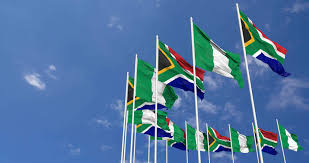
In South Africa, the violence sometimes labelled xenophobia is usually the final expression of tensions that have been building quietly over time. A row of shuttered spaza shops after a night of looting. A street where neighbours who once exchanged greetings now pass each other in silence. A young man pushed out of a rented room because his accent has marked him as foreign. These are not isolated moments of disorder. They are points where deeper pressures briefly become visible. Xenophobia, in this sense, is not only about migration or economic strain. It is an echo of unresolved history, carrying forward the afterlife of apartheid into the present.
Apartheid did more than enforce legal separation. It organised perception itself. It trained people to see difference as distance and proximity as competition. It produced a society in which access, movement and belonging were tightly controlled and unevenly distributed. When that system formally ended in 1994, its legal structure collapsed, but its social and psychological residues remained. The idea that space is limited, that opportunity must be defended, did not disappear. It adapted to new conditions and continued to shape everyday life in quieter ways.
In the post-apartheid period, economic transformation has been uneven and often painfully slow. In many townships and informal settlements, unemployment remains entrenched, particularly among young people. Public infrastructure is strained, and social mobility is often uncertain. These conditions do not exist in abstraction. They are felt in daily routines, in repeated rejection letters, in overcrowded housing, in the slow erosion of expectation. It is within this environment that frustration deepens, not always in visible ways, but as a steady background pressure.
At the same time, South Africa has become a destination for migrants from across the continent, including Zimbabwe, Nigeria, Somalia, Ethiopia and others. Many arrive with limited resources and little security, but with determination to survive. They open small shops, trade in goods, repair electronics, and build fragile livelihoods in difficult conditions. Their presence is visible in spaces already marked by economic strain. This visibility is often misread, not as vulnerability, but as advantage. It raises difficult, often unspoken questions about fairness and survival, especially in communities where struggle is already familiar.
It is at this point that interpretation must not blur moral clarity. The pressures are real, but the violence that sometimes follows is not justifiable. Homes are destroyed, shops are looted, and people are harmed not because they are responsible for structural hardship, but because they are available as targets for displaced frustration. Understanding the conditions in which xenophobia emerges is necessary, but it must never slide into justification. Dignity cannot be restored through exclusion.
The deeper issue lies in how history continues to organise perception. Apartheid created a lived experience of scarcity in which dignity, opportunity and recognition were unevenly distributed and tightly guarded. That logic has not disappeared. It persists in the form of economic inequality and spatial separation, where wealth and access remain concentrated and many remain excluded from meaningful participation. When scarcity becomes normalised, it reshapes social imagination. It narrows empathy and makes suspicion feel reasonable.
There is also a more intimate dimension to this reality. For many South Africans, freedom arrived without full restoration. The promise of dignity was real, but its distribution has been uneven. In such a context, the arrival and visible survival of migrants can unintentionally reopen unresolved feelings of exclusion. The response is not simply directed outward. It is also shaped by an internal struggle to reconcile expectation with lived reality.
As Kenneth Maswabi writes in his poem “Xenophobia in South Africa”, the violence represents a moral rupture rather than a cultural expression. He describes it as:
“The black plague of xenophobia
Slithering across South Africa
Is an abomination to the African gods
Betraying the Spirit of Africa
As espoused by Nelson Mandela
And captured by the South African anthem”
In “Xenophobia in South Africa”, Maswabi frames xenophobia as a betrayal of the ethical memory of African solidarity, recalling the spirit of Nelson Mandela and the unifying symbolism of the national anthem. The poem disrupts any attempt to normalise exclusion by situating it against a wider moral and historical inheritance.
Dudu Ngobeni, in her poem “No To Xenophobia”, extends this insistence on shared belonging across the continent. She writes:
“Africa my continent, Africa my home
From Nigeria to Zimbabwe,
Mozambique, my mother land
For I am an African before being a South African”
In “No To Xenophobia”, Ngobeni challenges the narrowing of identity into national boundaries alone. Her assertion that African identity precedes national identity reopens a difficult but necessary question about belonging in a continent shaped by shared histories of struggle, displacement and resistance.
These poetic interventions do not resolve the problem, but they interrupt complacency. They remind us that xenophobia is not simply a social dysfunction, but a break in a longer moral and political memory in which African solidarity once carried real meaning.
Yet poetry alone cannot hold the weight of structural reality. Governance remains uneven, and public communication around migration is often inconsistent. At times, migrants are acknowledged as contributors to society. At other times, they are spoken of in terms that reinforce burden and suspicion. In a context already shaped by economic pressure, such ambiguity allows fear to circulate more freely. Where policy fails to expand opportunity or reduce inequality, frustration seeks visible expression, and migrants too often become the surface onto which deeper failures are projected.
Still, the picture is not uniform. There are spaces where a different social logic quietly emerges. In informal markets where South Africans and migrants trade side by side. In neighbourhoods where cooperation develops through daily necessity rather than formal design. In these spaces, belonging is not fixed by origin but shaped through interaction. These moments do not erase tension, but they complicate it.
At the centre of this entire question lies dignity. Apartheid distorted it by making it conditional, uneven and contested. The task of the present is not only to acknowledge that distortion, but to actively undo its lingering effects. When dignity is treated as scarce, exclusion appears rational. When it is understood as something that expands through recognition of others, solidarity becomes possible.
Xenophobia, then, is not an isolated breakdown of social order. It is a warning that historical wounds remain active within the present. It exposes the gap between political freedom and lived equality, between formal citizenship and felt belonging. It asks whether transformation has fully reached the level of everyday social perception.
The echoes of apartheid will not fade through time alone. They require deliberate interruption through policy, through education, and through how people learn to see one another again. The question that remains is whether South Africa is willing to confront not only the structures it inherited, but also the quieter habits of perception those structures produced. Until that work is done, the promise of a shared and inclusive freedom will remain unfinished, held in tension between memory and the demands of the present.