Global Issues
South Africa’s Xenophobia: A Crisis of Identity and Accountability -By John Kokome
Because ultimately, the measure of a society is not how it treats its own in times of comfort, but how it treats the “other” in times of strain. For South Africa, the path forward will depend on whether it can reclaim the values that once made it a beacon of hope not just for its citizens, but for the entire African continent.

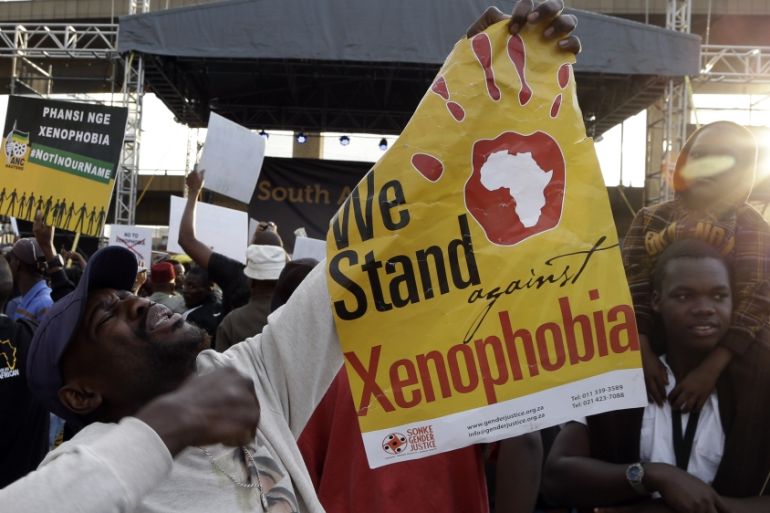
At the core of South Africa’s democratic narrative is an unsettling paradox. A country that was once hailed as Africa’s moral compass and was founded on the principles of human solidarity, freedom, and dignity, is currently facing waves of xenophobic violence. The pictures of plundered stores, uprooted families, and scared refugees from once-promising neighbourhoods have become all too common. What is sometimes described as intermittent instability is actually a deeper issue: an identity and accountability crisis.
South Africa’s place in Africa’s history is not incidental. During the long years of apartheid, it was the collective support of African nations that sustained the liberation struggle. Countries across the continent opened their borders, provided refuge, and lent diplomatic weight to the anti-apartheid cause. That legacy of solidarity makes the current hostility toward fellow Africans not just unfortunate, but profoundly ironic. It raises a difficult question: how did a nation forged in unity against oppression arrive at a point where it turns against its own continental kin?
The easy answer lies in economics. South Africa faces significant structural challenges, high unemployment, deep inequality, and slow economic growth. In such an environment, frustration festers. Foreign nationals, particularly those from other African countries, become convenient scapegoats. They are accused of taking jobs, undercutting local businesses, and straining public services. These narratives, while politically expedient, often lack empirical grounding. More importantly, they distract from the real drivers of economic hardship: systemic inequality, governance inefficiencies, and policy failures that have persisted over time.
But xenophobia in South Africa is not just an economic issue; it is also an identity crisis. The post-apartheid vision of a “Rainbow Nation” was anchored on inclusivity and diversity. Yet, decades later, that vision appears strained. The boundaries of belonging have become contested, with nationality increasingly used as a marker of exclusion. In this environment, being “African” is no longer a unifying identity but a dividing line. This erosion of shared identity is dangerous because it creates fertile ground for resentment, suspicion, and ultimately, violence.
The role of leadership in this context cannot be overstated. While South African authorities have, at various times, condemned xenophobic attacks, these responses have often been reactive rather than preventive. Condemnation without sustained action risks becoming performative. What is needed is a clear and consistent strategy, one that combines effective law enforcement with long-term social and economic interventions. Perpetrators of violence must be held accountable, not just to restore justice for victims, but to send an unequivocal message that such actions will not be tolerated.
Equally critical is the language used in public discourse. Words shape perception, and perception shapes behaviour. When political leaders or influential voices frame migrants as criminals or economic threats, they legitimise hostility. Even subtle rhetoric can reinforce harmful stereotypes, making violence appear justified in the minds of some. Reframing this narrative requires deliberate effort, highlighting migrants’ contributions, promoting stories of coexistence, and reinforcing the idea that Africa’s strength lies in its interconnectedness.
The responsibility to address this crisis does not rest solely with South Africa. Xenophobia, particularly within the African context, undermines broader continental aspirations such as regional integration and economic cooperation. Institutions like the African Union and regional blocs must take a more proactive stance, engaging diplomatically and supporting initiatives that promote inclusion and mutual respect. Silence or passive concern risks normalising what should be unequivocally condemned.
Yet, beyond policy frameworks and diplomatic engagement lies a more fundamental issue: accountability at the societal level. Xenophobia does not occur in a vacuum; it is enabled by attitudes, beliefs, and everyday actions. Communities must confront the prejudices that fuel exclusion and recognise the shared humanity that unites Africans. Civil society, media, and educational institutions all have a role to play in shaping a culture that rejects division and embraces diversity.
South Africa stands at a critical juncture. It can continue to treat xenophobic violence as an episodic disturbance, responding only when tensions boil over. Or it can confront the deeper questions of identity and accountability that underpin this crisis. The choice is not merely about managing unrest; it is about defining the nation’s character in the years to come.
Because ultimately, the measure of a society is not how it treats its own in times of comfort, but how it treats the “other” in times of strain. For South Africa, the path forward will depend on whether it can reclaim the values that once made it a beacon of hope not just for its citizens, but for the entire African continent.
John Kokome
A Communications Strategist and Public Affairs Analyst writes from Lagos
kokomejohn@yahoo.com