
Forgotten Dairies
Sowore’s Cyberstalking Trial and the Moral Bankruptcy of Suspending Justice for an Election -By Daniel Nduka Okonkwo
But because no political candidate, regardless of ideology or popularity, should have to enter an election carrying an unresolved state prosecution whose future may depend partly on the outcome of that election.

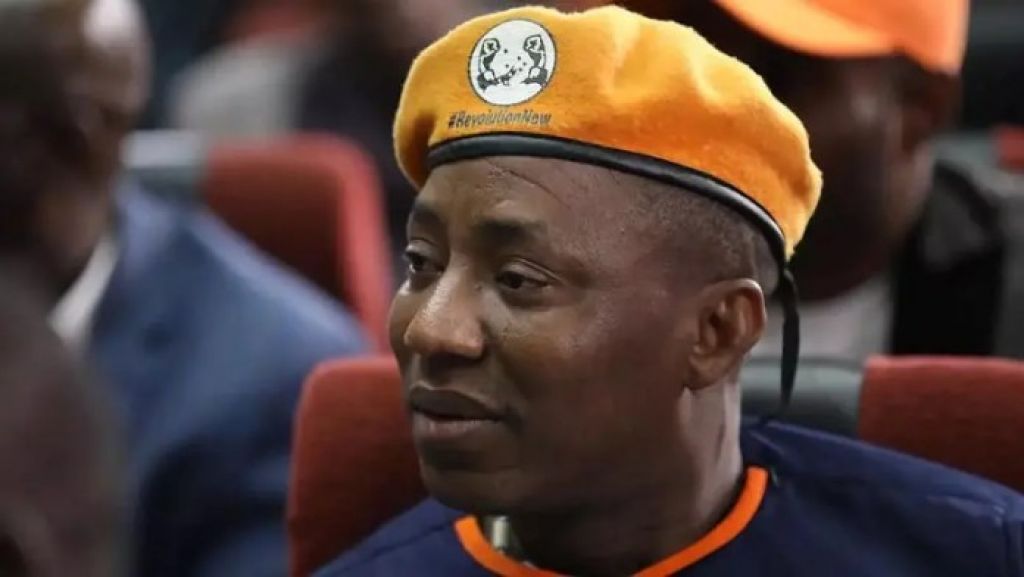
Omoyele Sowore has spent close to a year in and out of the Federal High Court in Abuja answering to an amended two-count charge arising from social media posts from August 2025 in which he described President Bola Tinubu as a criminal. After eleven adjournments, and with the case now facing a possible suspension until after the January 2027 presidential election that Sowore intends to contest, the question Nigerians and the wider world should be asking is not whether the Department of State Services (DSS) has suddenly become generous to him. It is why a state security agency is asking the court to pause an ongoing criminal prosecution according to an electoral timetable, and what that says about the relationship between Nigeria’s security agencies, the courts, and the political process.
The DSS says the proposed suspension is an act of fairness: a decision by Director-General Oluwatosin Ajayi to allow Sowore to participate fully in the electioneering process without the distraction of court proceedings. The agency has also said that the case was intended, among other things, to obtain judicial clarity on whether publicly describing the President or another individual as a criminal amounts to cyberbullying. DSS counsel Akinlolu Kehinde, SAN, has said the request is supported by international instruments concerning participation in public affairs and elections.
Sowore and his political camp have rejected the proposed suspension as insufficient and have called instead for the withdrawal of the case. It is important to state the government’s position fairly because a case this politically charged deserves to be examined through evidence and contradictions, not caricature.
But that same chronology raises a difficult question.
The agency that initiated the prosecution has now decided that the prosecution should be paused because the defendant is a presidential candidate whose campaign has commenced. That does not prove an improper motive. It does, however, create a legitimate public-interest question about the timing of the decision and whether electoral considerations have now become part of the management of a criminal case.
That question should not be dismissed merely because it is uncomfortable.
A pause is not a resolution
This is the part that should trouble every Nigerian, not just Sowore’s supporters.
A suspension is not an acquittal. It does not, by itself, terminate the charge or amount to a judicial declaration that the prosecution has failed. The reported proposal is essentially to place the proceedings on hold while the political process runs its course.
That distinction matters.
The current reporting indicates that Sowore’s international passport remains subject to conditions imposed in the case, while his political party has called for its return and for the return of phones and other electronic devices it says remain with the DSS.
A country cannot describe a pending prosecution as fully resolved merely because the hearings have been paused.
It is a pause, not a final legal remedy.
And the difference between the two should be kept firmly in view.
What happens if Sowore wins?
There is another extraordinary dimension to the proposed arrangement.
When PREMIUM TIMES asked DSS counsel Akinlolu Kehinde what would happen if Sowore emerged as president-elect, he reportedly said the case could remain stayed because of the constitutional immunity enjoyed by a sitting President.
If that position is ultimately accepted by the court, the implications are enormous.
An already pending criminal case could potentially be paused through the election period and, if the defendant wins, remain unaffected by presidential immunity during his tenure.
That raises a question far bigger than Sowore.
Can a criminal prosecution against a presidential candidate effectively move into suspended animation because the defendant enters the political process and then potentially remain unresolved because he wins?
If the answer is yes, Nigeria would have to explain how such a mechanism protects both the integrity of criminal justice and the integrity of elections.
The concern is not that the DSS has necessarily acted unlawfully by seeking a suspension. The court will determine that.
The concern is that an unresolved criminal prosecution, if left hanging for years, can continue to cast a legal shadow over a political figure without ever reaching a definitive judicial conclusion.
That is precisely why the public deserves clarity.
The Omokri question
Nigerians who have watched the treatment of political speech under successive administrations are also entitled to ask whether comparable public commentary is treated consistently.
During Sowore’s trial, the Federal High Court admitted video evidence in which former presidential aide and ambassador-designate Reno Omokri was shown describing President Tinubu as a “drug lord.” Omokri subsequently said that he had made the remarks but later discovered they were untrue and withdrew them.
The two situations are not legally identical, and they should not be presented as though they are. Sowore’s case must ultimately be determined on the evidence and provisions of law applicable to his own charge.
But the comparison raises an important question of public confidence.
When one political critic faces criminal proceedings over describing a President as a criminal, while another public figure whose earlier recorded comments about the same President were considerably more severe later receives an ambassadorial nomination, Nigerians are entitled to ask whether the state is applying a consistent standard to political expression.
That question is legitimate even if the legal circumstances of the two cases are different.
A democracy cannot demand public confidence in the law while appearing indifferent to questions about consistency in its application.
The judiciary cannot become an electoral timetable
There is also a serious institutional question for the Nigerian Bar Association.
When a security agency announces its intention to seek a pause in a matter pending before a Federal High Court judge, before the application is formally made to the court, the sequence naturally attracts public scrutiny.
The DSS has indicated that the request will be formally communicated to the Federal High Court when the court resumes sittings in September.
The legal authority to grant, reject, or modify any application remains with the court.
That distinction must be respected.
The DSS does not decide the judicial calendar. The judge does.
But public confidence in judicial independence depends not only on what judges ultimately decide; it also depends on the appearance that judicial proceedings are being managed through the courtroom rather than through public announcements.
An agency announcing its intended application before the judge has heard it is not, by itself, evidence that the judiciary has been compromised. But it does create an institutional optics problem that deserves attention.
The proper response is not to prejudge the judge.
It is to insist that the courtroom remains the place where judicial decisions are made.
That is where the Nigerian Bar Association has a legitimate professional and constitutional interest.
The NBA does not need to take sides for Sowore. It does not need to endorse his politics. It does not need to decide whether his social-media statements were justified.
It needs only to defend a principle larger than any individual defendant: judicial proceedings should remain judicial proceedings.
A bar association that treats questions surrounding the public management of a court case as someone else’s problem risks missing the larger institutional issue.
The question is not whether a security agency is entitled to make an application. Of course it is.
The question is whether the circumstances surrounding that application are consistent with the appearance of an independent judicial process.
Where does criticism end and cyberstalking begin?
Section 39 of the Nigerian Constitution guarantees freedom of expression, including the right to hold opinions and to receive and impart ideas and information without interference.
Article 19 of the International Covenant on Civil and Political Rights and Article 9 of the African Charter on Human and Peoples’ Rights likewise protect freedom of expression.
Those protections are not absolute. Governments may impose restrictions under circumstances permitted by law.
That is precisely why this case matters.
If describing a President as a criminal can constitute an offence under the applicable law, Nigerians deserve a clearly articulated legal standard showing where legitimate political criticism ends and punishable conduct begins.
The concern is not that every statement made about a public official must be immune from legal consequences.
It is that criminal restrictions on political expression should not become so uncertain that citizens cannot reasonably understand where the boundary lies.
Political leaders are not private citizens occupying private lives. They exercise public power and are therefore subject to intense criticism.
The state has a legitimate interest in preventing genuine threats, harassment, and unlawful conduct.
But that interest must coexist with the democratic principle that robust criticism of those who exercise state power is not, by itself, evidence of criminality.
What did the President himself say?
According to testimony given by Sowore’s defence witness Deji Adeyanju, and video evidence tendered during the proceedings, President Tinubu said during an engagement in Benue State that citizens had the right to insult, criticise, and call him names, and that law-enforcement agencies should allow citizens to exercise those rights as part of democracy.
The recordings were admitted as evidence.
If the testimony and recordings accurately reflect the President’s remarks, they raise an obvious question: how should those remarks be reconciled with a prosecution arising from political criticism directed at the same President?
That does not automatically determine the legal outcome of Sowore’s case. The court must still interpret the law and assess the evidence before it.
But it does create a striking tension between the democratic tolerance publicly expressed by the President and the criminal process now being pursued by a state security agency.
That tension deserves an answer.
Sowore’s history cannot simply be erased
Sowore’s history with the Nigerian state also makes the present controversy difficult to view in complete isolation.
In 2019, he was arrested and detained following the RevolutionNow protests and subsequently faced serious charges arising from that activism. Amnesty International described Sowore and fellow activist Olawale Bakare as prisoners of conscience, arguing that they had been detained for exercising rights to freedom of expression. The Federal Government eventually withdrew the charges in February 2024.
The existence of that history does not establish that the current prosecution is politically motivated.
But neither does it make the history irrelevant.
Institutions should be judged not merely by individual events but by patterns of conduct over time.
When the same political activist repeatedly becomes the subject of state action arising from his criticism of the government, the public is entitled to examine the pattern and ask whether the criminal law is being used proportionately.
That is not a declaration of guilt against the state.
It is an accountability question.
And accountability questions are precisely what democratic institutions should be strong enough to answer.
Legal purgatory is not justice
This is why the proposed suspension should not automatically be celebrated as good news.
A legal purgatory is not the same thing as exoneration.
If the prosecution believes it has a sustainable case, the proper destination of that case should ultimately be a lawful judicial conclusion. If it does not, the prosecution has other lawful options available to it.
What should concern the public is indefinite uncertainty.
Sowore is seeking the presidency while carrying an unresolved criminal prosecution. The state says it wants to pause the proceedings so that he can participate fully in the election.
But that immediately raises another question:
Why is the solution to an allegedly unnecessary electoral burden a suspension rather than a definitive legal resolution?
That question is not answered simply by saying that the suspension is fair.
Fairness should not mean moving uncertainty from one date to another.
It should mean bringing the matter to a lawful conclusion.
The same principle applies to property reportedly retained in connection with the case. If Sowore’s political party’s claims concerning his passport, phones, and other electronic devices are accurate, the legal basis and continuing necessity for retaining those items should be transparent.
A pending prosecution should not become an indefinite administrative limbo.
The timing matters
The timing of the DSS announcement deserves scrutiny.
The agency’s decision followed the commencement of presidential campaigns on August 19, 2026, and a meeting involving the DSS Director-General, counsel, and officials of the agency’s legal directorate on August 20, at which the proposed suspension was considered.
The presidential election is scheduled for January 16, 2027.
The DSS says the purpose of the proposed suspension is to enable Sowore to participate fully in the electioneering process.
That explanation should be tested against the chronology.
The prosecution has already been running for almost a year. The case has reportedly been adjourned eleven times.
Now, with the election approaching, the prosecuting agency says it would be fair to pause the proceedings.
There is nothing inherently improper about a prosecution agency recognising the importance of a defendant’s participation in an election.
But the timing creates a legitimate public-interest question: why now?
A responsible investigative journalist does not have to invent an answer.
The chronology itself is enough to demand one.
The public should be allowed to ask whether the decision was driven exclusively by concern for electoral participation, or whether other institutional, legal, or political considerations influenced it.
Only transparency can settle that question.
The international community should be watching
This is also a moment for the international community to pay closer attention to Nigeria’s civic space.
Amnesty International and other human-rights organisations have previously raised concerns about the treatment of activists, journalists, and political dissent in Nigeria.
The broader issue is larger than Sowore.
It concerns the relationship between security institutions and citizens who criticise the government.
It concerns the use of criminal law in the management of political expression.
It concerns the ability of opposition candidates to participate in elections without carrying unresolved state actions that may affect their political freedom.
And it concerns whether Nigeria’s constitutional promises are reflected consistently in practice.
International institutions should therefore do more than issue expressions of concern.
They should monitor the proceedings, examine the court record, assess the relevant legal standards, and speak where credible evidence establishes violations.
Where independent investigations establish that individual officials were responsible for serious abuses, foreign governments should consider lawful, targeted, and evidence-based accountability measures available under their own legal systems.
Such measures should be directed at identified individuals where responsibility has been established through credible processes, rather than imposed collectively on Nigeria or Nigerians.
The objective should not be punishment for punishment’s sake.
It should be accountability.
Nigeria cannot ask the world to respect institutions while institutions avoid scrutiny
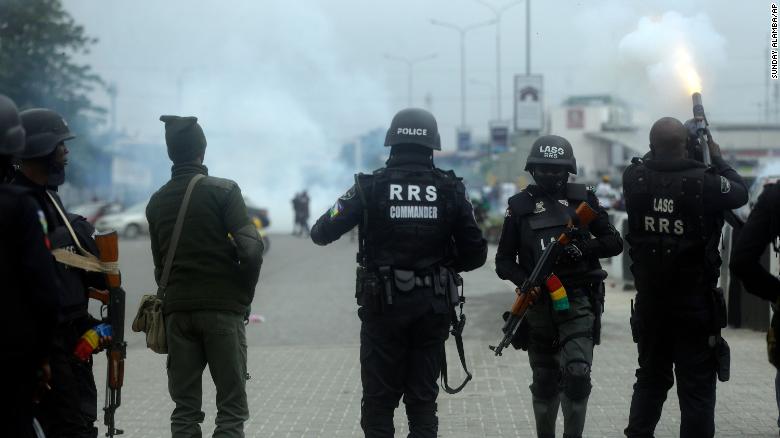
The world has watched Nigeria’s civic space come under sustained pressure through controversies surrounding protests, the treatment of demonstrators, the arrest or detention of journalists and activists, and the use of criminal law in disputes involving political expression.
Sowore’s case should therefore be examined not merely as another courtroom proceeding involving a controversial activist.
It is a test of institutional restraint.
It is a test of whether the state can prosecute political speech without creating the perception that dissent itself is the target.
It is a test of whether the security agencies understand that political opposition is not a security threat simply because it is uncomfortable.
And it is a test of whether the courts remain the ultimate forum for resolving disputes that the executive has taken to court.
The evidence is now sufficiently public for these questions to be asked without speculation.
There are court proceedings.
There are agency statements.
There are recorded presidential remarks.
There is an electoral timetable.
An opposition presidential candidate is facing an unresolved criminal case.
And there is now a proposal to pause that case because of the election.
That is enough for serious democratic scrutiny.
The real issue is bigger than Sowore
Sowore’s freedom, in the fullest sense of the word, should not be measured merely by whether he is allowed to campaign while his case sits dormant.
The real measure should be whether the underlying legal dispute eventually receives a definitive and lawful resolution.
If the prosecution succeeds, the court should say so.
If the defence succeeds, the court should say so.
If the prosecution chooses to withdraw the case through lawful procedure, that should be clear.
What democracy should resist is indefinite uncertainty becoming a substitute for justice.
Because the danger is larger than one man.
Today it may be an opposition candidate.
Tomorrow it may be a journalist.
The next day, it may be a civil society activist, a lawyer, a protester, or an ordinary citizen whose criticism becomes inconvenient to those in power.
The principle is the same.
Criminal justice should not become a political clock that can be stopped, restarted, or extended according to the circumstances of an election.
The state must prosecute where the law requires prosecution.
It must withdraw where the law and evidence require withdrawal.
And the courts must decide cases independently of political timetables.
Anything else risks creating the appearance of a system in which the criminal process can remain hanging over a political opponent without reaching a final determination.
That is why the proposed suspension deserves far more scrutiny than a headline announcing that the DSS is being “fair” to Sowore.
Fairness is not measured by whether a prosecution is postponed.
Fairness is measured by whether the law is applied consistently, whether the accused is afforded due process, whether judicial independence is protected, and whether every criminal case ultimately reaches a lawful conclusion.
Sowore’s case therefore belongs before the court, before the Nigerian Bar, before civil society, and before the international community.
Not because Sowore should receive special treatment.
But because no political candidate, regardless of ideology or popularity, should have to enter an election carrying an unresolved state prosecution whose future may depend partly on the outcome of that election.
The DSS may have the right to ask the court for a suspension.
The court has the right to decide whether that suspension is justified.
And Nigerians have the right to ask a much more
Daniel Nduka Okonkwo is an investigative journalist, human rights advocate, and publisher, and the founder of Profiles International Human Rights Advocate, PIHRA. His work focuses on governance, accountability, and the protection of fundamental rights across Nigeria and Africa. His reporting has appeared in Vanguard, Daily Trust, Sahara Reporters, African Defence Forum, Opinion Nigeria, and Daily Intel, among others.
Read more of his work on the PIHRA blog: https://profilesinternationalhumanrightsadv.blogspot.com
For tips, feedback, or collaboration, reach him at dan.okonkwo.73@gmail.com
















You must be logged in to post a comment Login