
Forgotten Dairies
Decolonising Healthcare: Reclaiming Africa’s Indigenous Medicine -By Patrick Iwelunmor
That is the real promise of decolonising healthcare: not the rejection of science, but the democratisation of knowledge; not the romanticisation of tradition, but its rigorous interrogation; and not the replacement of one intellectual hierarchy with another, but the creation of a healthcare system in which Africa’s knowledge finally has a seat at the table.

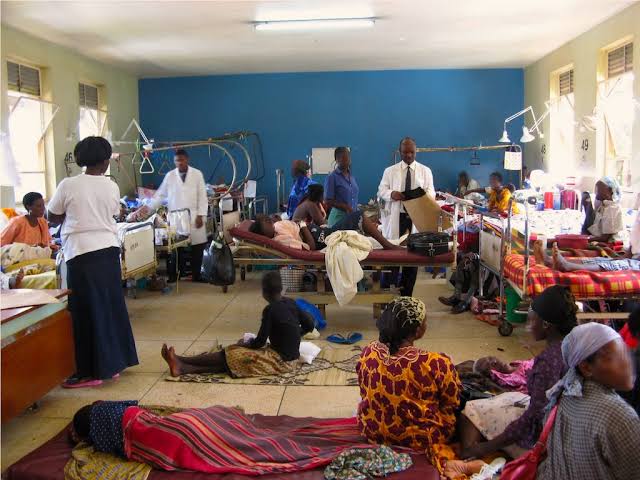
On August 31, 2026, World Traditional Medicine Day was commemorated in Nigeria by the Nigeria Natural Medicine Development Agency (NNMDA) with a health walk and conference tagged “Reflection on Research and Development Efforts of Traditional Medicine Towards Achieving Universal Health Coverage in the African Region.” The event was a timely reminder of the place of traditional medicine in Africa’s search for accessible, affordable and culturally relevant healthcare. While the Director-General of the NNMDA, Professor Martins Emeje, has called for increased research and regulation to reposition African traditional medicine for global competitiveness, the occasion also raises a fundamental question: why does a continent with such a rich history of indigenous medical knowledge remain largely a consumer rather than a recognised producer of global medical knowledge?
The answer lies partly in the history of knowledge production itself. For centuries, global systems of knowledge have privileged Western epistemologies while relegating indigenous knowledge systems to the margins. In medicine, this hierarchy has influenced what is considered scientific, legitimate, modern and worthy of institutional investment. Decolonising healthcare therefore requires us to interrogate the assumption that one medical epistemology should possess an automatic monopoly over legitimacy.
This is the epistemic dimension of coloniality challenged by decolonial thinkers such as Aníbal Quijano, Walter Mignolo and Catherine Walsh. Colonialism may have formally ended Africa, but its structures did not simply disappear with political independence. They survived in institutions, patterns of thought and hierarchies of knowledge that continue to shape how societies perceive themselves and how knowledge is validated. Decolonisation, therefore, should not mean rejecting Western medicine or romanticising everything indigenous. It should mean creating a more equitable intellectual space in which different knowledge systems can be rigorously investigated and allowed to contribute to human wellbeing.
This is where African traditional medicine deserves a more serious place in the continent’s healthcare architecture. Long before European colonialism, African societies had developed systems of healing based on generations of observation, experience, ecological knowledge and cultural transmission. Knowledge of medicinal plants, roots, bark, childbirth, bone setting and other forms of healing constituted an important part of Africa’s intellectual heritage. Much of this knowledge was transmitted orally and remains vulnerable to disappearance, distortion, commercial exploitation and appropriation.
The tragedy is that colonialism disrupted not only African political and economic institutions but also systems through which Africans produced and transmitted knowledge about their own bodies and environments. Africa consequently finds itself in a paradoxical position: it possesses enormous biological and cultural resources, yet much of the scientific and commercial value derived from those resources is developed and commercialised elsewhere.
The challenge, therefore, is not simply to preserve traditional medicine but to transform it. African traditional medicine practitioners cannot demand global recognition while resisting the scrutiny, documentation, standardisation and research required of any healthcare system seeking such recognition. If traditional medicine is to occupy a more meaningful place in modern healthcare, it must embrace rigorous research, quality control, ethical standards, pharmacovigilance and appropriate regulation. Claims of efficacy must be investigated, remedies must be tested for safety, and indigenous knowledge must be documented and protected from exploitation. This is not a surrender to Western medicine. It is an investment in the credibility and future of African knowledge.
Indeed, decolonising healthcare should empower Africans to become producers of knowledge about African health rather than merely consumers of knowledge generated elsewhere. Governments, universities, research institutions, traditional practitioners and pharmaceutical companies must collaborate to investigate Africa’s medicinal resources and indigenous knowledge systems. The World Health Organisation’s growing recognition of traditional, complementary and integrative medicine provides an important platform, but recognition alone is insufficient. Africa needs institutions capable of converting recognition into research, innovation, intellectual property and economic value.
India and China offer instructive examples. Their medical traditions have gained international recognition because indigenous knowledge was not simply preserved as cultural heritage; it was researched, institutionalised, regulated and developed. Africa can pursue a similar path without copying either country’s model wholesale.
Consider, for instance, the continuing capacity of African indigenous knowledge systems to generate ideas worthy of serious scholarly interrogation. In May 2024, prominent Yoruba traditionalist and Ifa priest, Ifayemi Elebuibon, called for the adoption of a Yoruba traditional DNA system in resolving paternity disputes. The scientific validity of such a proposal would require rigorous investigation and cannot be established merely by invoking indigenous knowledge. Yet the broader point is important: African intellectual traditions should be investigated rather than automatically dismissed because they originate outside Western epistemological frameworks.
This is the essence of epistemic plurality. Mignolo’s concept of pluriversality recognises that the world need not be organised around a single authorised way of knowing. Different knowledge systems can coexist and engage one another, provided that their claims are subjected to appropriate standards of scrutiny. The objective is not to declare every indigenous claim scientifically valid, but to ensure that indigenous knowledge is not rejected simply because it is indigenous.
Africans must therefore overcome the psychological consequences of centuries of colonial domination. Ngũgĩ wa Thiong’o’s call for the decolonisation of the mind remains relevant. A society that does not believe in its capacity to generate knowledge will forever depend on others to define its problems, design its solutions and profit from its resources.
But confidence alone is not enough. Africa needs political commitment, research funding, institutional coordination and a culture of excellence capable of transforming indigenous knowledge into credible healthcare innovation. It must also confront the question of ownership: who owns indigenous medical knowledge, and who benefits when knowledge developed collectively over generations becomes commercially valuable?
The decolonisation of healthcare must therefore become more than a rhetorical project. It must become a programme of research, regulation, education, innovation and economic empowerment. Africa must move beyond preserving its indigenous medical heritage as a museum piece and begin transforming it into a dynamic body of knowledge capable of engaging the demands of contemporary healthcare.
The ultimate objective is not to return to a precolonial past. It is to build a future in which Africa is no longer merely a consumer of medical knowledge produced elsewhere but an active producer, owner, innovator and exporter of healthcare knowledge.
That is the real promise of decolonising healthcare: not the rejection of science, but the democratisation of knowledge; not the romanticisation of tradition, but its rigorous interrogation; and not the replacement of one intellectual hierarchy with another, but the creation of a healthcare system in which Africa’s knowledge finally has a seat at the table.


















You must be logged in to post a comment Login