
Africa
Subnational Government and the Need for Scrutiny -By Abachi Ungbo

I was seated in one of the many recreational gardens that stand the Federal Capital Territory (FCT) out among its cousins, absorbing the cool evening breeze against the background of a soft strain of jazzy tunes. Seated in close proximity was a group of eight individuals which comprised two females; all having somewhat light-hearted exchanges punctuated with intermittent laughter.
No sooner had i ended a phone call than my curiosity was piqued by the growing decibel of their voices. They were observably shorn of the radiance their faces exuded upon arrival. Instantly, their boisterousness transformed them into a spectacle, attracting bewildered glances.
It was indeed a paradox that a group that was a picture of conviviality could quickly dissolve into bitter acrimony. It was when the cacophony conquered the serenity of that fateful evening that the underlying cause of the ugly outburst emerged.
The argument revolved around national politics, governance and leadership. The views exchanged were a complete mix bag of the sublime and ridiculous.
To my chagrin, the place of the subnational governments didn’t get a mention. Are they not pivotal to the country’s development? It is obvious that subnational governments are held less accountable by citizens, with attention disproportionately zeroed in on the federal government as though other tiers of government have little to offer in terms of development.
It would have made a refreshing change if the subnational entities were making real efforts towards development. They are central actors in the provision of essential services which is outlined in the constitution.
The three tiers of government which consist of the Federal, State and Local governments have roles attached to each of them which are found in the second and fourth schedules of the 1999 constitution. However, the local governments have been practically encumbered in the discharge of their basic functions and reduced to appendages of state governments through the instrumentality of the State/local government joint account. Recent intervention by the current administration gave a glimmer of hope for their autonomy. Though, they still remain hobbled.
Despite substantial resources, remarkable improvements on the material conditions of the people remain elusive. The state governments have practically elevated power over good governance which has affected the quality of governance, level of fiscal transparency and accountability. Their power is such that they are major deciding factors of election outcomes.
For the most part, public resources are deployed as veritable vehicle for trampling on the will of the people. The constitutional check on the activities of states is completely debilitated. It easily explains the reason for the shambolic state of public services and infrastructure since they can indulge their whims with reckless abandon.
When the Federal monthly allocation tapered off during the past administration due to shock in oil prices massive borrowings became the soft option instead of having recourse to the Intenally Generated Revenue (IGR). The monthly allocation remains the be all and end all for some states. Little imagination is hardly brought in, to improve I.G.R. Pathetically, inefficiency, incompetence and corruption are in full parade.
The monthly Federal allocation has remarkably improved from around 9 billion during the past administration to an average of 1.6 trillion in the last 2 years according to report.
However, a recent report by the Nigeria Extractive industries Transparency Initiative titled, “Beyond Federal Allocations: The Cost of Borrowings and Debt Servicing at State Level in Nigeria” revealed the negative impact of borrowings on state government ability to carry out their responsibilities of ensuring the provision of public services, infrastructure and initiatives for amelioration of poverty and hunger. According to the report between 10 and 30 percent of the states federal allocation are deducted at source for debt servicing.
The profligate spending and poor priorities are evident by the decision of many to execute vanity projects in the face of hunger and privation at staggering cost. It was echoed by the United States embassy in Nigeria titled ” Nigeria’s ruling class splashes billions on government houses,,” it pointed that it’s happening amidst economic difficulty. While citizens are asked to adjust to the present realities the ruling class continue to carry on heedlessly.They lack plans to deal with the challenges of huge out of school children, potable drinking water, crumbling healthcare facilities and classrooms etc.
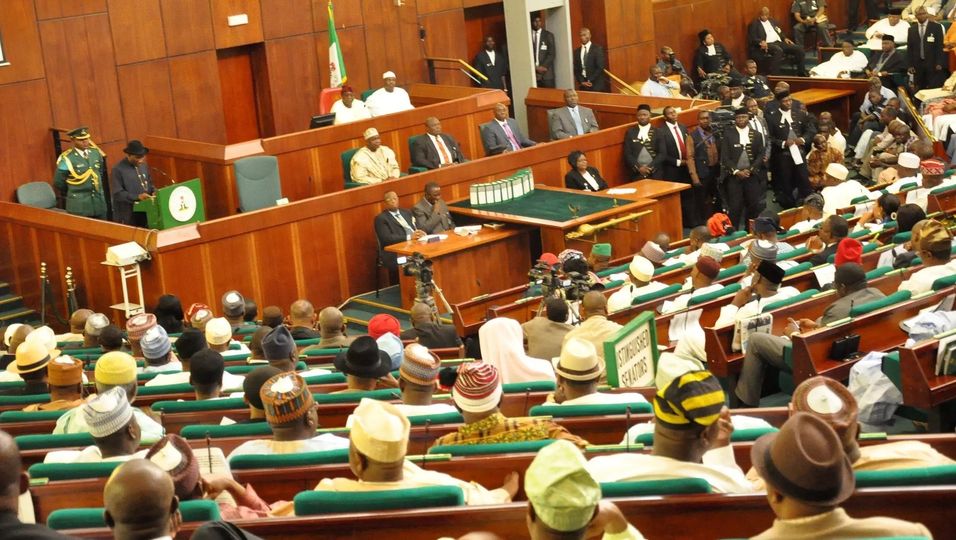
There’s need for citizens’ participation in interrogating the activities at the subnational level. It means proper enlightenment on their functions and place in the nation’s development. Equal amount of fervour in the scrutiny and demand for accountability on the federal government needs to be directed to the authorities at the subnational. A proper oversight is needed over their activities to engender good governance, fiscal transparency and accountability.
As things stand, the state of affairs of most of the Houses of Assembly is a travesty, which calls for financial independence and freedom from the clutch of governors for effectivenes in carrying out their responsibilities as enshrined in section 128 of the constitution.
Abachi Ungbo
abachi007@yahoo.com




















You must be logged in to post a comment Login