Africa
The Political North-South Divide in Nigeria Ahead of the 2027 Election -By Oluwafemi Popoola
As 2027 approaches, we must decide whether to keep playing Achebe’s tragedy on repeat or write a new chapter. The centre may no longer hold, but perhaps, if we build new bridges of justice, equity, accountability and genuine federalism, it doesn’t have to.


Chinua Achebe, in Things Fall Apart, wrote of Umuofia as a community that could not hold itself together. I often think about that story whenever I scroll through Nigeria’s political news. The first cracks in Achebe’s Umuofia did not come with the white man’s arrival, but from internal contradictions that had long festered. Okonkwo’s downfall was merely symbolic. It was a harbinger of a society already tilting under the weight of its own divisions.
As I watch Nigeria march toward 2027, I feel that same unsettling tremor beneath our feet. We are living Achebe’s warning in real time. Every strained debate, every regional whisper, and every tribal drumbeat of discontent feels like the prelude to something bigger and possibly darker.
The old fault lines between the North and South, which were papered over by past political compromises, are opening again. Like a house with a cracked foundation, the structure might still stand, but every storm shakes it harder.
For over sixty years, our politics has been an exhausting contest of identities, ethnic, religious, and regional, jostling for control of a centre that is both too powerful and too contested. As we inch closer to 2027, I can’t shake the feeling that we’re watching the sequel to a political tragedy we never learned from, only this time the stakes are even higher.
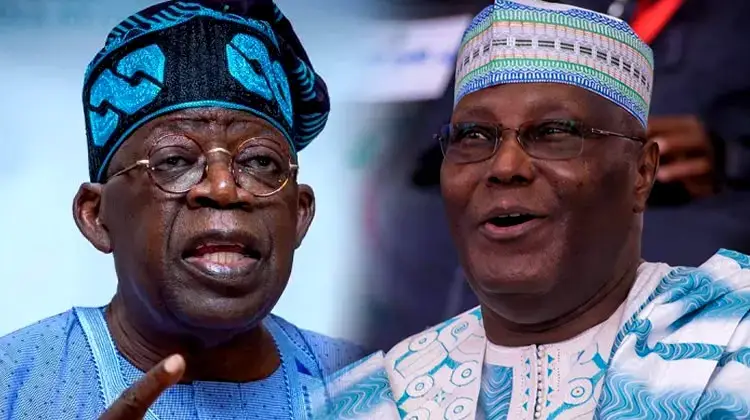
The 2023 election was no ordinary poll. It revealed the fragile seams holding Nigeria together. President Bola Ahmed Tinubu, a Southern Muslim from the Southwest, emerged victorious, riding on a divided North and a splintered South. His win was historic, but it has sparked a wave of resentment that simmers beneath the political surface.
Since his inauguration, I’ve seen and heard the accusations multiply. From radio phone-in programs in Kano where callers complain about being sidelined, to WhatsApp broadcast messages alleging “Northern exclusion” in federal projects, the atmosphere is tense. Prominent Northern voices like Babachir Lawal accuse Tinubu of “deliberately destroying the North,” while Umar Sani claims he is plotting to fracture Northern political unity by courting figures like Rabiu Kwankwaso.
The logic is brutal. The North holds the numbers. In three consecutive elections, the region accounted for nearly 65% of voter turnout. And yet, with only ten years in the presidency since 1999, many Northerners now ask: why should we wait until 2031 when the South would have ruled for eighteen years? I hear this question, just recently, in one big mall in Abuja, and in political WhatsApp groups filled with former classmates. It’s no longer just elite talk.
Atiku Abubakar’s 2023 experience is a case in point. The Southeast rejected him. The South-South fractured under Tinubu’s alliance with Nyesom Wike, and even his running mate, Ifeanyi Okowa, is now openly cordial with the APC. In Akwa Ibom, Governor Umo Eno’s body language tells its own story. The South is shifting and Atiku is not its center of gravity.
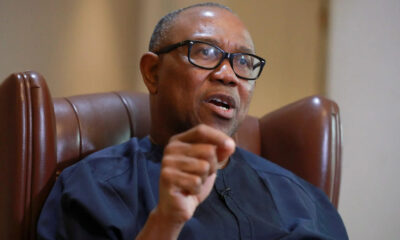
Peter Obi, the unexpected star of 2023, is also learning that popularity on social media doesn’t always translate to trust in the North. I’ve seen how some of his past statements like praising breweries in Anambra are interpreted with suspicion in conservative Northern circles. His promise to serve just one term sounds noble in theory, but to some, it raises doubts about whether he truly seeks long-term inclusion for their region.
Tinubu knows 2027 is not guaranteed. His outreach to Wike in Rivers State is as much about electoral math as it is about oil politics. If Rivers delivers again, and if he can fracture the North’s voting bloc by turning Kwankwaso or other key figures, his re-election chances grow.
This rivalry feels eerily like America’s Civil War tensions—only ours is not about slavery, but about power: who gets it, who keeps it, and for how long. It also reminds me of India’s struggles between the central government and its linguistically and culturally distinct Southern states. In both cases, the real battle is about inclusion and autonomy.
Social media, especially X (formerly Twitter), has now become the new battlefield for this unending war of narratives. It’s no longer just political surrogates at rallies and town halls. It’s everyday citizens, turned digital warriors, hurling ethnic slurs, historical revisionism, and conspiracy theories. What used to be a Cold War of mutual suspicion is morphing into a civil war of hostile rhetoric.
The tension is visible in daily life. I’ve overheard taxi drivers in Ibadan mutter that “the North only wants to dominate forever,” while traders in Sokoto complain that “Southern leaders will never care for us.” In football viewing centres, even a Premier League match can turn into a heated debate about regional politics. The emotional temperature is rising, and the signs are everywhere, sharper conversations, fewer jokes, more mistrust.
The danger isn’t just theoretical. The emotional temperature of the country is rising. The spectre of ethnic violence, political assassinations, and voter suppression in 2027 is not just a possibility, it is a likelihood, unless deliberate efforts are made to cool tensions and reinforce democratic norms.
This is why the 2027 elections won’t just be about candidates. It will be a referendum on Nigeria’s soul. Can we, as a people, transcend our regional loyalties to choose leaders based on competence, not ethnic arithmetic? Or will we again descend into the age-old trap of “our son versus their son,” while the nation bleeds?
There are no easy answers. But one truth remains that Nigeria’s unity, as fragile as it is, will be tested in 2027 like never before. The South wants continuity. The North wants redress. The East wants inclusion. The Middle Belt seeks justice. The Niger Delta demands respect. And at the centre, a presidency whose survival may depend on how well it navigates these treacherous waters.
The founding fathers of Nigeria, during the constitutional conferences before independence, warned of this very scenario. Even though the 1950 constitutional conferences were less about unity and more about negotiation for control. They understood that forcing a centralised structure on a deeply diverse society was a recipe for recurring crisis. The civil war proved them right. Yet we never truly listened.
As 2027 approaches, we must decide whether to keep playing Achebe’s tragedy on repeat or write a new chapter. The centre may no longer hold, but perhaps, if we build new bridges of justice, equity, accountability and genuine federalism, it doesn’t have to.
Popoola is a Nigerian journalist, media strategist, and political columnist. He can be reached via bromeo2013@gmail.com