Forgotten Dairies
The Rot Within: How Power, Leadership Failure, and Political Decay Are Pushing Nigeria to the Edge A Call to Vote Wisely -By Daniel Nduka Okonkwo
The country’s national renewal will require leaders committed to serving every Nigerian irrespective of religion, ethnicity, or regional identity. It will require deliberate efforts to bridge long-standing divides, confront economic hardship with structural reform, and strengthen institutions capable of outlasting individual political administrations.

The crisis of governance is laid bare by leaders who neglect public schools while sending their children to elite private institutions, who refuse to invest in hospitals yet fly abroad for medical care, and who prioritize family and political patrons over the citizens they swore to serve. Such leadership corrodes public trust, diverts national budgets into private enrichment, and entrenches systems of favoritism and manipulation that silence critics and exploit divisions. At a time when Nigeria urgently needs accountable governance, voters must resist leaders who treat power as a personal inheritance rather than a public responsibility, because effective leadership is built on service, not self-interest.
Nigeria stands as one of Africa’s most strategically important nations, rich in natural resources, vibrant in culture, and strengthened by one of the world’s youngest and most energetic populations. Yet despite its immense potential, the country continues to wrestle with a governance crisis that has left millions questioning not only leadership, but the very institutions meant to protect public trust and deliver national progress.
Nigeria’s political challenges have extended beyond elections and party competition. At the heart of the national struggle lies a deeper institutional decay, one where public office is too often viewed as a pathway to personal gain rather than a solemn duty of service. The consequences are visible across sectors: deepening economic hardship, weak institutional accountability, widening distrust in government, and a political culture increasingly shaped by patronage, division, and the pursuit of power over principle.
The nation’s vast human and natural resources require leadership defined by systemic and value-based governance, not leadership driven by private enrichment or short-term political maneuvering. A nation as diverse and influential as Nigeria cannot sustainably move forward while national budgets and public funds are diverted toward personal luxury, while politically connected allies are placed in sensitive public positions without merit, and while institutions designed to serve the people are weakened by political interference.
The challenge confronting Nigeria is not merely the search for elected officials; it is the search for leaders with the discipline and courage to place national interest above personal ambition.
A functioning democracy depends on leaders who lead by example, those whose internal moral compass aligns with their public conduct. Leaders who accept responsibility instead of shifting blame. Leaders are willing to demand high standards of public service from themselves and others. Leaders who understand that trust in government is earned through transparency, competence, and consistency, not slogans, symbolism, or political theater.
Effective leadership requires more than rhetoric. It demands the ability to balance public trust with operational execution, pairing long-term national vision with the resilience to navigate political obstacles without compromising ethical standards. Emotional intelligence, accountability, and integrity are not optional qualities in governance; they are the foundations on which durable institutions are built.
A good government leader is ultimately defined by selflessness, integrity, and a demonstrated commitment to the common good. Such leadership listens actively, empowers citizens, respects institutions, and accepts scrutiny. Public office under this model is understood as an opportunity to serve, not an entitlement to be served.
The opposite has become increasingly familiar across many political systems: leaders who prioritize personal enrichment over national development; who reward loyalty over competence; who silence criticism rather than address it; who manipulate systems to remain politically dominant; and who exploit existing ethnic, social, or religious divisions to distract the public while consolidating power.
These patterns carry long-term consequences. They weaken national cohesion, deepen inequality, and erode faith in democratic institutions. They also place enormous strain on ordinary Nigerians already navigating inflation, insecurity, unemployment, and declining public confidence in governance.
Yet leadership alone cannot carry the burden of national transformation.
Nigeria’s future will depend as much on citizen participation as it does on political leadership. Civic engagement remains central to rebuilding accountability. National progress is sustained not only through elections, but through informed public participation, stronger local institutions, responsible media, policy advocacy, and community-led initiatives that hold power accountable at every level.
A politically aware and engaged citizenry creates pressure for better governance. It strengthens democratic institutions from the ground up and reinforces the principle that leadership is a public trust, not a private inheritance.
Nigeria’s youth population may ultimately become the country’s most important democratic force. Across sectors, younger Nigerians continue to drive innovation, civic awareness, and policy conversations in ways previous generations could not. Their participation in governance, whether through public service, entrepreneurship, advocacy, or political organizing, may determine whether Nigeria’s next chapter reflects reform or repetition.
The country’s national renewal will require leaders committed to serving every Nigerian irrespective of religion, ethnicity, or regional identity. It will require deliberate efforts to bridge long-standing divides, confront economic hardship with structural reform, and strengthen institutions capable of outlasting individual political administrations.
The broader lesson is clear: nations rarely collapse overnight, and they rarely recover through rhetoric alone. Progress requires institutional courage, public accountability, and leadership willing to sacrifice personal convenience for national interest.
For Nigeria, the path forward remains difficult but not impossible.
The country possesses the people, resources, and democratic energy needed to build stronger institutions and restore public confidence. What remains essential is leadership anchored in integrity, a citizenry committed to accountability, and a collective refusal to normalize corruption, abuse of office, and governance built around private interests.
Nigeria’s future may ultimately be shaped by one defining question: whether public office will continue to be treated as a personal reward or finally reclaimed as a responsibility to serve the nation.
The answer may determine not only the future of governance, but the future of the country itself.
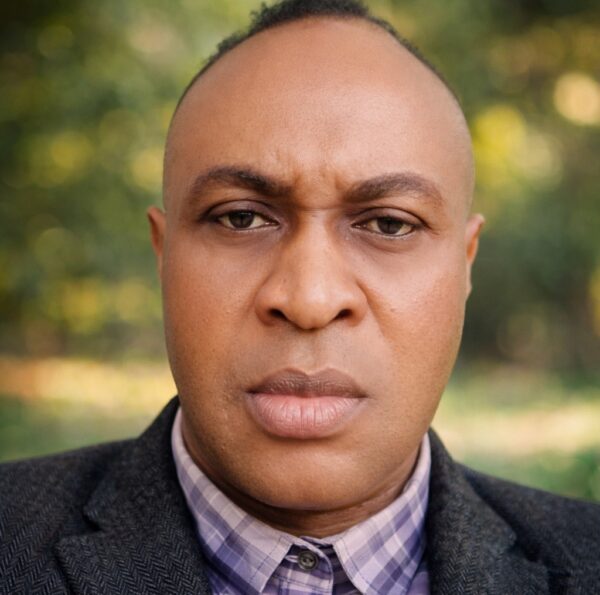
Daniel Nduka Okonkwo is an investigative journalist, human rights advocate, and policy analyst based in Abuja, Nigeria. He is the publisher of Profiles International, a platform dedicated to accountability journalism, governance reporting, and the documentation of human rights issues across Africa. His work examines the intersection of political power, institutional failure, and the human cost of corruption, with a particular focus on Nigeria and the broader African continent. Okonkwo’s reporting and analysis have appeared in Sahara Reporters, African Defence Forum, Daily Trust, Vanguard, Daily Intel, Opinion Nigeria, African Angle, Local Newsbreak, and several international outlets. He is a committed advocate for transparency, democratic principles, and justice, and collaborates with Daniels Entertainment on human rights initiatives that extend his work beyond the written word. He writes from Abuja and can be reached at dan.okonkwo.73@gmail.com.