
Africa
When Corruption Becomes a National Disorder: The Case for a Mental Forensic Lock-Up Unit in Nigeria -By John Egbeazien Oshodi
These men are not just symbols of corruption; they are case studies in apparent pathological entitlement. They parade around as if their trials are mere inconveniences—some even plotting political comebacks while court dates are endlessly adjourned. For these individuals, conventional justice has proven impotent, crippled by legal entanglements and political shielding. Therefore, their inclusion in this Lock-Up Unit would serve as the necessary psychological and civic quarantine, where their entitlement is dismantled, their rationalizations are documented, and their behavior becomes a case study for future Nigerian leaders.


Nigeria’s battle against corruption has reached a critical junction—one where traditional legal mechanisms have proven woefully inadequate. Despite high-profile arrests, media parades, and countless court appearances, the likes of former Governors Abdulfatah Ahmed, Willie Obiano, Yahaya Bello, Darius Ishaku, and Theodore Orji continue to roam freely, basking in the glow of political privilege while their corruption cases crawl through the judicial system. It is as if the accusations against them are mere whispers, drowned out by the noise of political influence and judicial delays.
Premium Times Nigeria has done a remarkable service by keeping these cases in the public eye, refusing to let these men walk freely as if their hands are clean. Their reporting is a bold reminder that justice delayed is not just justice denied—it is justice mocked. But reminders are not enough. It is time to adopt drastic measures, to treat corruption not just as a legal crime but as a national psychological disorder.
Let us now imagine what this “Mental Forensic Temporal Lock-Up Unit” could mean—not as abstract satire, but as a serious institutional policy born out of desperation, necessity, and deep-rooted national trauma. In a country where the legal system has been captured, and where elite criminals endlessly recycle themselves through legal gymnastics, we must admit a hard truth: standard criminal justice has failed to treat elite corruption as a national mental disorder. These are not isolated cases of theft—they are possible patterns of pathological behavior, performed with detached precision, emotionless entitlement, and a total absence of shame. Therefore, the country must now shift from asking how to punish them to asking how to contain and recondition them.
Reimagining Justice: A Psychological Containment System
The Mental Forensic Temporal Lock-Up Unit is not a conventional prison. It is a hybrid model—a therapeutic, cognitive, and ethical quarantine zone for individuals who have been identified through forensic audits, financial investigations, and sworn testimonies as serial looters of public funds. These individuals would be removed from public space and subjected to a compulsory sequence of psychological evaluations, diagnostic profiling, and behavioral accountability mechanisms. This is not a place of brutality, but of institutional deactivation—where their access to public office, media platforms, and influence is terminated, and their ego dismantled through a controlled therapeutic process.
This is not revenge; it is a moral quarantine, a civic duty to isolate those whose corruption has metastasized into a national disorder. They would not be allowed to enjoy “retirement” in wealth; instead, they would enter civic confinement—a space between freedom and imprisonment, between guilt and rehabilitation.
Psychological Framework: Diagnosing Corruption as a Disorder
The idea that corruption can be viewed through a psychological lens is not far-fetched. I did not evaluate any of these criminal suspects, so I cannot say if any of them have criminal pathology. But in psychological terms, the behavior exhibited by many of these political figures aligns with Antisocial Personality Disorder (ASPD) and Narcissistic Personality Disorder (NPD). Key characteristics include:
Lack of empathy or remorse for the consequences of their actions.
Inflated sense of entitlement and self-importance.
Pathological lying and manipulation to maintain power and status.
Disregard for the rights of others—evident in their siphoning of public funds meant for community development.
The Mental Forensic Temporal Lock-Up Unit would operate similarly to therapeutic containment used in the treatment of individuals with pathological criminal behavior.
Here, these political figures would be subjected to:
Cognitive Behavioral Therapy (CBT) to address distorted thinking patterns that justify corruption.
Moral Reconation Therapy (MRT) to rebuild ethical and moral reasoning.
Group Accountability Sessions where their actions are dissected, analyzed, and criticized in front of peers and civic educators.
The goal is to deconstruct their rationalizations—the false beliefs that stealing public funds is a right of office, that evading justice is a symbol of power, and that corruption is merely part of political life.
Institutional Quarantine: Containing the Enablers
If we can’t jail them in conventional cells, then we must morally isolate them—psychologically, socially, and institutionally. This is not a call for extrajudicial revenge, but for institutional quarantine. And while we focus on the primary offenders, should we also not expand the lock-up model to include their enablers?
Should deeply compromised Senior Advocates of Nigeria (SANs), corrupt judges, and facilitators of judicial delay not be institutionally quarantined as well?
Their role in perpetuating grand corruption is not peripheral—it is central. If proven to have aided the cycle of looting and obstruction, they too must enter the civic lock-up to be studied, exposed, and documented.
These enablers must be treated with the same clinical scrutiny. These are individuals who knowingly weaponize the law against the public interest. The SANs who turn courtrooms into shelters for looters, the judges who twist constitutional technicalities to stall trials for decades, and the clerks who “lose” critical files—these are not passive actors; they are psychological accomplices in a nationwide economic trauma.
Global Precedents: Real-World Examples of Judicial Accountability
The idea of isolating corrupt officials is not without precedent.
Truth and Reconciliation Commission (South Africa): In the aftermath of apartheid, South Africa instituted a model of accountability that focused not only on punishment but on exposure and societal reckoning.
Operation Clean Hands (Italy): The Italian judiciary took drastic measures to quarantine corrupt officials during the anti-Mafia campaigns of the 1990s, leading to thousands of prosecutions and societal cleansing.
Commission of Inquiry into State Capture (South Africa): Known as the Zondo Commission, it exposed the vast network of corruption involving political figures and corporate entities, leading to public shaming and forced resignations.
Case Studies: The Ex-Governors’ Pathological Corruption and the Need for Forensic Lock-Up
Here, the likes of former Governors Abdulfatah Ahmed of Kwara State, Willie Obiano of Anambra State, Yahaya Bello of Kogi State, Darius Ishaku of Taraba, and Theodore Orji of Abia, whose corruption cases linger through legal manipulation and endless procedural delays, would be prime candidates for the Mental Forensic Temporal Lock-Up. Their trials are emblematic of the rot—an unbroken chain of abuse, arrogance, and systematic theft.
These men are not just symbols of corruption; they are case studies in apparent pathological entitlement. They parade around as if their trials are mere inconveniences—some even plotting political comebacks while court dates are endlessly adjourned. For these individuals, conventional justice has proven impotent, crippled by legal entanglements and political shielding. Therefore, their inclusion in this Lock-Up Unit would serve as the necessary psychological and civic quarantine, where their entitlement is dismantled, their rationalizations are documented, and their behavior becomes a case study for future Nigerian leaders.
A Bold Idea, But a Necessary One: A Psychological Insight from Prof. John Egbeazien Oshodi
Yes, these ideas by Psychologist John Egbeazien Oshodi could be seen as extraordinary, but good God, we have got to do it! If Nigeria is to heal, if Nigeria is to reclaim its dignity, the enablers and beneficiaries of grand corruption must be mentally quarantined—studied, documented, and isolated from public influence. This is not about vengeance; it is about national rehabilitation.
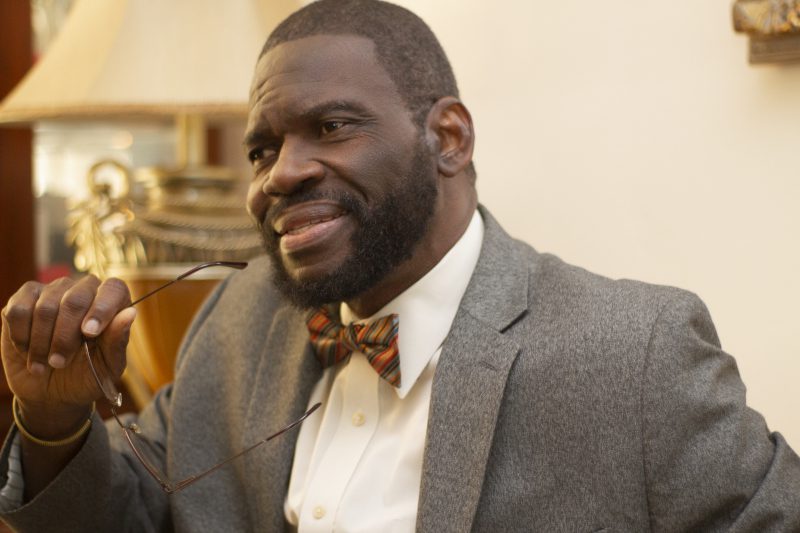
John Egbeazien Oshodi
Oshodi Open Door Public Training (OOPDT), also known as Oshodi Open Door, is a public awareness initiative dedicated to promoting transparency, accountability, and integrity in Africa. Through educational articles and resources, OOPDT fosters informed discourse on governance, institutional reform, and psychological well-being. It also provides specialized Timely Response Solutions (TRS) training at minimal or no cost, ensuring swift and effective interventions for critical institutional and societal challenges. For more information, contact: jos5930458@aol.com.
Professor John Egbeazien Oshodi is an American psychologist, educator, and author specializing in forensic, legal, and clinical psychology, cross-cultural psychology, police and prison sciences, and community justice. Born in Uromi, Edo State, Nigeria, he is the son of a 37-year veteran of the Nigeria Police Force—an experience that shaped his enduring commitment to justice, security, and psychological reform.
A pioneer in the field, he introduced state-of-the-art forensic psychology to Nigeria in 2011 through the National Universities Commission and Nasarawa State University, where he served as Associate Professor in the Department of Psychology. His contributions extend beyond academia through the Oshodi Foundation and the Center for Psychological and Forensic Services, advancing mental health, behavioral reform, and institutional transformation.
Professor Oshodi has held faculty positions at Florida Memorial University, Florida International University, Broward College, where he also served as Assistant Professor and Interim Associate Dean, Nova Southeastern University, and Lynn University. He is currently a contributing faculty member at Walden University and a virtual professor with Weldios University and ISCOM University.
In the United States, he serves as a government consultant in forensic-clinical psychology, offering expertise in mental health, behavioral analysis, and institutional evaluation. He is also the founder of Psychoafricalysis, a theoretical framework that integrates African sociocultural dynamics into modern psychology.
A proud Black Republican, Professor Oshodi advocates for individual empowerment, ethical leadership, and institutional integrity. His work focuses on promoting functional governance and sustainable development across Africa.























You must be logged in to post a comment Login