
Breaking News
WHO Chief Warns Ebola Crisis Shows Why Pandemic Treaty Must Be Completed
Tedros urges countries to complete the pandemic treaty as Ebola in DR Congo and other deadly outbreaks expose gaps in global health preparedness.

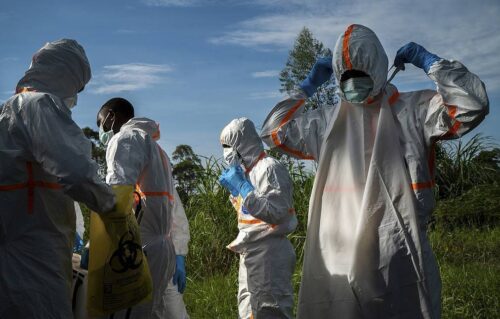
The ongoing Ebola epidemic in the Democratic Republic of Congo (DRC) has reinforced the need for a comprehensive international pandemic treaty, World Health Organization Director-General Tedros Adhanom Ghebreyesus has warned.
Tedros made the appeal on Monday as the ninth round of negotiations to finalise the agreement began in Geneva, urging countries to overcome their differences and “finish the job”.
Developed and developing nations remain at odds over how the agreement, adopted last year as a framework for managing future Covid-like pandemics, would be implemented.
According to Tedros, recent deadly disease outbreaks have demonstrated why completing the treaty is critical to protecting populations worldwide.
He said finalising the agreement was “about protecting people”.
“A pathogen threat anywhere can become a threat everywhere, to people of every country,” Tedros said in a written statement.
“The outbreak of hantavirus earlier this year, and the ongoing Ebola epidemic in DRC remind us of this threat.”
The WHO chief cited the hantavirus outbreak in April, which claimed three lives aboard a cruise ship, and the latest Ebola epidemic, declared in May, which has killed nearly 5,000 people among more than 10,000 infected, predominantly in the DRC.
Tedros said the Covid-19 pandemic had exposed a critical weakness in global preparedness, stressing that “no country can protect itself from pandemics by acting alone”.
Countries adopted the Pandemic Agreement in May 2025 but postponed resolving disagreements over the operation of its most contentious component.
The outstanding issue concerns the Pathogen Access and Benefit-Sharing (PABS) mechanism, which seeks to establish rules for sharing pathogens capable of triggering pandemics and distributing benefits such as vaccines, diagnostic tests and treatments.
“PABS is the last remaining piece of our puzzle,” Tedros said.
He recalled how the Covid-19 pandemic exposed inequalities in access to medical resources, despite the rapid development of vaccines.
“The world developed vaccines in record time, but too many countries were left waiting while others secured far more than they needed,” he said.
“That inequity cost lives, prolonged the pandemic and increased the risk of new variants emerging.”
Tedros described the completion of the final component of the treaty as a crucial step towards strengthening global protection against future health emergencies.
He insisted that resolving the remaining differences would provide “the key that will unlock the door to a safer future”.
Africans Angle News

























You must be logged in to post a comment Login