
Africa
Why Pay Off Nigeria’s Debt Today Only To Plunge Into Deeper Debt Tomorrow? -By Isaac Asabor
Nigerians are watching, and history will remember. It is not enough to clear debts for the sake of headlines. The real test lies in whether these actions bring relief to the masses and set the nation on a path to sustainable development. As of now, this looks more like a fiscal merry-go-round than a credible roadmap to economic recovery.

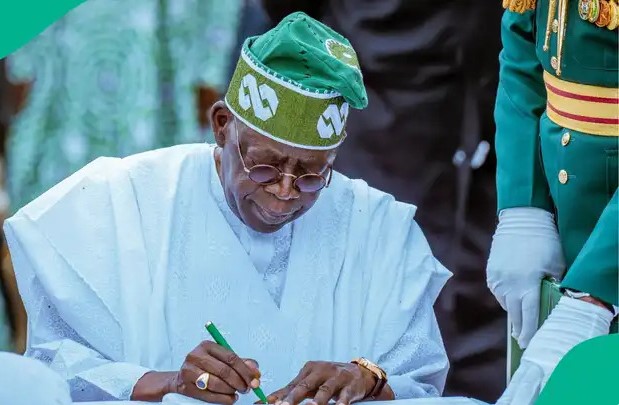
In less than a month, Nigeria under President Bola Ahmed Tinubu’s administration has managed to accomplish what many considered a positive economic milestone: clearing off Nigeria’s debt with the International Monetary Fund (IMF). But no sooner had this news begun to settle than the same government turned around to request approval from the National Assembly to borrow a whopping $21.5 billion and issue a ₦758 billion pension bond. To say this move is contradictory would be an understatement; it is downright confusing and raises a crucial question: Where is the prudency?
Clearing the IMF debt was lauded by many observers and rightly so. The repayment of $3.4 billion in IMF loans, including the Covid-19 Rapid Financing Instrument, was seen as a fiscal credibility booster for the Tinubu administration. The move was hailed as an indication that Nigeria was turning a new leaf in financial discipline and economic responsibility. Statements from the presidency suggested that the country was strengthening its fiscal position to attract sustainable foreign investments.
Yet, the celebration was short-lived. In what feels like a cruel twist of logic, the administration has now approached the National Assembly to approve a new loan plan worth $21.5 billion and a domestic bond issuance of ₦757.9 billion to settle pension arrears. This raises critical questions about the government’s financial strategy. Why repay debt only to plunge deeper into it almost immediately afterward? Is this financial prudence or a cleverly disguised economic charade?
Let us be honest: Nigeria’s economic woes are not new. From oil price shocks to policy inconsistency and corruption, the nation has struggled to find a sustainable path to economic growth. Debt, unfortunately, has become a recurrent crutch. However, the issue now is not about debt in itself, as borrowing is an accepted economic tool. The concern lies in the sheer lack of a coherent strategy and the brazenness with which contradictions are paraded as policy.
It is important to understand what this new loan request implies. A $21.5 billion loan is not a small amount by any measure. Added to this is the proposed ₦758 billion bond meant to clear pension liabilities. While addressing pension arrears is necessary and overdue, should it be done through more borrowing when the government just made a song and dance about fiscal discipline? How sustainable is this cycle of clearing one debt only to amass more?
Let us revisit President Tinubu’s promise of fiscal responsibility. This term, by definition, entails sound budgeting, cutting down waste, increasing revenue, and borrowing only when necessary. The recent IMF repayment may have been seen as an effort in that direction, but it appears more like a smokescreen when viewed alongside the latest borrowing request. The administration seems to be more concerned about optics than actual economic stability.
Some will argue that the proposed loans are needed for infrastructure, agriculture, and power. But we have heard this before. Successive governments have justified massive borrowing with grand plans of infrastructure development, yet the results remain underwhelming. Nigeria’s roads are still riddled with potholes, power supply remains epileptic, and agricultural productivity is stifled by insecurity and outdated systems.
Moreover, the lack of transparency in how these borrowed funds are managed only compounds public skepticism. Where are the audit reports for past loans? What happened to the loans taken during the Buhari administration? Have those projects been completed, and if so, what value have they added to the economy? Until there is a culture of accountability and transparent implementation, every new loan will be seen as another round of fiscal misadventure.
Even more worrying is the proposed issuance of a ₦758 billion bond to offset pension liabilities. Pensioners are among the most vulnerable in our society, and neglecting their dues is unjustifiable. However, funding pensions through more borrowing sends a worrying message. It suggests that the government has not built adequate reserves or planned long-term strategies to honor its obligations. It reflects a hand-to-mouth approach to governance, an unsustainable financial model.
This back-and-forth economic strategy also affects investor confidence. One day, the government is praised for repaying debt, and the next day, it is in the news seeking to accumulate more. Investors are not just watching economic actions; they are also evaluating consistency, policy clarity, and long-term viability. What signal does this send to them?
We must also consider the impact on ordinary Nigerians. The majority are still reeling from inflation, unemployment, and a depreciating naira. Food prices are through the roof, transportation costs are unbearable, and many families are struggling to survive. To these Nigerians, headlines about billions in loan repayments and new borrowing mean little unless they translate into tangible economic relief. How does this fiscal acrobatics benefit them?
This administration must be reminded that fiscal prudency is not a PR tool. It is a governance principle that should reflect in policy decisions, budgetary allocations, and debt management strategies. If indeed the Tinubu administration is committed to economic reform, it must go beyond token gestures. It must present a comprehensive and transparent debt sustainability plan. Nigerians deserve to know the long-term economic blueprint. What are the repayment terms for the new loans? What projects will they fund? What is the expected return on investment?
Furthermore, the National Assembly must rise above partisan loyalty and play its oversight role effectively. Rubber-stamping every loan request without thorough scrutiny is tantamount to mortgaging the country’s future. The legislative arm should demand detailed project breakdowns, implementation timelines, and performance indicators before approving any new loans.
In conclusion, it is time the Tinubu administration matches its rhetoric with action. Fiscal credibility cannot be achieved by merely paying off debts. It requires consistent, strategic, and transparent economic management. It involves planning for the long term, cutting unnecessary spending, increasing internally generated revenue, and ensuring that every borrowed kobo is used for productive ventures.
The question remains: where is the prudency in paying off debt today only to plunge into even deeper debt tomorrow?
Nigerians are watching, and history will remember. It is not enough to clear debts for the sake of headlines. The real test lies in whether these actions bring relief to the masses and set the nation on a path to sustainable development. As of now, this looks more like a fiscal merry-go-round than a credible roadmap to economic recovery.



















You must be logged in to post a comment Login