Africa
Yahaya Bello: The Cautionary Tale of a Failed Youth Governor -By Oluwafemi Popoola
For this rare candor, perhaps we should commend Bello. He has described, more vividly than any political scientist, the tragic comedy of Nigerian democracy. But let my gratitude end there. For the rest of us, the task is clear: reject his template. We must insist on a democracy that belongs not to godfathers but to the people.

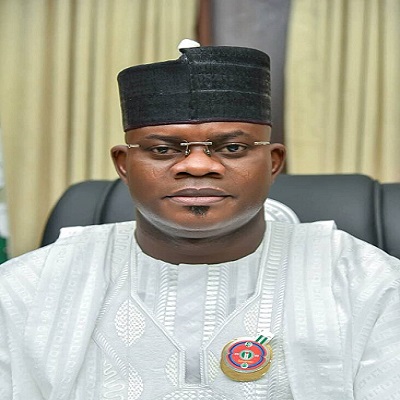
I have often wondered what democracy really means in Nigeria. Is it, as Abraham Lincoln famously defined it in his Gettysburg Address of 1863, as “government of the people, by the people, and for the people”? Or has Yahaya Bello, former governor of Kogi State, now redefined it in his own viral lecture as “government of the godfathers, by the godfathers, and for the godfathers”? In a chillingly candid video, Bello bluntly told a young legislator that power does not belong to the people but to those who “recommended” him.
In a strange way, I could almost applaud his honesty. After all, it takes a certain boldness to say publicly what most Nigerian politicians only whisper in backrooms. At least Bello has saved us the stress of pretending. He has admitted what many already suspect: Nigeria’s democracy is a charade.
But Bello’s confessions are not surprising. Long before this unsolicited political lecture, his name had become synonymous with scandal. The EFCC chairman, Ola Olukoyede, revealed last year how Bello dipped his hands into the Kogi treasury to withdraw a staggering $720,000 (over ₦900 million) to pay his child’s school fees—not just for one session but prepaid until the year 2034–2035. While the future of his family was secured with public funds, the children of ordinary Kogites sat in dilapidated classrooms, some on bare floors, while over 125,000 remained completely out of school. Hospitals decayed, teachers went unpaid, and civil servants endured months—sometimes years—without salaries.
The irony could not be more tragic. In 2015, Bello was hailed as a symbol of youth resurgence in Nigerian politics. At barely 40, he was presented as the face of a new generation, proof that young Nigerians could do better than the old guard. He was branded the “White Lion,” a bold reformer who would roar for the people. Instead, he became the lion that devoured his pride, betraying the very youth constituency he claimed to represent.
Bello’s rise itself was unusual. He was an accidental governor, elevated after the sudden death of Prince Abubakar Audu, the APC candidate in 2015. Marketed as young, digital-savvy, and untainted by corruption, Bello was sold as the breath of fresh air that Nigeria desperately needed. But eight years in office exposed him as anything but. His legacy? Empty coffers, disillusioned youths, a battered civil service, and a state whose most basic infrastructure was left in ruins. His so-called model schools only raised further questions about inflated contracts and abandoned projects.
And now, in his viral video, Bello sat comfortably in his Abuja mansion, lecturing a newly elected APC lawmaker, Hassan Shado, on the realities of power. “You are there because somebody recommended you,” he told him. “Don’t go and think you are independent. Follow whatever you are told.” No flowery language, no rhetorical cover-up—just raw political cynicism. It was, in its own way, a masterclass in honesty.
If anyone needed proof of why Nigeria’s democracy struggles to breathe, Bello has provided it. His words expose the unspoken rules: legislators are puppets, elections are stage-managed, and loyalty to godfathers—not the people—is the real currency of politics.
History offers chilling parallels. In Robert Mugabe’s Zimbabwe, loyalty meant silence in the face of corruption. In Mobutu’s Zaire, lawmakers existed only to clap for the ruler. Bello’s Kogi is no different, and Nigeria as a whole is drifting dangerously close to that reality. It is little wonder that a Canadian court once likened Nigeria’s major political parties to “terrorist organizations.” Harsh, yes—but when politicians themselves reduce democracy to obedience, the comparison becomes understandable.
The real tragedy, however, is not just that Bello said these words. It is that millions of Nigerians already live under this reality, quietly accepting it. Governors, legislators, councillors—many are not chosen by the people but installed by their benefactors. Elections are rarely contests of ideas; they are endorsements of pre-selected candidates. Bello merely gave voice to the silent script.
Do I expect Yahaya Bello to face true accountability? Sadly, no. Nigerian politicians are skilled escape artists, evading justice time and again. But his story should serve as a warning to my generation. Bello is not the youth leader we prayed for; he is a cautionary tale. He proves that young age alone does not equal progressive leadership. If we fail to rise, organize, and demand better, we will continue recycling leaders who think democracy is about loyalty to patrons, not service to the people.
For this rare candor, perhaps we should commend Bello. He has described, more vividly than any political scientist, the tragic comedy of Nigerian democracy. But let my gratitude end there. For the rest of us, the task is clear: reject his template. We must insist on a democracy that belongs not to godfathers but to the people.
Popoola is a Nigerian journalist, Media strategist and Political columnist. He can be reached via bromeo2013@gmail.com.