
Entertainment
Achalugo, Odogwu Paranran, and Love for Nigeria -By Prince Charles Dickson Ph.D
The film’s tension lies in Chioma’s internal battle: Will she let past pain dictate her future, or will she rewrite her story? Similarly, Nigeria stands at a crossroads. Generations inherited the traumas of colonialism, civil war, and military rule, but the choice remains: Do we chain ourselves to history, or do we, like Chioma, step into the unknown for a chance at redemption?

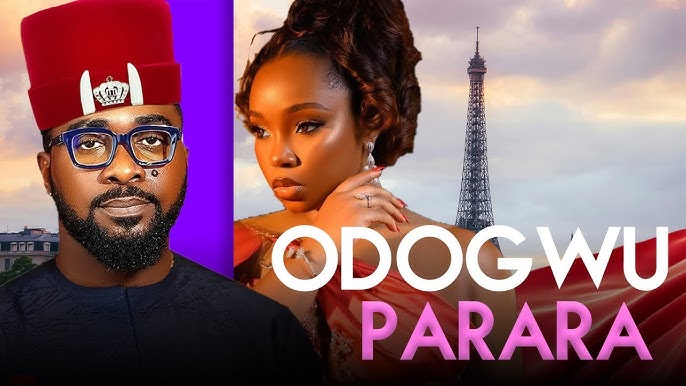
In the bustling heart of Nollywood, where stories mirror the pulse of the nation, filmmaker Omoni Oboli’s Love in Every Word emerges not merely as a romantic drama but as a profound allegory for Nigeria’s enduring love affair with itself.
The film, which follows Chioma—a Lagos career woman torn between her past and an unexpected romance—unfolds like a parable for the Nigerian condition: a nation grappling with inherited flaws, societal storms, and a love so fierce it borders on obsession. This is not just a tale of two lovers; it is a reflection of Nigeria’s journey to reconcile its contradictions, heal its wounds, and embrace a future where “all will be well,” no matter the tempests.
Chioma’s story begins with resistance. A modern Nigerian woman shaped by ambition and trauma, she cuts ties with a lover who fails her expectations and recoils from a father whose flaws once shattered her family. Her resolve to avoid men who mirror her father’s shortcomings mirrors the disillusionment many Nigerians feel toward their nation. Like Chioma, citizens often wrestle with a love-hate relationship with Nigeria—a country whose potential feels perpetually undermined by systemic failures, corruption, and the ghosts of past betrayals.
The film’s opening scenes—where Chioma demands back the gifts she gave her ex—echo the frustration of a populace weary of investing hope in leaders and systems that yield little return. Her toxic workplace, ruled by a tyrannical boss, mirrors the daily grind of Nigerians navigating a society where merit is stifled, opportunities are hoarded, and survival often depends on gritting one’s teeth through indignities. Yet, like Chioma, Nigerians persist. They show up, they work, they dream—even when the dream feels like a mirage.
Enter Obiora, the Igbo entrepreneur whose confidence and persistence disrupt Chioma’s guarded world. Played with magnetic charm by Uzor Arukwe, Obiora is no flawless knight; he carries the cultural baggage Chioma despises—accent, traditions, and a boldness that unnerves her. Yet, he embodies something greater: an unshakable belief in his worth and his right to love her. Here lies the metaphor for Nigeria’s untapped promise.
Obiora’s grand gesture—buying an entire office building to win Chioma’s attention—is audacious, almost reckless. But isn’t this the essence of Nigeria? A nation that, against all odds, continues to bet on itself? From the bustling markets of Onitsha to the tech hubs of Yaba, Nigerians daily perform miracles of resilience. They build empires from nothing, create art in chaos, and innovate where infrastructure falters. Like Obiora, Nigeria may not fit the mold of what the world—or even its people—expects, but it refuses to shrink. It demands to be seen, not for its scars, but for its spirit.
Chioma’s workplace serves as a microcosm of Nigeria’s systemic struggles. Her boss, a symbol of oppressive authority, hoards power and undermines her efforts—a reality familiar to many in a nation where leaders often prioritize self-interest over service. Yet, Chioma’s journey teaches a vital lesson: storms refine us. Her resignation from the job, prompted by a crisis of conscience, mirrors moments in Nigerian history when citizens rise—#EndSARS, voter mobilization, civic activism—to reclaim agency.
The film’s tension lies in Chioma’s internal battle: Will she let past pain dictate her future, or will she rewrite her story? Similarly, Nigeria stands at a crossroads. Generations inherited the traumas of colonialism, civil war, and military rule, but the choice remains: Do we chain ourselves to history, or do we, like Chioma, step into the unknown for a chance at redemption?
In Chioma’s friends, Ify and Ivie, we find the Achalugo—the voices of reason and community that anchor her. They represent Nigeria’s vibrant civil society, its artists, its grassroots movements, and its diaspora, all urging the nation toward self-love. “You’re pushing away a good man because of an accent?” Ify chides, echoing the irony of Nigerians who shun local solutions while romanticizing foreign saviors.
Obiora, the Odogwu Paranran (great warrior), embodies the fearless love required to transform Nigeria. His persistence is the relentless hope of farmers tilling arid land, teachers in crumbling classrooms, and nurses battling epidemics with scant resources. He does not beg for acceptance; he earns it through action. This is the lesson for Nigeria: To win the world’s respect, we must first believe in our worth.
The film’s crescendo is Chioma’s leap of faith—choosing Obiora despite her fears. It is a quiet revolution, akin to Nigeria’s moments of collective courage: the 2015 peaceful transfer of power, the creativity of Burna Boy and Chimamanda claiming global stages, and the resilience of IDPs rebuilding lives. Chioma’s choice whispers, “Love is not the absence of storms, but the courage to dance in the rain.”
Nigeria, too, must choose. Will we cling to cynicism, or embrace the audacity of hope? The “love” here is not naive—it is revolutionary. It is the love of Fela’s music raging against oppression, the love of Wole Soyinka’s pen defying tyranny, the love of market women pooling resources to send a child to school. It is a love that stares down dysfunction and says, “You cannot have my soul.”
Love in Every Word closes not with a fairy-tale ending, but with the promise of growth. Chioma and Obiora’s journey is just beginning—as is Nigeria’s. Our nation, like the film’s protagonists, is a work in progress. But progress demands faith.
To love Nigeria irrevocably is to be a realist and a dreamer. It is to acknowledge the oil spills in the Niger Delta and the ingenuity of startups turning waste into wealth. It is to decry banditry in the North while celebrating the peacemakers bridging divides. It is to groan under the weight of poor governance yet campaign tirelessly for accountability.
This love is not blind; it is visionary—seeing beyond the present chaos to the potential gleaming beneath.
Achalugo, the voices crying out for justice, and Odogwu Paranran, the warriors building a better Nigeria, are not mythical figures. They are the students coding through power cuts, the mothers rallying communities against insecurity, and the artists redefining our global narrative. They are you and I.
Nigeria, like Chioma, is learning to love itself—flaws, accents, and all. Our storms—insecurity, inflation, corruption—are fierce, but so is our resolve. The world whispers, “Break,” but Nigeria bends and rises, again and again, because our love is not a fleeting infatuation. It is an obsession, a covenant, a prayer etched into the soil of our ancestors.
In the words of Chinua Achebe, “Nigeria is what it is because its leaders are not what they should be.” Yet, the inverse is also true: Nigeria will be what it should be when its people—guided by the spirit of Achalugo and Odogwu Paranran—refuse to let go of love. We are Chioma, wrestling with our past. We are Obiora, daring to demand more. And in our collective story, the final act is not written by the storms we face, but by the love that outlasts them, and for me this is a testament to the unyielding faith in the fatherland.
All will be well. E go better. Because to love Nigeria is to believe in miracles–May Nigeria Win!
—
Prince Charles Dickson PhD
Team Lead
The Tattaaunawa Roundtable Initiative (TRICentre)
Development & Media Practitioner|
Researcher|Policy Analyst|Public Intellect|Teacher
234 803 331 1301, 234 805 715 2301
Alternate Mail: pcdbooks@yahoo.com
Skype ID: princecharlesdickson



























You must be logged in to post a comment Login